
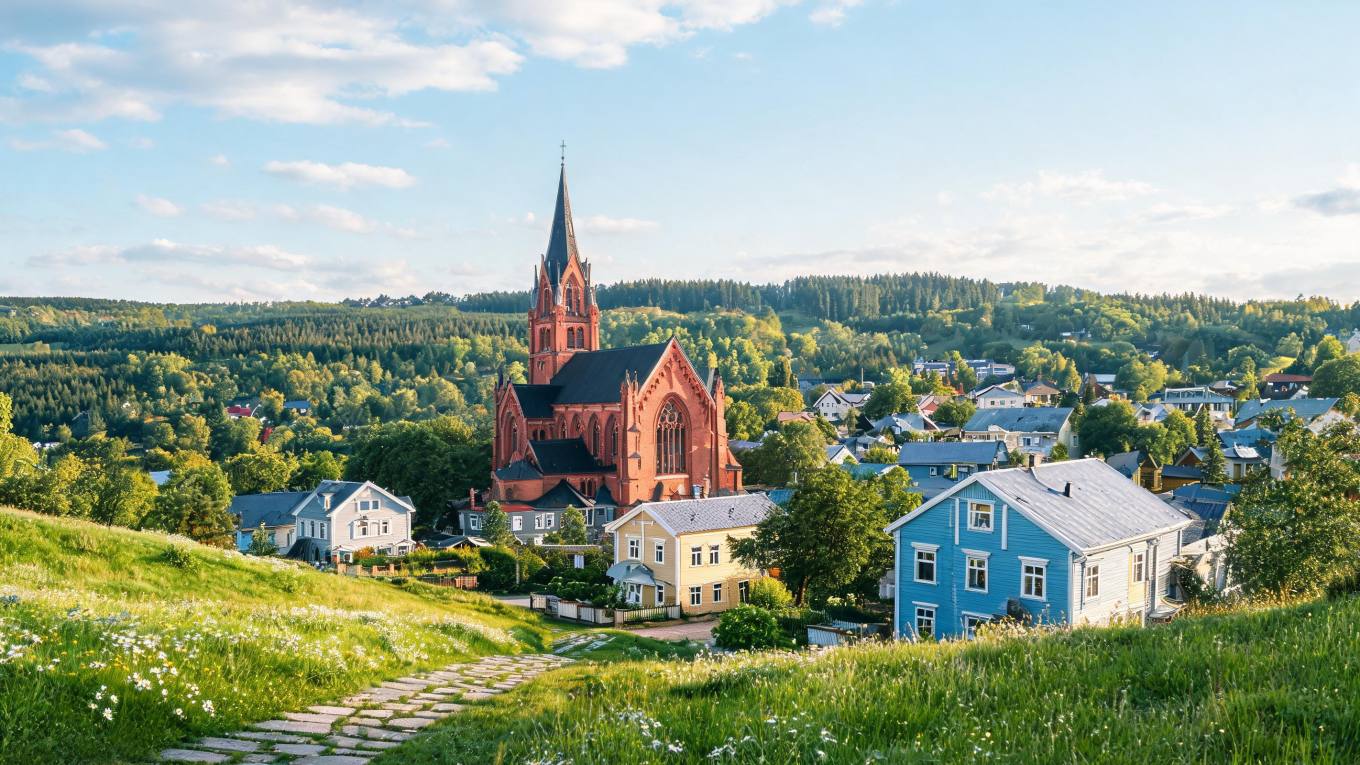
Core Insight: Visa-Free Perks & New National Park Put Valga on the Map for In-Depth European Travel
In autumn 2026, with China’s visa-free policy extended to 30 days for Estonia and eight other nations, alongside the newly opened Arutaguse National Park in northeastern Estonia, this border town of Valga on the eastern Baltic coast is emerging as a "hidden gem" for in-depth European travel. As a strategic crossroads between Estonia and Latvia, Valga combines a unique dual-cultural heritage, pristine natural landscapes, and customized itineraries curated by HeroGuide-certified local guides, making it an ideal new destination for travelers seeking off-the-beaten-path experiences.
Background & Changes: Visa Policy Extensions & Transport Upgrades Break Down Travel Barriers
1. 30-Day Visa-Free Extension Transits into In-Depth Exploration
Starting November 30, 2024, Chinese passport holders can enter Estonia visa-free for up to 30 days (previously 15). This extension gives travelers ample time to explore Valga and its surroundings. For instance, visitors can combine a 48-hour medieval cultural tour of Tallinn (Estonia’s capital) with three days delving into Valga’s border villages and national parks, creating a "classic + niche" seven-day loop.
2. Enhanced Cross-Border Transport Network Boosts Direct Accessibility to Valga
- Railway Upgrades: In 2026, Estonian Railways will introduce a direct overnight train from Tallinn to Valga, reducing travel time to just four hours. Coaches are equipped with free Wi-Fi and charging ports, making night travel ideal for saving daytime hours.
- Simplified Border Crossing: Valga and Valka (Latvia) function as a true "twin city." Schengen visa holders can move freely between both countries. HeroGuide-certified guides can design "one location, two countries" itineraries—for example, visiting St. John’s Church on the Estonian side in the morning, then walking over to the Latvian side in the afternoon to experience traditional sauna culture.
Practical Impact for Travelers: Three New Experiences Unlocked in Valga
1. Arutaguse National Park: Northern Europe’s Last Pristine Wetlands
As Estonia’s newest national park, Arutaguse spans 43,000 hectares of coniferous forests and wetlands, making it a haven for eco-enthusiasts. Only one well-maintained wooden boardwalk cuts through the core area, so visitors must join HeroGuide-certified guides for a "wetland canoeing" experience. Recognized by UNESCO as an intangible cultural heritage skill, this activity allows travelers to navigate spring-flooded "fifth season" waters to spot rare birds like capercaillie and broad-billed sandpipers. The park administration recommends visiting from late October to early November, when blueberries and mushrooms are at their peak. Guides will teach safe foraging techniques and help prepare simple picnics.
2. Cross-Border Cultural Fusion: Historical Snapshots from Churches to Prison Camp Cemeteries
Valga’s historical narrative is uniquely shaped by its geographic position:
- St. John’s Church: Originally Gothic, this building was converted into a military watchtower due to border conflicts. Its basement still retains the original structure of a 1944 wartime shelter. HeroGuide-certified guides can access archival footage to recreate the living conditions of residents during that era.
- Prison Camp Cemetery: During the Cold War, Soviet political prisoners were held here. Tombstones bear only identification numbers instead of names. Guides will weave these silent stories together with Estonia’s independence movement history, bringing individual narratives to life.
3. Digital Nomad Friendly: Embracing "Slow Tech" Life in a Border Town
Though small, Valga has become a new hub for Estonia’s digital nomad community thanks to its low cost of living and widespread high-speed fiber optics. Local cafes like "Border Brew" offer daily "work packages" for just €5 (including coffee, sandwiches, and private workstations). Through the HeroGuide platform, travelers can connect with local programmer guides who organize "Code & Forest" themed hikes. Over a three-hour light trek, guides will explain how Estonia leverages its "X-Road" e-government system to digitize 99% of public services—an innovative model now being studied by countries like Armenia.
Target Audience & Best Time to Visit
- Ideal For: History enthusiasts, eco-travelers, digital nomads, and cross-cultural researchers
- Best Season: Late September to early November (autumn foliage & berry picking season); late February to early March (border ice festival, subject to annual schedule)
- Tips to Avoid Crowds: Weekends tend to be busier; consider visiting the national park midweek (Wednesday–Friday). Morning masses at St. John’s Church (7:30 AM) draw smaller crowds and offer excellent lighting for photography.
Further Reading & Useful Links
- The Paper: How Estonia Is Helping Armenia "Break from Russia and Move Toward Europe" (For geopolitical and cultural context)
- Baidu Baike: Estonia’s National Park System (Reference for planning surrounding itineraries)
- China Belt and Road Initiative Portal: Estonia’s Economic & Industrial Data (Essential reading for business travelers)
- HeroGuide Official Website: www.heroguide.com (Competitive bidding & fixed pricing from certified guides; supports English, Chinese, and Estonian)