
One-sentence summary: For the most comfortable experience, plan 4 days in Chengdu—2 days in the city for the Panda Base, Kuanzhai Alley, People's Park tea-drinking, and Taikoo Li, plus 2 days for Dujiangyan and Mount Qingcheng, and Leshan Giant Buddha and Mount Emei. With only 2 days, you'll feel rushed and won't see much depth; if you want to add Jiuzhaigou and Huanglong, you'll need another 3 to 4 days separately. Chengdu's essence is "slowness"—overloading your itinerary loses the city's most valuable quality.
How Many Days Are Ideal?
Chengdu is often mistaken for "a panda base plus a few snack streets," doable in two days. But its true depth lies in the urban leisure of the city center plus the world heritage sites on the outskirts—both are outstanding. Here are three recommended durations based on time and interest:
- 2 days purely in the city: Panda Base + Kuanzhai Alley + People's Park + Chunxi Road/Taikoo Li. A relaxed pace, suitable for first-timers with limited time. This is the minimum, but you'll miss the outskirts.
- 4 days city + outskirts: 2 days in the city, 1 day for Dujiangyan and Mount Qingcheng, and 1 day for Leshan Giant Buddha and Mount Emei (or split into two days for a more relaxed pace). This is the most popular and worthwhile arrangement, covering both world heritage sites and pandas.
- 6 to 8 days for in-depth plus Western Sichuan: On top of the above, set aside 3 to 4 days for Jiuzhaigou, Huanglong, or the Western Sichuan plateau. Note these spots are at high altitudes with long drives—they cannot be treated as a "half-day trip" from downtown and must be scheduled separately.
The city center of Chengdu is small, with a dense metro network. Staying at one hotel and commuting daily is more than sufficient—no need to switch hotels frequently. For foreign inbound travelers, this is especially convenient: choose a hotel in the city center (near Chunxi Road or Tianfu Square) as your base, and the metro will take you to most attractions.
Must-Visit Attractions
Chengdu Research Base of Giant Panda Breeding (Early Start + Reservation Required)
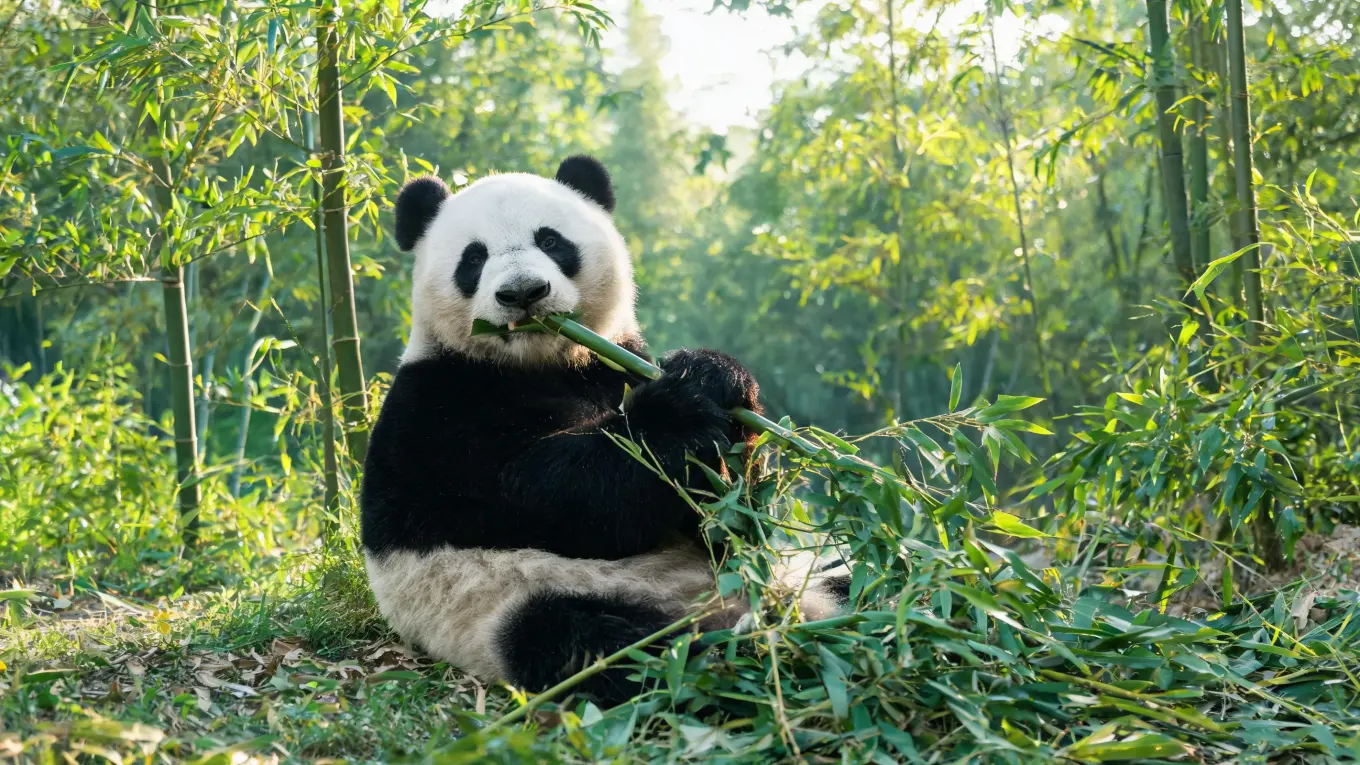
This is the city's top attraction, almost a must. It's not a zoo but a research and breeding habitat for giant pandas, set in a park-like environment. Key tip: the earlier, the better. Pandas dislike heat; they are most active from 8 to 10 AM, climbing trees, playing, and grabbing bamboo. After noon, most are sleeping—you'll see "panda carpets." So arrive around opening time (approx. 7:30 AM), head straight to the "Moon Nursery" and "Sun Nursery" for young pandas, then stroll around. Tickets are about 55 yuan RMB (check official sources), and advance online real-name reservation is required. During peak season, tickets often sell out days in advance, so book before heading out. For foreign visitors: both reservation and entry require passport real-name verification. It's best to complete this through official channels in advance. The site is large, so consider taking the shuttle bus (additional fee) at the entrance to save energy.
Kuanzhai Alley, Jinli, and Wuhou Shrine
Chengdu's "old Chengdu trademark" trio, all in the city center and walkable in sequence. Kuanzhai Alley consists of Wide Alley, Narrow Alley, and Well Alley, featuring late Qing and early Republic-era courtyards with gray bricks and black tiles. You'll find ear cleaning, covered-bowl tea, and Sichuan opera face-changing performances—commercial but atmospheric. Best visited in the evening, free entry. Wuhou Shrine is a temple dedicated to Zhuge Liang and the Shu Han rulers, a key site for Three Kingdoms culture. Tickets about 50 yuan (check official sources). Adjacent Jinli Ancient Street is a replica ancient commercial street, free, with snacks and handicrafts. It's especially photogenic at night with red lanterns lit. Together, these three take half a day to a full day.
People's Park Tea House and Chunxi Road / Taikoo Li
To understand how locals live, go to Heming Tea House in People's Park. A bamboo chair and a bowl of covered-bowl tea (about 20 to 40 yuan, check official sources) can last from morning to afternoon, watching locals play cards, get ear cleaning, and chat (ba men zhen). This is Chengdu's "slowness" itself. The park is free. Chunxi Road and Taikoo Li are the opposite—Chengdu's trendiest shopping areas. Taikoo Li blends influencer stores with the thousand-year-old Daci Temple, mixing modern and ancient. Great for shopping, coffee, and people-watching. Experience both—one for leisure, one for trendiness.
Dujiangyan and Mount Qingcheng (Outskirts)
A UNESCO World Heritage pair about 1 hour west of the city by car. Dujiangyan is an irrigation system built over 2,000 years ago by Li Bing and his son, still irrigating the Chengdu Plain—a "living ancient project." Tickets about 80 yuan (check official sources); walk through Fish Mouth, Flying Sand Weir, and Bottle-Neck Channel, plus the Anlan Suspension Bridge, to appreciate ancient hydraulic wisdom. Mount Qingcheng is a famous Taoist mountain, divided into Front Mountain (cultural, temples) and Back Mountain (natural, hiking). Front Mountain tickets about 80 yuan (check official sources), serene and secluded—"Qingcheng is the most peaceful under heaven." They are close; physically fit visitors can do both in one day, but half a day each is more comfortable. The high-speed train from Chengdu to Dujiangyan takes only about 30 minutes—very convenient.
Leshan Giant Buddha and Mount Emei (Outskirts)
Another UNESCO World Heritage pair south of Chengdu, about 2 to 2.5 hours by car or high-speed train. Leshan Giant Buddha is a 71-meter-tall Tang Dynasty Maitreya statue carved into a cliff, one of the world's largest stone Buddha statues. You can walk down the plank road to the feet or take a boat on the river for a full view. Tickets about 80 yuan (check official sources). Mount Emei is a famous Buddhist mountain, known for the Golden Summit's sea of clouds, sunrise, and "Monkey Zone." It's large and scenic; a thorough visit takes a full day or two. There is a cable car (additional fee). Leshan and Emei are often combined into 1 to 2 days—they are close and easy to visit together.
Extension: Jiuzhaigou and Huanglong
Jiuzhaigou's colorful forests and lakes and Huanglong's travertine pools are indeed stunning, but they are in Aba Prefecture, high altitude, about 8 to 10 hours by car from Chengdu or a flight to Jiuhuang Airport. They are not part of Chengdu's outskirts. Set aside 3 to 4 days separately and be mindful of altitude sickness—don't force them into your Chengdu itinerary.
Classic Itineraries (2/3/4 Days)
- 2 days (purely city): Day 1: early morning Panda Base → afternoon Wuhou Shrine + Jinli → evening Kuanzhai Alley. Day 2: morning People's Park tea → afternoon Chunxi Road/Taikoo Li for shopping and eating. Easy and unhurried, but all outskirts are skipped.
- 3 days (city + one outskirts): First two days same as above, Day 3 choose either Dujiangyan + Mount Qingcheng (easy via high-speed rail) or Leshan + Mount Emei (longer travel). For world heritage in limited time, recommend Dujiangyan + Mount Qingcheng.
- 4 days (most balanced): Day 1: Panda Base + Kuanzhai Alley. Day 2: Wuhou Shrine + Jinli + People's Park + Taikoo Li. Day 3: Dujiangyan + Mount Qingcheng. Day 4: Leshan Giant Buddha + Mount Emei. Covers pandas, city life, irrigation, Buddhist mountains, and world heritage without being too tiring.
In any itinerary, put the Panda Base first thing in the morning on that day—it's the only trick to see active pandas. Don't schedule it in the afternoon.
Transportation, Tickets, and Costs (Metro, Airport to City, Panda Base Round Trip, RMB)
Transport within Chengdu city is mainly metro, with a dense network covering almost all attractions and both airports. A single trip costs about 2 to 10 yuan. It's highly recommended to use mobile phone QR codes: locals use the "ride code" in Alipay or WeChat to scan at gates; if you prefer not to use a phone, you can buy single-trip tickets or a transit card at stations.
- Airport to city: Chengdu has Tianfu International Airport (TFU) and Shuangliu International Airport (CTU). Be sure to check which airport when booking. Shuangliu is closer to the city—Metro Line 10 goes directly downtown. Tianfu is farther—Metro Line 18 or airport bus takes about 1 hour. Taxi to city: Shuangliu about 50 to 80 yuan, Tianfu about 120 to 180 yuan (based on actual meter).
- Panda Base round trip: Metro reaches the Panda Base (multiple line transfers; check latest official shuttle info). After exiting the metro, take a shuttle bus or walk to the gate. Alternatively, take a taxi; from the city center to the base costs about 40 to 60 yuan (based on actual meter). For those with elderly/children or arriving early, a taxi or private car saves time.
- Outskirts transportation: Dujiangyan is accessible by high-speed train (about 30 minutes); Leshan and Emei by high-speed train to Leshan Station then transfer. Self-guided transfers are feasible, but connections between outskirts sites can be piecemeal; a private car for a day often smoother.
Rough per-person daily costs (excluding flights/hotels): transport + tickets + meals, about 150 to 300 yuan per day in the city; on days with outskirts attractions and long-distance transport, about 300 to 600 yuan per day. Flexible based on budget. For foreign visitors: China uses RMB, with mobile QR code payment as mainstream. It is recommended to link an overseas bank card (Visa/Mastercard) to Alipay or WeChat Pay international version in advance—most merchants, attractions, and taxis accept it. Also carry a small amount of cash for emergencies; convenience stores and official taxis also accept cash. Currency exchange is available at airports and some banks.
Food (Hotpot / Skewers / Dan Dan Noodles / Covered-Bowl Tea)
Chengdu is a "food capital"—eating itself is a reason to visit:
- Hotpot: The soul of Chengdu. Red oil beef broth base, classic ingredients like tripe, duck intestine, beef aorta, and tender beef. Dip in garlic oil sauce to cool and enhance flavor. If you're afraid of spice, order a split pot or mild, but Chengdu's "mild" is still spicier than many places—pace yourself.
- Chuan Chuan Xiang (Skewers): The budget version of hotpot: ingredients skewered on bamboo sticks, cooked in broth, charged by the stick. Down-to-earth and affordable, perfect for one or two people.
- Dan Dan Noodles: A famous Chengdu snack—noodles topped with minced pork and ya cai (pickled mustard greens), tossed in spicy and savory sauce. Small portion, good as a snack or side. Other must-tries: Long Chao Shou (Sichuan wontons), Zhong Shui Jiao (Zhong's dumplings), Tian Shui Mian (sweet water noodles), Fu Qi Fei Pian (husband-and-wife lung slices), Bo Bo Ji (cold skewers in chili oil), Bing Fen (ice jelly).
- Covered-Bowl Tea: It's not about drinking—it's about sitting. A bowl of tea with an afternoon of leisure is the essence of Chengdu lifestyle. Experience it at People's Park or various old tea houses.
For foreign visitors: Sichuan cuisine is known for "mala" (spicy and numbing from Sichuan pepper). The numbing sensation is new to many. When ordering, you can proactively say "mild/no spicy." Many restaurants have picture menus or QR code ordering; ordering pages often support English switch, or you can use a translation app.
Practical Tips and Pitfalls to Avoid
- Panda Base: Go early: Repeating—morning for active pandas, afternoon mostly sleeping. Be sure to reserve in advance with real-name and arrive at opening time. This is the most important tip.
- Crowds during peak season: Holidays and summer/winter breaks see massive crowds at Panda Base, Kuanzhai Alley, etc. Try to visit popular spots off-peak and early; buy tickets via official channels in advance to avoid long queues or sellouts.
- Avoid hotpot traps: Look for restaurants with many locals and good reputation; be wary of shops near attractions that pull customers in, have no price tags on menus, or push expensive broth. Ask upfront about the broth base and mandatory charges to avoid surprises at checkout.
- For foreign visitors—visa and visa-free: China offers unilateral visa-free, mutual visa-free, and transit visa-free policies (e.g., 240-hour transit at certain ports) for some countries. However, eligible countries, stay duration, and entry ports are subject to change. Always check the latest official announcements from China's Ministry of Foreign Affairs / National Immigration Administration / embassies and consulates before traveling.
- Passport real-name: Ticket reservations, hotel check-in, buying train/flight tickets all require passport real-name. Always carry your passport. Some hotels may need a license to accommodate foreign guests—confirm before booking.
- Payment and internet: Set up Alipay/WeChat Pay international version (with foreign card) in advance for smoother travel. Some overseas apps/websites commonly used in China may be restricted; download offline maps in advance (English street signs in Chengdu are limited) and prepare a workable internet solution.
Should You Hire a Local Guide or Private Car?
Chengdu's metro is well-developed and mobile payment is convenient—independent travel within the city is fine for young travelers. However, in the following situations, hiring a local guide or private car can save hassle:
- Domestic visitors—outskirts touring: Self-guided transfers via high-speed rail + bus + taxi for Dujiangyan/Mount Qingcheng, Leshan/Mount Emei can be cumbersome. A private car takes you directly to the gates, ensures a smooth route, and allows flexibility—especially helpful with elderly or children.
- Foreign visitors—language and communication: An English-speaking local guide or bilingual driver can handle passport-based ticket booking, help avoid food pitfalls, and communicate with drivers and merchants—smoothing over the biggest barrier of language. It transforms the experience.
- Depth and efficiency: A knowledgeable local knows which panda nursery to hit when, how to sequence outskirts sites to avoid backtracking, and which hotpot restaurants are reliable—saving you time and maximizing what you see and eat.
On Dijiexia (Local Guide Platform), whether you're a domestic traveler or an inbound foreign tourist, you can post your needs (e.g., "4 days, 2 adults 1 senior, city + Dujiangyan + Leshan, need bilingual English-speaking driver-guide"). Local guides, drivers, and translators will bid and quote. You compare credentials, reviews, and prices before committing—no blind selection. For easy city-only tours without outskirts, self-guided is sufficient and you don't need to spend extra.
FAQ
How many days should I spend in Chengdu?
2 days in the city is enough to see the Panda Base and a few old streets. To also include outskirts world heritage sites like Dujiangyan/Mount Qingcheng and Leshan/Mount Emei, recommend 4 days. For Jiuzhaigou and Huanglong, add another 3 to 4 days separately. 4 days is the most balanced and worthwhile option.
What's the best time to visit the Panda Base? Do I need a reservation?
Arrive around opening time (approx. 7:30 AM). Pandas dislike heat; they are most active from 8 to 10 AM. After noon, most are sleeping. Advance online real-name reservation is required. During peak season, tickets often sell out days in advance. Tickets about 55 yuan (check official sources). Foreign visitors need passport real-name for reservation and entry.
Is it easy to pay and get around as a foreign tourist?
Payment: mobile QR code is mainstream. Recommend linking overseas bank card (Visa/Mastercard) to Alipay or WeChat Pay international version in advance—most shops, taxis, and attractions accept it. Also carry a small amount of RMB cash for emergencies. Language: English signage at attractions is limited; most restaurants use Chinese. Prepare offline maps and a translation app. For convenience, find an English-speaking bilingual driver-guide or local guide on Dijiexia to help with tickets and communication. Visa-free policies depend on the latest official announcements from Chinese authorities.