
One-sentence summary: Beijing is best suited for a 4 to 5 day trip. Book the two major "must-avoid pitfalls" sites—the Forbidden City and the Great Wall—in advance through official channels with real-name registration. Use the well-connected metro for the rest of your time to visit the Summer Palace, Temple of Heaven, hutongs, and Yonghe Temple. Foreign visitors should focus on three things: purchasing tickets with a passport via real-name systems, linking foreign bank cards to mobile payments, and downloading offline maps. This way, you can avoid unlicensed taxis, shopping tours, and overpriced rickshaws, spending your money where it truly counts.
How many days to spend
Beijing's scale means it's not a "two-day check-in" city. Urban attractions are dense, but visiting the Forbidden City takes over an hour, and a Great Wall trip—round-trip transport plus hiking—takes a full day. With limited time, you'll only skim the surface. Here's a practical reference:
- 3 days: Just enough for the core circle—Forbidden City + Tiananmen Square, one day for the Great Wall, and one of the Summer Palace or Temple of Heaven, plus a stroll through hutongs in the evening. Suitable for layovers or tight schedules for inbound tourists.
- 4 to 5 days: The most comfortable pace. You can leisurely cover the Forbidden City, Great Wall, Summer Palace, Temple of Heaven, Yonghe Temple, and Shichahai, with half a day left for Nanluoguxiang or Universal Studios.
- With children or planning to visit Universal Studios: Universal Studios takes a full day alone, so plan for at least 5 days.
Spring and autumn (April to May, September to October) are the best seasons in Beijing, but they're also the peak seasons with strict visitor caps; summer is hot with frequent thunderstorms, while winter offers stunning snowy scenes at the Forbidden City but strong winds. Regardless of the season, book the Forbidden City and Great Wall in advance.
Must-visit attractions
Forbidden City & Tiananmen Square
The Forbidden City is the stop that requires the most advance preparation. Remember three hard rules: You must book with real-name via official channels (only the official "Palace Museum" mini-program/website is valid; you need to bind your ID or passport, tickets are released about 7 days in advance and often sell out instantly in peak season); closed on Mondays (except public holidays); entry requires original ID for real-name verification, via facial recognition or scanning your document. Tickets cost around 60 RMB (peak season)/40 RMB (off-peak), with separate tickets for the Treasure Gallery and Clock Gallery, subject to official updates. It's best to enter through the Meridian Gate and exit through the Gate of Divine Might for a one-way tour, taking half a day to a full day. Tiananmen Square is directly south of the Forbidden City. In recent years, entry to the square also requires advance real-name booking and security check. For the flag-raising ceremony, you need to arrive very early; for a normal visit, daytime is fine. Visiting both together is a classic start, but don't expect to book on the same day—likely no tickets available.
Badaling / Mutianyu Great Wall
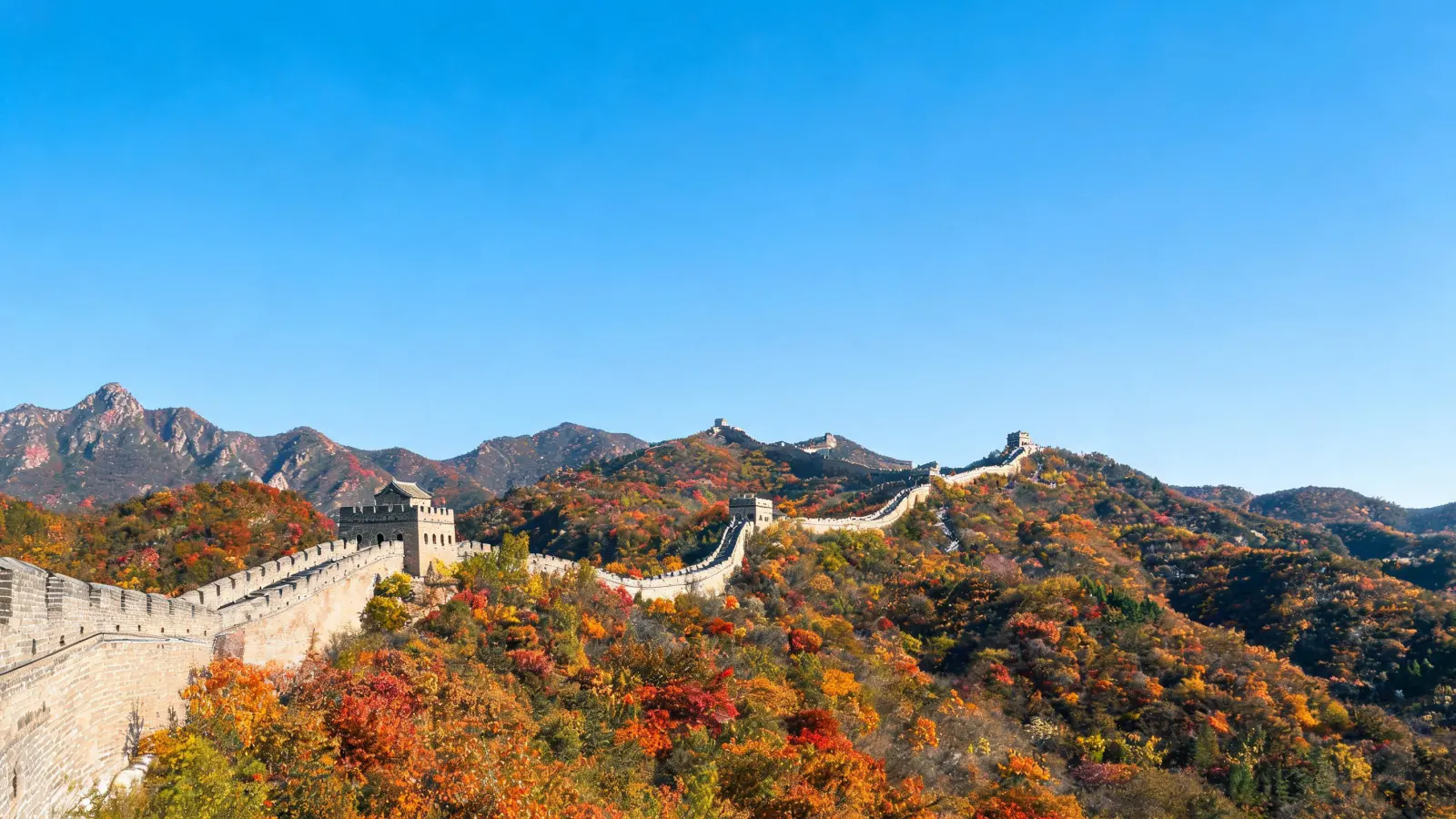
"You're not a hero until you've climbed the Great Wall." However, the Great Wall is about 70–80 km northwest of the city center, so you must arrange round-trip transport. Badaling is the most famous, with direct access via the S2 suburban railway and tourist buses, but it's crowded; Mutianyu has fewer people, better cable car and toboggan experiences, and is more suitable for foreign tourists and those with elderly or children, but public transport requires transfers. It's recommended to charter a private car or join a legitimate tour group for round trips. Unlicensed taxis and "one-day shopping tours" at the foot of the Great Wall are the most notorious scams in Beijing. Ticket prices: Badaling around 40 RMB, Mutianyu around 45 RMB, with cable cars and toboggans charged separately. Set aside half a day to a full day; if you're not physically strong, take the cable car up and walk down.
Summer Palace & Old Summer Palace
These two parks are adjacent, so you can visit them in half a day. The Summer Palace is the pinnacle of imperial gardens, with Kunming Lake, the Long Corridor, and the Tower of Buddhist Incense. Tickets cost around 30 RMB (peak season, combo ticket with inner gardens about 60 RMB), and a leisurely visit takes about 3 hours. Next door, the Old Summer Palace is a ruined site with the Western Mansions' ruined columns, thought-provoking. Admission is around 10 RMB, with an extra fee for the Western Mansions ruins. Suitable for those interested in history.
Temple of Heaven
The site where Ming and Qing emperors prayed for good harvests, with the Hall of Prayer for Good Harvests being one of Beijing's most photogenic buildings. A combo ticket costs around 28–34 RMB (including the Hall of Prayer, Echo Wall, and Circular Mound), while the park ticket is just a few RMB. In the early morning, locals practice tai chi, sing opera, and play diabolo here—a great window into "Beijing daily life." Go in the morning, spending about 2 hours.
Nanluoguxiang / Shichahai / Hutongs
This area is Beijing's soul of local life, free of charge. Shichahai's Houhai area offers lake views and bars; Nanluoguxiang is a renovated trendy commercial street (somewhat touristy); the truly interesting parts are the surrounding old hutongs—Mao'er Hutong, Yandai Xiejie, Guozijian Street. It's best to walk or rent a bike for a slow tour, most charming in the evening. When exploring hutongs, avoid the touting rickshaw "hutong tours"—they often have rip-off schemes.
Yonghe Temple & Guozijian
Yonghe Temple is Beijing's most vibrant Tibetan Buddhist monastery, with red walls, golden tiles, and a giant sandalwood Maitreya statue. Tickets cost around 25 RMB, incense is provided free—don't buy overpriced incense at the gate. Just across the street is Guozijian Street, where the Confucius Temple and the Imperial College (Guozijian) from the Yuan, Ming, and Qing dynasties form a quiet, ancient complex, contrasting with the lively Yonghe Temple. A half-day tour is enough.
Universal Studios
Universal Beijing Resort is located in Tongzhou, accessible via Metro Line 7 or Batong South Extension. Highlights include the Wizarding World of Harry Potter and Transformers. You must buy tickets with real-name via the official app, with prices varying by date. In peak season, single-day tickets range from about 500 to 700 RMB (subject to official updates). Buy early bird tickets and plan for Universal Express in advance. A full day is needed, and alternating this with the city's ancient route makes for a refreshing change.
Classic itineraries (3/4/5 days)
3-day highlights: Day 1: Tiananmen Square → Forbidden City → Jingshan Park for panoramic view of the Forbidden City → Shichahai; Day 2: Great Wall day trip (Badaling or Mutianyu, private car round trip); Day 3: Temple of Heaven → Yonghe Temple → Guozijian → Nanluoguxiang.
4-day comfortable: Add the Summer Palace + Old Summer Palace for half a day on Day 4, then stroll through hutongs or Qianmen/Dazhalan in the afternoon.
5-day deep/family: Same as the first 4 days, then Day 5 at Universal Studios all day; or combine Mutianyu Great Wall with nearby Gubei Water Town for a full-day in-depth experience (be careful on wild Great Wall sections, only walk open areas).
Transport, tickets & costs
The subway is the lifeline for Beijing tourists: It has a dense network covering almost all attractions, with English station announcements. Fares range from 3 to 10 RMB depending on distance. You can pay by scanning your phone or buying tickets. For airport access, take the Airport Express (Capital/Daxing airport lines) and transfer to the metro, costing about 25–35 RMB; a taxi from Capital Airport to the city center costs around 100 RMB, and more from Daxing. For taxis within the city, use Didi—the English interface and foreign card payment have been supported in recent years.
Great Wall round trip is the only part requiring separate transport planning: public transport is cheaper but time-consuming with transfers; a private car is hassle-free and point-to-point; legitimate one-day tours fall in between—when choosing a tour, make sure it's labeled "no shopping, pure play." Tickets for major attractions range from 10 to 60 RMB, with Universal Studios being the only high-cost item; payment is unified in RMB, and attractions generally support mobile payments and scanning IDs for entry. Overall, Beijing's accommodation and entry fees are not expensive; Great Wall transport and Universal Studios are the two major expenses.
Food
In Beijing, three things are almost unavoidable: Peking duck, sliced with skin, dipped in sugar, and wrapped in pancakes—both old-school and modern restaurants have fans; a whole duck serves two to three people, averaging around 100 RMB per person; Zhajiangmian (noodles with fried sauce), served with seven or eight small dishes of toppings mixed into the sauce—a staple dish for about a few dozen RMB; copper hotpot with sliced lamb, charcoal-fired copper pot, clear broth, lamb slices dipped in sesame sauce—the soul of winter, around 100 RMB per person. Additionally, douzhi (fermented bean drink) with jiaoquan (fried rings), lühuo (stewed offal), and baodu (quick-boiled tripe) are "local flavors" worth trying. Prices vary greatly depending on the restaurant, so check on-site. Avoid overpriced shops near attractions; the more authentic and affordable places are often found deeper in the hutongs.
Practical tips & pitfalls
- Book the Forbidden City and Great Wall through official real-name channels: Only the official Palace Museum mini-program/website is valid for the Forbidden City, and official ticketing for Great Wall scenic areas. Any offer of "no reservation needed, we'll get you in" or "internal tickets" is a scam.
- Great Wall unlicensed taxis & one-day shopping tour tricks: Low-cost "one-day tours" touted at train stations and the foot of the Great Wall often cram in shopping stops (jade, health supplements, so-called local specialties) and optional add-ons, cutting the itinerary short. Either charter a legitimate private car yourself, or choose a tour clearly marked "no shopping, pure play."
- Peak season visitor caps: During holidays and summer, the Forbidden City, Great Wall, and Universal Studios may sell out or limit entry. Off-peak timing and advance booking are key.
- Hutong rickshaw rip-offs: The three-wheeled "hutong tours" hailed on the street often quote a low price upfront but demand hundreds later—common disputes. If you want the experience, go through official channels and confirm the total price first.
- For foreign visitors (inbound): Visa-free / transit visa-free policies are subject to the latest official announcements—China has unilateral visa-free and transit visa-free policies (e.g., 144 hours) for many countries, with eligible nationalities, ports, and lengths of stay subject to change. Check the latest announcements from China's National Immigration Administration or Chinese embassies/consulates before travel. After entry, your passport is your real-name ID—use the original passport for ticket purchases, hotel check-ins, and entry to the Forbidden City and Great Wall. Carry it with you at all times. Mobile payments: Alipay and WeChat now support linking foreign bank cards. Link your card upon arrival, and you can scan codes for meals, taxis, and tickets almost without cash. Still, keep a small amount of cash as backup. English signage is relatively comprehensive (subway, airport, major attractions have English), but it's advisable to download offline maps and a translation app in advance, and save a screenshot of your hotel's Chinese address to show taxi drivers.
Should you hire a local guide or private car?
It's not mandatory, but in two scenarios it can significantly improve your experience, save hassle, and even money.
For domestic travelers: Chartering a private car for the Great Wall round trip saves you from transfers, offers point-to-point service, and avoids unlicensed taxis and shopping tours at train stations and the foot of the Great Wall; hiring a guide for the Forbidden City—without one, the 600-year-old palace is mostly "photo walk-through," while a knowledgeable local knows how to bypass the crowds.
For foreign travelers: An English-speaking local guide, bilingual driver-guide, or interpreter can solve communication, ticket booking, dining, tax refund, and Great Wall transport issues all at once. Especially for first-time visitors with language barriers, it's like hiring a "temporary Chinese friend."
Both types of travelers can directly post their needs on Dijiexia (where to go, how many people, which day, need English or not), and local guides and driver-guides will proactively bid and quote. Compare qualifications, reviews, and prices before deciding. Your information is anonymized and protected before the deal is made—much more reliable than finding an unlicensed driver or being touted at the attraction gate. For specific pricing on English-speaking guides, see the site's article "How Much Does an English Tour Guide Cost in Beijing Per Day."
FAQ
Q: Can I buy tickets for the Forbidden City on-site? Will it be closed if I go on a Monday?
A: Basically, you cannot buy on-site; you must book in advance through official channels with real-name registration. During peak season, tickets often sell out days early. The Forbidden City is closed on Mondays (except public holidays). If you go on a Monday, you'll certainly be shut out. Plan your itinerary to avoid that day.
Q: What's the most hassle-free way to arrange a round trip to the Great Wall?
A: For Badaling, you can take the S2 suburban railway or tourist bus; for Mutianyu, it's better to charter a private car or choose a "no shopping, pure play" legitimate one-day tour. The most important thing is to avoid the low-cost tours and unlicensed taxis touting at train stations and the foot of the wall—they may seem cheap, but they stuff in shopping stops and cut the itinerary.
Q: How do foreign visitors handle visa-free entry and mobile payments in Beijing?
A: China offers unilateral visa-free and transit visa-free policies for many countries, but eligible nationalities, ports, and lengths of stay are subject to change. Please refer to the latest official announcements from China's National Immigration Administration, etc. After arrival, use the original passport for ticket purchases and hotel check-ins. For mobile payments, you can link foreign bank cards to Alipay/WeChat and scan codes for meals, taxis, and tickets. Also, keep a small amount of cash as a backup.