
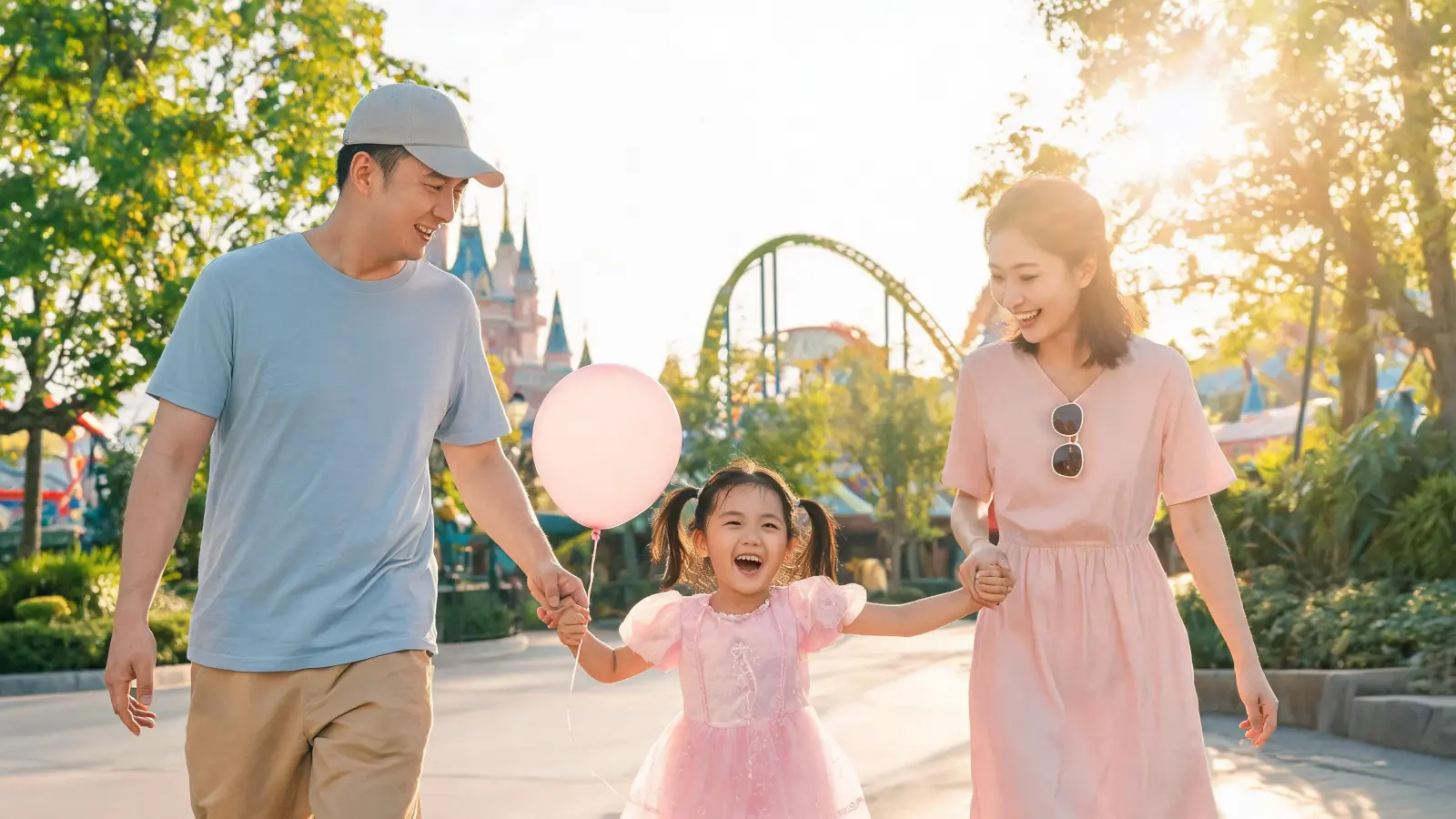
Bottom Line: Traveling Abroad with Kids? Hire a Local Chinese-Speaking Driver-Guide — Miles Less Hassle Than Squeezing onto the Subway
Anyone who has traveled with kids knows the drill: naptime, bathroom emergencies, two steps and they’re exhausted, plus a stroller full of formula, diapers, and sippy cups. For overseas family trips, hiring a local Chinese-speaking driver-guide (with a vehicle and child seats) isn’t about “luxury” — it’s about turning “uncontrollable” into “manageable.” Point-to-point transfers between attractions: kids nap in the car, luggage stays in the trunk, sudden diarrhea and you’re at the nearest convenience store or drugstore in no time, rainy days and you switch to indoor venues. Below, using Japan and Singapore — the two best routes for Chinese families — we’ll break down how to plan your itinerary, what a day of private car service costs, how to arrange child safety seats, and how to avoid fake “family tours” that are really shopping trips.
Why Family Trips Are Perfect for a Local Driver-Guide (Instead of Going It Alone)
- Child seats are nearly impossible with independent travel. Japanese law requires children under 6 to use a safety seat in cars. Taxis are exempt, but for long-distance or intercity travel, lugging your own seat around is unrealistic. A reliable driver-guide can have the right seat for your child’s age ready in advance.
- Lots of luggage, heavy strollers. A family of three heading to Disneyland or Universal Studios brings strollers, thermoses, a change of clothes, and snacks galore. Hauling that up and down subway stairs can exhaust any adult. With a private car, luggage stays onboard throughout.
- Pace follows the child, not a timetable. If your child naps, has a meltdown, or wants to play longer, a private car can wait or adapt. Trains can’t.
- Someone has your back in emergencies. Child has a fever, needs a bathroom, loses something, or can’t communicate at a clinic? Your local Chinese-speaking driver-guide can directly help you navigate to the nearest hospital or pharmacy.
- No subway crowds, no studying complex transfers. Tokyo and Osaka’s rail systems are intimidating enough for first-timers, let alone with kids. What you save isn’t money — it’s your patience and your child’s good mood.
How to String Together Japan Family Routes: Tokyo, Kansai, and Hakone Have Different Strategies
Tokyo Route (Best for ages 2+; Disney better for 3+)
A classic three-day combo: Tokyo Disneyland/DisneySea for a full day (DisneySea has more thrilling rides, better for older kids and adults; Disneyland is more toddler-friendly) → teamLab Borderless or Planets (digital art museum at Toyosu or Azabudai — interactive lights that kids love, half a day is enough; book the morning slot to avoid crowds) → Ueno Zoo + Ueno Park (see the pandas, cheap tickets, half a day, plus nearby museums). Add an extra day for Hakone for a family-friendly hot spring (many ryokan offer private family baths so you don’t have to worry about kids in public nude baths), plus Lake Ashi and Owakudani. Tokyo to Hakone is about 1.5–2 hours by car — perfect for a private hire.
Kansai Route (USJ for ages 3+; Osaka Aquarium for all ages)
Universal Studios Japan (USJ) for a full day (Super Nintendo World and Minion Park are fun for younger kids; some roller coasters have height restrictions — check carefully) → Osaka Aquarium Kaiyukan (huge whale shark tank, indoor, all ages, great for rainy days, half a day) → optionally add Nara Park to feed deer (about 1 hour drive; kids usually love it, but watch out — deer can snatch food, especially near toddlers). On USJ days, strongly consider buying Express Passes, otherwise waiting two hours in line with kids can be disastrous.
Route Suggestion
Spend 3–4 days each in Tokyo and Kansai separately, and transfer between them via Shinkansen (driver-guide can drop you at and pick you up from stations, saving the hassle of managing big luggage). Don’t try to do both Tokyo and Kansai in one sweep — the more cities you cross with kids, the more exhausting it gets.
How to String Together Singapore Family Routes: Small City, Dense Attractions — 2–4 Days Is Just Right
Singapore is small, bilingual, safe, and extremely kid-friendly — an ideal “first stop” for overseas family trips.
- One day on Sentosa Island: Universal Studios Singapore (USS) + S.E.A. Aquarium. USS is smaller than Japan’s USJ, suitable for 3+ for half to a full day; S.E.A. Aquarium is one of Asia’s largest, indoor, all ages, and great for rainy days. The island also has a water park and cable car.
- One day at Singapore Zoo + Night Safari. The daytime zoo has an open design and a children’s water play area — highly recommended for all ages; Night Safari offers tram rides to see nocturnal animals, suggested for ages 4+ (toddlers afraid of the dark or prone to falling asleep may not enjoy it). Both parks are adjacent, so you can combine them in one day.
- Half a day at Gardens by the Bay. Supertrees, Flower Dome, Cloud Forest — evening light show (Garden Rhapsody). Indoor conservatories are air-conditioned, perfect for an afternoon break from the heat, all ages welcome.
Singapore has short distances within the city, but the weather is hot and humid with frequent afternoon thunder showers. A private car that takes you point-to-point keeps kids from too much sun and lets you hop in when it rains — the difference in comfort is huge.
Japan / Singapore Family Day Trip Routes × Suitable Ages × Highlights Comparison Table
| Destination | One-Day Itinerary | Suitable Ages | Key Highlights / Notes |
|---|---|---|---|
| Tokyo | Tokyo Disneyland/DisneySea (full day) | Disneyland 3+, DisneySea 6+/older kids | Disneyland is more toddler-friendly; DisneySea has more thrilling rides for adults/older kids |
| Tokyo | teamLab (half day) + Ueno Zoo (half day) | Ages 2+ | Interactive digital art + see pandas; book teamLab morning slot |
| Hakone | Family hot spring + Lake Ashi / Owakudani (full day) | All ages (choose private family bath) | Private bath avoids public nude bathing awkwardness; about 1.5–2h drive from Tokyo |
| Osaka | Universal Studios Japan USJ (full day) | Ages 3+ (some rides have height restrictions) | Nintendo/Minnie area suitable for younger kids; definitely buy Express Pass |
| Osaka | Kaiyukan Aquarium (half day) + Nara deer feeding (half day) | All ages | Whale shark tank — indoor, rain-friendly; watch toddlers around deer that grab food |
| Singapore | Sentosa: USS + S.E.A. Aquarium (full day) | USS 3+, Aquarium all ages | USS is compact and easy; Aquarium indoor, all ages, rain-friendly |
| Singapore | Zoo + Night Safari (full day) | Daytime all ages, Night Safari 4+ | Daytime has water play area; Night Safari tram ride for nocturnal animals |
| Singapore | Gardens by the Bay (half day) | All ages | Supertree light show; conservatories cool for afternoon heat relief |
Approximate Daily Private Car Cost (RMB, Including Chinese-Speaking Driver-Guide)
The following are typical market ranges — just for reference. Actual costs vary by vehicle type (5-seat/7-seat/MPV), duration (usually 8–10 hours), whether it’s intercity, and whether tolls/parking are included:
- Japan (Tokyo/Osaka city one-day private car): Approx. RMB 1,200–2,200/day (5–7 seat with Chinese driver-guide); intercity (e.g. Tokyo↔Hakone round trip) or MPV will be higher.
- Singapore (city one-day private car): Approx. RMB 900–1,600/day (5–7 seat with Chinese driver-guide); includes waiting time for Sentosa, Night Safari, etc.
- Child safety seats: Most reliable driver-guides can provide them free or for a small additional fee (about a few dozen RMB/day), but you must clearly state “how many seats and for what age” when you order/get a quote — don’t assume they’ll have them, and don’t find out they don’t when you get in the car.
For the same route, quotes from different driver-guides can differ by 30%–50%, depending on the vehicle, whether they offer ticket booking, and whether tour commentary is included. Getting multiple quotes and comparing them is more important than just going for the lowest price.
Safety & Health: Don’t Skimp on These When Traveling Abroad with Kids
- Child safety seats are non-negotiable, not a bonus. Japan requires children under 6 to use a safety seat by law; Singapore also requires restraint devices based on body size. If the car doesn’t have an appropriate seat, don’t get in. Confirm the seat model / suitable age range in writing when you book.
- Bring your own common medications and allergy info. Pack fever medicine (age-appropriate dosage form), oral rehydration salts, band-aids, mosquito repellent, motion sickness patches, and any allergy meds your child uses. If your child has food/drug allergies, write the allergens in both Chinese and English on a card to carry. Overseas children’s medication dosages differ from China’s, and it may not be easy to find suitable alternatives on the spot.
- Medical care and insurance. Be sure to buy travel insurance that covers overseas medical expenses + emergency assistance (including minors). Save the 24-hour hotline of your insurance company. Check the location of children’s hospitals or clinics with Chinese/English service at your destination in advance.
- Prevent wandering off. Give your child a wristband or write your name and local phone number (use your accommodation address or a mobile number, not your home address) on the inside of their clothing. Agree on a plan: if separated, “stay put and find a uniformed staff member.” At crowded theme parks, take a photo of what your child is wearing that day when you enter.
Pacing with Kids: Don’t Overpack Each Day — Hard-Earned Advice from Seasoned Parents
- One “main event” per day is enough. Big attractions like Disney, Universal Studios, or zoos each deserve a full day. Trying to squeeze two major sights in one day will exhaust both child and parent.
- Build in a nap break. Younger children need to go back to the hotel or nap in the car at midday to stay in good shape for the afternoon. The beauty of a private car is that you can slow down when your child sleeps.
- Plan meals in advance. Kids can’t wait when they’re hungry — carry snacks. Look for restaurants with kids’ menus and high chairs, or ask your driver-guide to recommend family-friendly places that aren’t too crowded.
- Leave buffer time. Keep 1–2 hours of flexibility each day for traffic jams, sudden meltdowns, or wanting to stay longer. Scheduling every minute is the most common mistake in family travel.
Common Pitfalls: Three You’re Most Likely to Encounter
- No child safety seat in the car. Many low-cost private cars don’t come with one by default, or the driver says “it’s just a short ride, no problem.” Confirm when booking; if the car arrives without a seat, you have the right to refuse.
- Overpacked itinerary. It looks like a great deal on paper, but in reality your child cries the whole time, parents are always rushing, and you don’t even have time to take photos. With kids, it’s better to cut one attraction.
- “Family tour” that’s actually a shopping tour. Suspect low-priced “family day trips” often drag you to duty-free shops, jewelry stores, and health product stores, spending only a short time at the actual attractions. Look for quotes that specify “private car/private guide only” and “no designated shopping stops.” Before you book, directly ask: “Will we visit any shopping stores during the trip?”
Frequently Asked Questions (FAQ)
What age is suitable for a family trip abroad?
There’s no hard rule, but children aged 2–3 and up tend to get more out of it (they can walk and play, and remember a little). For infants under 1, it’s mostly hard work for parents and the child won’t remember much. Whatever the age, a private car with seats and a slow pace are key.
Do I really need a child safety seat?
Yes. Japan (under 6) and Singapore (based on body size) both legally require them, and more importantly, they are essential for safety. When booking, be sure to specify the child’s age and the number of seats needed. If the car arrives without a seat, you can refuse to ride.
What about rainy or scorching days?
That’s exactly the value of a private car plus advance planning. In Japan, have indoor options ready like Kaiyukan Aquarium or teamLab; in Singapore, have S.E.A. Aquarium or Gardens by the Bay conservatories as backup. When it rains, switch to indoor venues and enjoy point-to-point transfers without getting wet or squeezing onto the subway. In Singapore, afternoon thunder showers are common — plan indoor activities for the afternoon.
Does the daily private car fee include tickets and tolls?
It varies by provider. Usually it includes the driver, vehicle, and fuel. Tickets, parking, tolls, and the driver-guide’s meals — you should ask whether each is included. Many driver-guides can help you book tickets (e.g. Disney, USJ, USS) but the ticket cost is separate. When you get a quote, ask them to list clearly what’s included and what’s not.
If there’s a language barrier, how much help can the driver-guide provide?
A local Chinese-speaking driver-guide can navigate, communicate with merchants, recommend child-friendly restaurants, and take you to a pharmacy or clinic in an emergency. However, they are not a tour guide/commentator unless you specifically request a guided service. When booking, clarify whether you want “pure transfer” or “transfer plus commentary and accompanying play.”
How to avoid shopping tours or unreliable driver-guides?
Check credentials and genuine reviews. Ask directly: “Is this a pure private car service? Will the itinerary include shopping stops? Are child seats provided?” And compare quotes from multiple providers. Prices far below the market range often rely on shopping commissions to make up the difference — be cautious.
For This Trip, Let Local Driver-Guides with Kids Experience Compete for Your Booking
The biggest fear in family travel is “information asymmetry” — you don’t know which local driver-guide has actually taken care of children, whether there really is a car seat, or whether the quote hides shopping traps. Post a family private-car request on Dijiexia (provide your dates, number of people, child’s age, how many safety seats needed, and which theme parks you want to visit). Local Chinese-speaking driver-guides who have experience with kids will actively bid with quotes. You can compare their credentials, real reviews, and detailed pricing side by side, pick the one that feels right, and pay a deposit to lock it in. Save the hassle of squeezing onto subways, hauling luggage, and studying transfer maps — and use that energy for your child’s smiles. Post your request on Dijiexia now, and let a local driver-guide who has parented before help you plan this family trip right.