
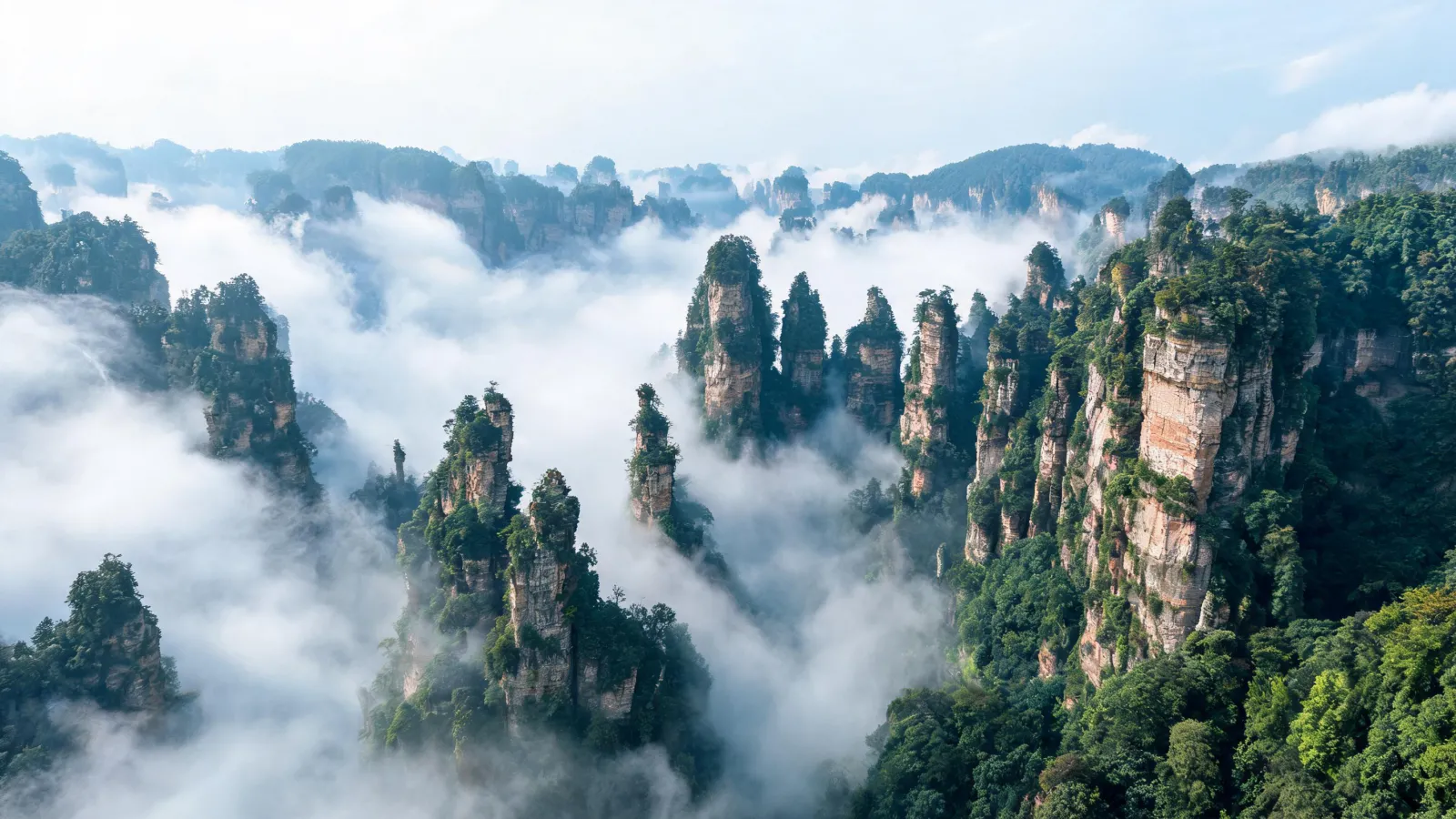
One-sentence conclusion: Zhangjiajie is not a single urban attraction, but a "collection of scenic spots" scattered among the mountains, including the Forest Park, Tianmen Mountain, Grand Canyon, and Baofeng Lake. These spots are tens of kilometers apart with complex transfers by car. The walking trails within the scenic areas alone stretch over a hundred kilometers. First-time visitors can easily get lost or waste time on unnecessary routes. Unless you have plenty of time, good physical strength, and don't mind the hassle, it is strongly recommended to hire a reliable local guide or charter a car—especially since low-price tour groups and shopping scams are rampant here. For foreign tourists, language barriers and ticket purchasing difficulties add extra challenges.
How many days to spend
The core challenge of Zhangjiajie is that "scenic spots are scattered and each takes a long time." Zhangjiajie National Forest Park itself requires a full day or even two, Tianmen Mountain half a day to a full day, Grand Canyon Glass Bridge half a day, and a round trip to Fenghuang Ancient Town takes another full day. Here is a practical reference:
- 3 days: 1.5 days for Forest Park + half day for Tianmen Mountain + half day for Grand Canyon Glass Bridge. A tight schedule, suitable for only the highlights.
- 4 days: Based on 3 days, extend Forest Park to two full days (cover Yuanjiajie, Tianzi Mountain, Golden Whip Stream, and Yangjiajie). More relaxed.
- 5 days or more: Add Fenghuang Ancient Town (about 4 hours by car) for an overnight stay, or add Baofeng Lake and Huanglong Cave.
It is recommended to reserve at least 3 full days. Anything less will either leave you exhausted or force you to skip the most classic parts of the Forest Park.
Must-visit attractions
Zhangjiajie National Forest Park (Wulingyuan core, four-day ticket)
This is the soul of Zhangjiajie and the filming location for the floating mountains in *Avatar*. The main ticket is approximately 220 RMB/person, valid for multiple days (usually 4 days, including internal eco-buses). Enter with your ID card or passport (real-name registration). The park is huge, connected by free eco-buses between areas. It is recommended to plan by zones:
- Yuanjiajie (Avatar Hallelujah Mountain, Heaven's Pillar, First Bridge of the World): The most photogenic stone pillar cluster. Take the Bailong Elevator up and down (about 72 RMB/person, separate ticket, often long queues).
- Tianzi Mountain (Imperial Writing Brush Peak, Fairy Scattering Flowers): Overlook the sea of peaks. You can take the cable car up and down (about 72 RMB).
- Golden Whip Stream: A approximately 7.5 km valley trail, flat and easy to walk, cool in summer. Golden Whip Rock and Pishan Jiufu are along this route.
- Yangjiajie (Wulong Village, Tianbo Mansion): Relatively fewer people, excellent views. The climbing sections require physical effort.
Tip: Transportation within the park is a combination of "bus + cable car + walking." The ways to ascend and descend differ between areas. If you plan the route incorrectly, you may have to backtrack repeatedly. This is where a guide is most useful.
Tianmen Mountain and the Glass Skywalk
Tianmen Mountain is located on the south side of Zhangjiajie city. It has a completely separate ticketing system from the Forest Park and is about 35 km away—do not confuse them. The ticket (including round-trip cable car) is about 258–278 RMB/person, with time-slot reservations. Highlights include the world's longest alpine passenger cable car (nearly 7.5 km), the glass skywalk on a thousand-meter cliff (Guigu Skywalk/Glass Bridge section), and Tianmen Cave. Not recommended for those with a fear of heights—wear shoe covers on the glass section.
99 Bends Mountain Road and Tianmen Cave
The "Heavenly Road" with 99 bends is the signature of Tianmen Mountain—a winding mountain road layered on cliffs. Riding the scenic area bus along the bends is an experience in itself. At the end is Tianmen Cave, a natural through-hole in the mountain. To reach it, you need to climb the "Stairway to Heaven" (approximately 999 steps) or take the mountain escalator. The view from the top is stunning, but the stairs are steep—take it easy.
Zhangjiajie Grand Canyon Glass Bridge
The Grand Canyon is to the east of Wulingyuan. Its most famous feature is the glass bridge spanning the canyon (about 300 m high, 430 m long). You need to reserve a separate time-slot ticket. The glass bridge ticket is about 138 RMB, and the combined ticket including the canyon tour is about 259 RMB (check on-site). A must-visit for the brave—the bridge has capacity limits and queues during peak season.
Baofeng Lake
A high-altitude lake near Wulingyuan. The ticket is about 96 RMB/person. Take a boat around the lake to see reflections of peaks and listen to Tujia folk songs. It's a relaxing pace, ideal for a day off between intense hikes.
Suburban Fenghuang Ancient Town
Strictly speaking, Fenghuang belongs to Xiangxi Prefecture, not Zhangjiajie city, but it is about 4 hours away by car, and almost everyone makes a side trip. The ancient town itself is free to enter (some small attractions have a combined ticket of about 148 RMB). Highlights include the night scenery along the Tuojiang River, stilted houses, and Miao silver. Best to stay overnight at the end of your itinerary before returning.
Classic itineraries (3 / 4 days)
3-day highlights itinerary:
- D1: Arrive, enter Forest Park—Golden Whip Stream + Bailong Elevator up to Yuanjiajie (Avatar floating mountains). Stay inside the park (Yangjiajie/Dingxiangrong area).
- D2: Tianzi Mountain for peak views—descend to Grand Canyon Glass Bridge. Return to Wulingyuan/city in the evening.
- D3: Tianmen Mountain (cable car + glass skywalk + 99 bends + Tianmen Cave) half day. Depart in the afternoon.
4-day relaxed itinerary: Expand D1-D2 into two days. D1: Golden Whip Stream + Yuanjiajie. D2: Tianzi Mountain + Yangjiajie. Stay two nights inside the park to avoid repeated entry/exit. D3: Grand Canyon + Baofeng Lake. D4: Tianmen Mountain. Add one more day if you want to visit Fenghuang.
Transportation, tickets, and costs
Getting there: Take the high-speed train to "Zhangjiajie West Station," or fly to "Zhangjiajie Hehua Airport." Both are not far from the city. Then transfer to Wulingyuan (about 40 km, 1 hour drive). Most out-of-town visitors transit through Changsha—the high-speed train from Changsha to Zhangjiajie takes about 1.5 hours.
Transport within scenic areas: The Forest Park is connected by free eco-buses. However, the Bailong Elevator, cable cars, and escalators for ascending/descending generally require separate tickets (tens of RMB per segment). This is a major hidden cost beyond the main ticket. Between scenic areas (Forest Park ↔ Tianmen Mountain ↔ Grand Canyon), there are tens of kilometers with no direct public buses—you need to take a taxi, charter a car, or join a tour.
Multi-day tickets: The Forest Park main ticket is usually valid for 4 days, allowing multiple entries. Good planning can save money and effort. Tianmen Mountain and Grand Canyon Glass Bridge have separate time-slot tickets—be sure to reserve in advance through official channels. During peak season, you may not get tickets on the day.
Cost range (per person, based on official/on-site prices): Forest Park 220 + Tianmen Mountain about 258 + Grand Canyon about 138–259. Add cable cars and elevators, and the main tickets alone total around 700 RMB. Including accommodation, meals, and transport, a 3–4 day independent trip averages about 2000–3500 RMB per person. The currency used nationwide is the Chinese Yuan (RMB).
Food
Xiangxi cuisine is heavy on spice and smoky flavors. Sanxia Guo (Three-Course Pot) is Zhangjiajie's signature—cured pork, intestines, pork belly, and other ingredients dry-fried together then braised. It's salty, spicy, and goes well with rice—almost every local restaurant serves it. Xiangxi cured pork has a strong smoked flavor and tastes great stir-fried with garlic sprouts or dried bamboo shoots. Other dishes include rock moss chicken, Tujia cured meat combo, kudzu root noodles, rice tofu, and she fan. In the city, local restaurants like Hu Shifu or Wulongshan Tiaofeiji have good reputations; food inside the scenic areas tends to be overpriced and average—it's better to eat in the city or Wulingyuan town.
Practical tips and pitfalls
- The scenic area is huge and easy to get lost: The Forest Park has multiple entrances, forks, and transfer points. The distance perception on maps is weak. Be sure to save offline maps and remember the bus stop names in the mountaintop area where you stay. Don't still be on the mountain after dark.
- Low-price tours / illegal guides / shopping scams are rampant: "A few hundred yuan to visit all of Zhangjiajie" or "free pickup" usually leads you to jade, silver, or local product shops, or forces you into paid add-ons. Be especially cautious of people who approach you at the train station, airport, or on the street offering to "help book tickets or hotels." Use legitimate channels. When hiring a guide or chartering a car, make it clear in writing: "no shopping stops, no detours."
- Queues for cable cars and elevators: Bailong Elevator and Tianmen Mountain cable car often have queues of 1–2 hours during peak season. Avoid crowds by taking the first trip in the morning or near closing time, or choose walking/escalator alternatives.
- Rain and fog viewing: The mountain area is frequently cloudy and foggy, which can obscure the peaks. Check the weather before your trip and keep 1–2 flexible days. However, fog can create a "sea of clouds" effect that is also beautiful—don't fixate on just one day.
- Multi-day ticket validity: Don't lose your Forest Park ticket. It allows multiple entries within 4 days, so you can make good use of it for cross-day itineraries.
Additional tips for foreign tourists:
- Visa / Visa-free entry: China offers unilateral visa-free policies and transit visa-free entry (up to 240 hours at some ports) for certain nationalities. However, eligible countries, ports, and stay durations are subject to change. Always consult the latest official announcements from Chinese authorities and Chinese embassies/consulates abroad. Do not rely on old guides.
- Passport real-name registration: You need your passport for real-name authentication when buying scenic area tickets, checking into hotels, and taking high-speed trains. Make sure the name on the ticket matches your passport exactly. Choose hotels that can accommodate foreign guests and register foreign passports.
- Mobile payment: Payments in Zhangjiajie are almost entirely via QR code scanning. The international versions of Alipay and WeChat already support binding overseas bank cards (Visa, Mastercard, etc.) for direct payments. Install the apps, bind your card, and complete real-name verification before entering the country. Also carry some cash as backup.
- Language and signage: English signage in the scenic areas is limited, and mobile signals can be intermittent in the mountains. Download offline maps and translation apps in advance. Screenshot your hotel address and key station names. If there is a language barrier, a local bilingual guide/driver who speaks English can greatly reduce friction with transfers, ticket purchases, and asking for directions.
Should you hire a local guide or charter a car?
Zhangjiajie is probably one of the destinations in China where it is most "worth it" to hire a guide or charter a car. The reasons are practical:
Domestic tourists: The scenic areas are scattered, and transfers and ways up/down the mountain are complex. It's hard for first-timers to get the route right on their own. Plus, illegal guides and low-price shopping tours are everywhere. Figuring things out yourself wastes time and easily leads to pitfalls. A reliable local guide who knows the routes can help you plan a logical itinerary, avoid cable car queues, and dodge shopping scams. Chartering a car solves the tens-of-kilometers transfers between Forest Park, Tianmen Mountain, and Grand Canyon, saving you from repeated taxi hailing and waiting.
Foreign tourists: Language barriers, limited English signage, and the need for passport real-name registration for tickets and hotels can easily get you stuck. A local guide or bilingual driver who speaks English can handle communication, time-slot ticket booking, and complex transfers, allowing you to enjoy the scenery worry-free.
You can post your needs on Dijiexia: specify dates, number of people, desired attractions, and language requirements. Local guides/drivers will bid on your request with quotes. You compare qualifications, reviews, and prices before confirming—much more reliable than random street approaches or low-price tours. Before finalizing, information is anonymized for transparent comparison. The specific itinerary and price are determined by the local service provider based on your needs.
FAQ
Q: Are Zhangjiajie National Forest Park and Tianmen Mountain the same place?
A: No. They belong to different areas, about 35 km apart, with completely independent ticketing. The Forest Park is the core peak forest where the floating mountains of *Avatar* are located (multi-day ticket). Tianmen Mountain is famous for its high-altitude cable car, glass skywalk, 99 bends, and Tianmen Cave (separate time-slot ticket including cable car). Most visitors arrange for both.
Q: Can someone with a fear of heights visit Zhangjiajie? Is the glass skywalk or glass bridge mandatory?
A: Yes, you can still visit. The main attractions of the Forest Park are the peak forests themselves, viewed from observation platforms and trails—fine even for those with acrophobia. The Bailong Elevator and cable cars have enclosed cabins. The glass skywalk and Grand Canyon glass bridge are optional. Skipping them does not affect the main itinerary, and alternative non-glass routes are available.
Q: What should a foreign tourist visiting Zhangjiajie for the first time prepare in advance?
A: Three things: ① Confirm your visa/visa-free policy (based on the latest official Chinese announcements) and carry your passport. ② Before entering China, install the international versions of Alipay or WeChat, bind an overseas bank card, and complete real-name verification. Keep some cash on hand. ③ Download offline maps and translation apps. Book a hotel that can register foreign passports. If you are worried about language and transfers, arrange a bilingual local guide or driver in advance through Dijiexia to save a lot of trouble.