
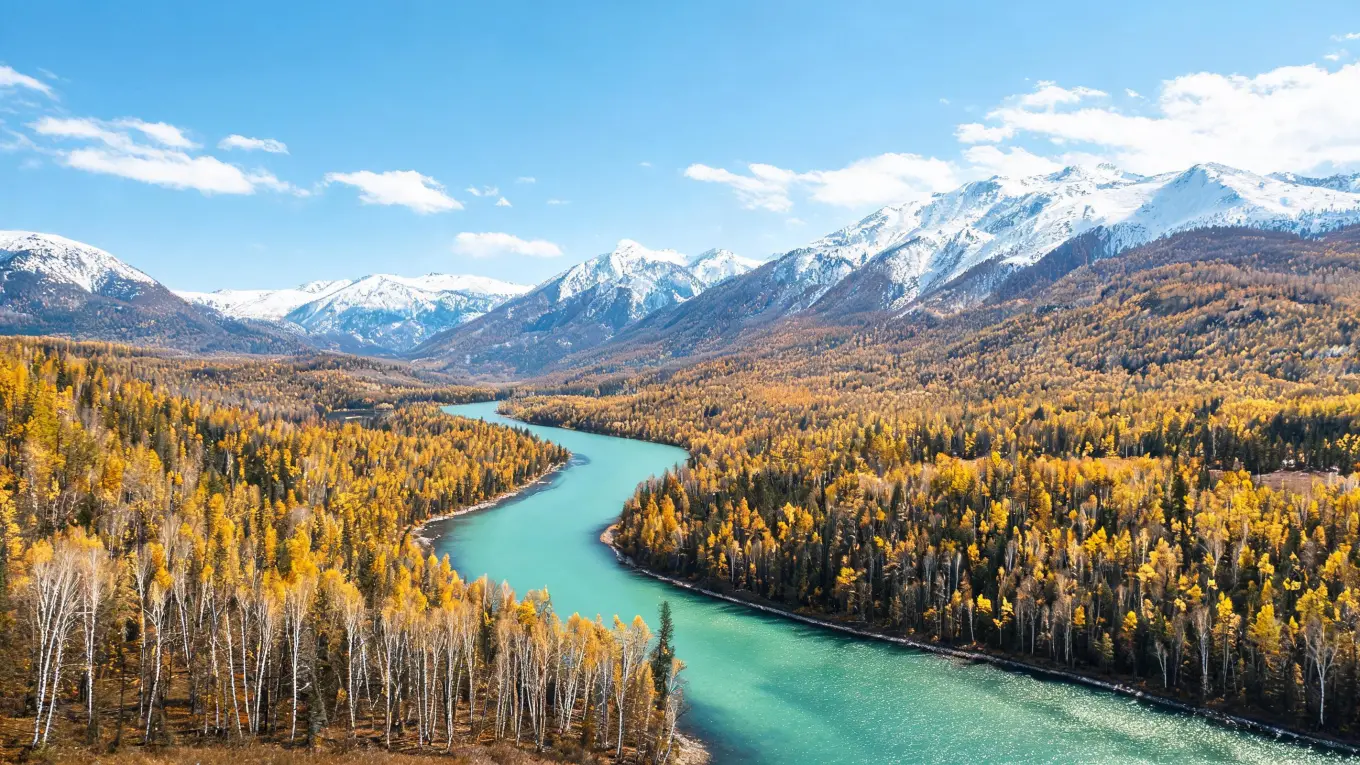
One-sentence conclusion: Xinjiang is China's largest provincial-level administrative region (about 1.66 million square kilometers, equivalent to three Frances), with attractions often hundreds of kilometers apart—from Tianchi to Kanas, or Yili to Kashgar, distances typically start at 700–800 kilometers. Public transport schedules are sparse and road conditions highly seasonal. It is strongly recommended to use Urumqi as a gateway, hire a private car with an experienced driver-guide, or join a reliable local tour. Split your trip into Northern Xinjiang / Southern Xinjiang lines for in-depth exploration, and never try to cram the entire region into one itinerary.
How many days to play, and Northern or Southern Xinjiang?
Xinjiang is too vast to fully experience in one trip. The pragmatic approach is to choose a route by "region" rather than cobble together "attractions":
- Northern Xinjiang loop (grasslands, lakes, forests): Urumqi—Tianshan Tianchi—Turpan—Kanas/Hemu—Yili (Nalati, Sayram Lake). The densest natural scenery, 7–10 days is most comfortable. First-timers to Xinjiang overwhelmingly choose Northern Xinjiang.
- Southern Xinjiang cultural route (old cities, Gobi, desert poplars): Kashgar Old City, Pamir Plateau, Kuqa, around the Taklamakan. Richer ethnic culture and historical depth, 6–8 days, more suitable for return visitors or travelers with a preference for culture/photography.
- Only 3–5 days: It's best to stick to Urumqi's suburbs—Tianshan Tianchi + Turpan day trip or two-day trip, plus Xinjiang Museum and International Grand Bazaar. Don't force trips to Kanas or Kashgar (one-way flight/drive takes most of a day).
For foreign travelers with limited time, a short Northern Xinjiang loop is also recommended first: scenic spots already have relatively mature tourism services, signage and reception are more friendly, making it less hassle than venturing deep into Southern Xinjiang border areas.
Must-see attractions (by region, with ticket prices and time)
Prices below are common ranges; always refer to official announcements and on-site actuals. Peak season, combo tickets, shuttle buses, and cable cars often incur additional charges.
Urumqi (gateway city, 1–2 days)
- International Grand Bazaar: Xinjiang's most representative market landmark, concentrated with dried fruits, handicrafts, and ethnic cuisine. Free entry (observation tower ticket about ¥50 extra), half a day for browsing and eating.
- Hongshan Park: City green lung with panoramic views, free, 1–2 hours.
- Xinjiang Uyghur Autonomous Region Museum: Must-visit for the "Loulan Beauty" mummy and Silk Road artifacts, free (reservation required, entry with ID). Allow 2–3 hours. Foreign visitors must bring passport for registration.
Tianshan Tianchi (Urumqi suburb, 1 day)
An alpine lake about 110 km from the city center, ~2 hours drive, with snow-capped peaks reflected and Bogda Peak as backdrop. Peak-season tickets about ¥190–215 including shuttle bus; cable car/boat extra. Full tour takes about one day, a very cost-effective day trip from Urumqi.
Turpan (southeast of Urumqi, 1–2 days)
- Flaming Mountains: Prototype for "Journey to the West," summer surface temperatures can exceed 70°C. Tickets about ¥40–50, 1 hour for photos.
- Grape Valley: Oasis and drying-house scenery, tickets about ¥60–75, 1–2 hours.
- Karez: Ancient underground irrigation system, key to understanding Turpan's oasis civilization, tickets about ¥40, about 1 hour.
- Jiaohe Ruins: World Heritage site, well-preserved earthen city ruins, tickets about ¥70. Visit early morning or evening to avoid heat, 1.5 hours.
Northern Xinjiang Kanas and Hemu (2–3 days)
Xinjiang's most beautiful forest lakes and Tuva villages, autumn foliage is cover-worthy. Kanas tickets about ¥160 + shuttle bus about ¥120; Hemu tickets about ¥60 + shuttle bus. Located deep in Altay, about 700 km from Urumqi; allow ample travel time, do not attempt a day trip.
Yili (Nalati Grassland / Sayram Lake / Lavender, 2–3 days)
Nalati Sky Grassland tickets about ¥95 + shuttle bus ¥60–80; Sayram Lake tickets about ¥70 + shuttle bus. Huocheng lavender only blooms mid-to-late June; off-season means no flowers, so don't plan solely for the sea of flowers. The Yili River Valley is called "the Jiangnan beyond the Great Wall"; self-driving or private car offers scenic views along the way.
Southern Xinjiang Kashgar Old City (2 days)
A living thousand-year-old city with earthen alleys, copperware shops, naan pits, and song and dance; free entry. There's an opening ceremony every morning. Plan two days to wander slowly for the richest Western Region culture. Note: The Pamir Plateau (Taxkorgan/Red Flag Pass) and some border counties around Kashgar are border management areas. Chinese citizens need a border permit in advance; foreign visitors have separate procedures. Always consult the latest official and local public security/border regulations before departure.
Classic routes (Northern Xinjiang loop 7–8 days / Southern Xinjiang)
Northern Xinjiang classic loop (7–8 days, most popular):
- D1 Urumqi: Museum + International Grand Bazaar, adjust to altitude and time difference.
- D2 Tianshan Tianchi day trip.
- D3 Turpan: Flaming Mountains—Grape Valley—Karez—Jiaohe Ruins.
- D4–5 Transfer to Altay, Kanas + Hemu (morning mist, villages).
- D6–7 Transfer to Yili: Sayram Lake, Nalati Grassland, Guozigou Bridge.
- D8 Return to Urumqi, buffer/departure.
Southern Xinjiang cultural route (6–8 days): Fly from Urumqi to Kashgar—Kashgar Old City (2 days)—Pamir/White Sand Lake (requires border permit, subject to policy)—Kuqa Tianshan Grand Canyon—return. Southern Xinjiang has longer distances and fewer supply points, relies more on private car and experienced guides; independent bus travel is impractical.
Transportation, tickets, and costs
- Getting in/out of Xinjiang: Urumqi Diwopu International Airport is the absolute gateway, with direct flights from major cities across China; Kanas, Kashgar, Yili, Korla, etc., have regional airports. For long-distance transfers, "fly one leg to save a day."
- Intercity distances are huge: Tianchi is nearby, but Kanas, Yili, and Kashgar are often 600–800 km apart. Private car/self-driving is the mainstream travel mode in Northern Xinjiang; bus services are infrequent, and carpooling is inflexible.
- Currency and payment: The renminbi is used nationwide. Domestic travelers can use WeChat/Alipay seamlessly; foreign visitors can use Alipay/WeChat International bound to overseas bank cards (Visa/Mastercard, etc.) for small payments, and carry some cash for remote areas.
- Time and daily rhythm: Xinjiang officially uses Beijing time, but due to its westernmost location in China, actual daily rhythm is about 2 hours later—dawn around 9–10 AM, sunset after 10 PM, restaurants and scenic spots open later. Don't schedule your itinerary by mainland time.
- Cost reference: Mid-range per-person cost for an 8-day Northern Xinjiang private car trip (including vehicle, fuel, accommodation, tickets, meals) is about ¥4,000–7,000, varying greatly by peak season and vehicle type. Quoted prices prevail.
Food
Xinjiang is a place where "you won't want to diet":
- Big plate chicken (Dapanji): Chicken and potato chunks with wide noodles, generous portions; Shawan version is most famous.
- Grilled meat (lamb skewers/whole roast lamb): Charcoal-grilled, aromatic with cumin and chili, the soul of night markets.
- Hand-grabbed rice (Polo): Lamb, carrots, onions simmered with rice, oily and fragrant.
- Naan (bread): Xinjiang people's "staple faith"; freshly baked naan with milk tea is most authentic.
Also try samsa, pulling noodles, milk beer, and various dried fruits—Turpan grapes, Korla fragrant pears, and Hotan dates are worth tasting on site.
Practical tips and pitfalls
- Don't be greedy: The region is huge; it's better to explore one area thoroughly than to cram both Northern and Southern Xinjiang into one week—most time will be spent on the road.
- Choose the right season: June–September is the golden period for grasslands and lakes; September–October for Kanas/Hemu autumn colors and Southern Xinjiang desert poplars; lavender only in June; snow-capped mountains are year-round. Most grassland routes close in winter.
- Large temperature difference: Day-night difference can exceed 15°C; bring a jacket even in midsummer, strong UV requires sunscreen.
- Border permits: Required for Pamir, Red Flag Pass, and some border counties; foreign visitors have different procedures. Always follow the latest official regulations.
- Beware of low-price tours: Watch out for "ultra-cheap day trips" hiding forced shopping (jade, health products); confirm if it's a pure tour and whether there are shopping stops.
- Foreign visitors special notes: China has unilateral visa-free and transit visa-free policies for some countries, with scope and duration subject to change. Always refer to the latest official announcements from China; carry passport for ticket purchase and check-in; scenic spots and trains require passport; some border areas have additional procedures for foreigners—confirm with authorities or local tour operator in advance; limited English signage at scenic spots, so download offline maps and translation apps in advance.
Should you hire a local guide or private car?
For domestic travelers: Xinjiang's huge distances, complex road conditions and seasonality, and sparse reliable public transport make hiring a local car with an experienced driver-guide almost a necessity—they know which roads are under repair, the best time for Sayram Lake lighting, which night market is reliable, and how to reroute in bad weather. It's more hassle-free and often more cost-effective than piecing together your own arrangement.
For foreign travelers: Language barriers, difficulties with mobile payments and English signage make a local English-speaking guide or bilingual driver-guide invaluable, solving communication, ticketing, border permits, and long-distance transfers in one go—a completely different experience.
Both types of readers can post their Xinjiang itinerary needs (dates, number of people, desired areas, budget) on Dijiexia, allowing local guides/drivers to proactively bid. Compare qualifications, reviews, and prices before committing; information is anonymized before transaction for mutual peace of mind.
Frequently Asked Questions (FAQ)
Q: First time in Xinjiang, how many days and which route?
A: For first-timers, strongly recommend the Northern Xinjiang loop 7–10 days (Tianchi—Turpan—Kanas—Yili), the densest natural scenery; if you only have 3–5 days, stick to Urumqi's suburbs (Tianchi + Turpan) and avoid cross-region trips.
Q: What's the best season to go?
A: For grasslands and lakes, choose June–September; for Kanas autumn colors and Southern Xinjiang desert poplars, choose September–October; lavender only blooms mid-to-late June; most grassland routes close in winter—only suitable for snow and city tours.
Q: What should foreign visitors pay attention to in Xinjiang?
A: Check the latest official announcements from China regarding visa-free/transit visa-free eligibility and duration; carry your passport at all times for ticket purchase and check-in; some border areas have additional procedures for foreigners—confirm with authorities or local tour operator before departure; recommend binding Alipay/WeChat International and carrying some cash, plus downloading offline maps.