
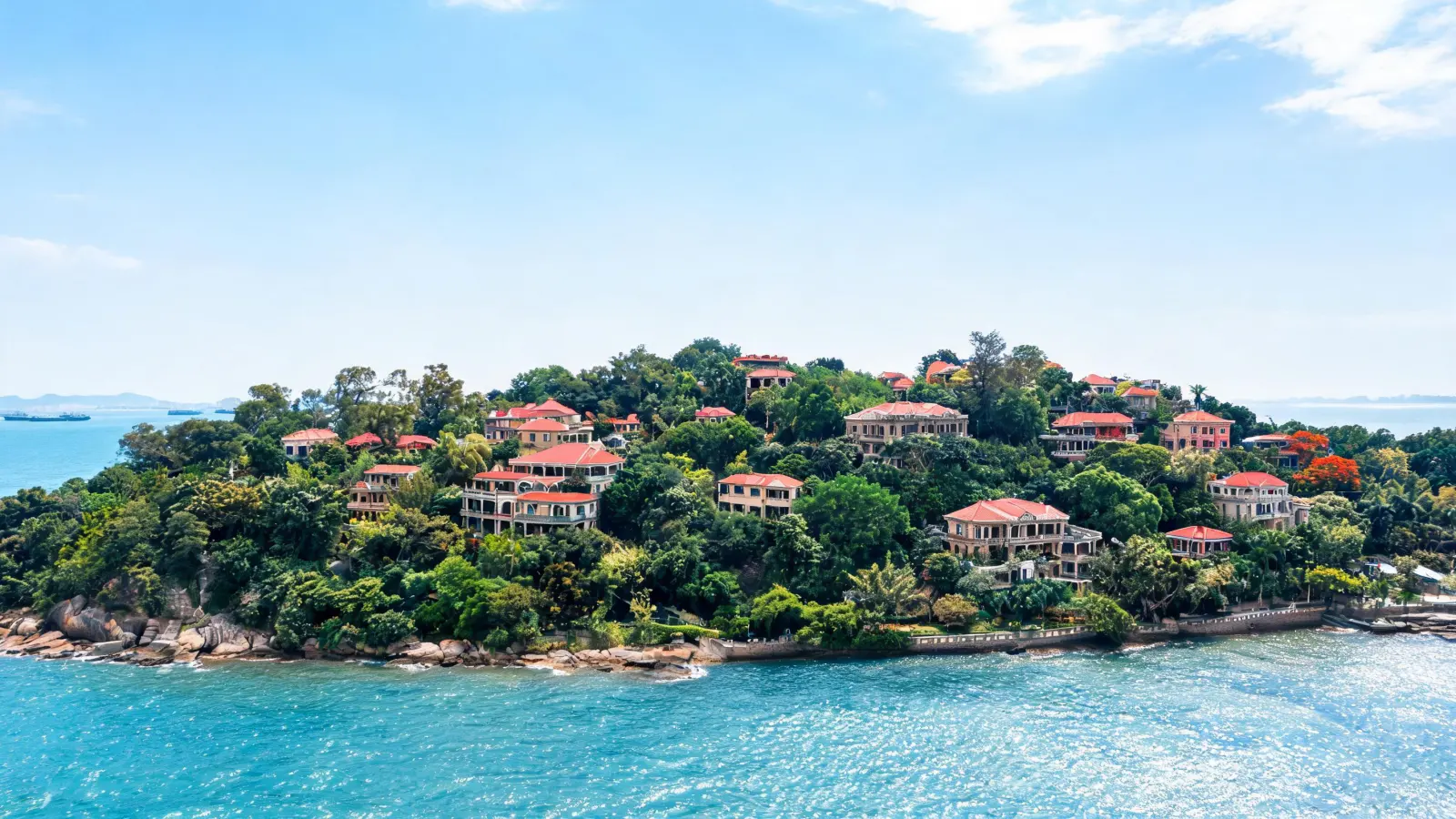
One-sentence summary: Xiamen's highlights are concentrated along the coastal belt of Gulangyu Island, Huandao Road, Xiamen University and Nanputuo Temple – 2 to 3 days is enough to thoroughly explore the core area; if you want to visit the Fujian Tulou in Yongding/Nanjing, adding one day for a round-trip car hire makes for a more relaxed itinerary. Gulangyu ferry tickets must be booked in advance with real-name registration on the official platform – this is the most common pitfall and the thing that needs to be sorted out well ahead of time on the entire trip.
How many days to spend in Xiamen
Xiamen is a "small but refined" island city with a high density of attractions that are close to each other. However, popular spots like Gulangyu Island and Xiamen University require queuing or reservations, and if your pace isn't well planned, you can easily get stuck in transit. Here's a practical day-by-day suggestion:
- 2 days: Only the core of the main island. Day 1 on Gulangyu, Day 2 along Huandao Road + Xiamen University/Nanputuo + Zengcuo'an. The pace is tight but you won't miss the essentials. Suitable for weekends or stopovers.
- 3 days: On top of the 2-day plan, gives you breathing room to add slow-browsing spots like Zhongshan Road's old town, Shapowei, Baicheng Beach, and the Eighth Market (Bashi), letting you better appreciate Xiamen's dual character of "local life + art". This is the most comfortable duration for most people.
- 4 days or more: Set aside one full day to visit the Fujian Tulou in Yongding or Nanjing (one-way drive 2.5 to 3.5 hours), or arrange a coastal cycling trip + a sea excursion, slowing the pace down completely.
Xiamen is not big, but "rushing" will destroy its charm. The city's appeal lies precisely in idling by the sea, wandering alleys aimlessly, and diving into any noodle shop at random – more days don't necessarily mean better; the key is not to pack every day full. For inbound foreign tourists, as purchasing tickets, asking directions, and ordering food all take more time than for domestic tourists, it's recommended to build in extra buffer on top of the above suggestions, and rather see one fewer spot than rush.
Must-see attractions
Gulangyu Island (ferry tickets require advance real-name reservation)
Gulangyu Island is the soul of Xiamen, a UNESCO World Heritage site. Motor vehicles are prohibited on the island, and its unique character comes from century-old international architecture, old villas, and the sound of pianos. Key reminder: The ferry to the island must be purchased in advance with real-name registration on the official platform "Xiamen Ferry Co., Ltd." – make sure to choose a route departing from the Cruise Center Xiagu Pier or Dongdu Cruise Center. During peak season, tickets often sell out days in advance, and arriving at the terminal without a ticket leaves you empty-handed. Daytime tourists crossing from the main island all depart from the Cruise Center Xiagu Pier (about 20 minutes by ferry); only Xiamen local residents can use the Lundu Pier (Sanqiutian/Neicuoa). Ordinary adult tickets range from about 35 to 50 RMB, with different prices for evening returns – refer to the official platform for real-time ticket prices.
Must-sees on the island: Sunlight Rock (the highest point on Gulangyu, offering panoramic views, ticket around 50 RMB); Shuzhuang Garden and Piano Museum (a private garden that "hides the sea within", the Piano Museum displays over a hundred antique pianos, ticket around 30 RMB). Together with wandering the alleys and Longtou Road commercial street, plan for half a day to a full day. All ticket prices are subject to on-site or official announcements.
Huandao Road: Cycling and beaches
Huandao Road runs along the coast, with open sea views and rocky beaches on one side, and wooden boardwalks and bike lanes on the other – it's the best stretch in Xiamen for clearing your mind. You can rent a bicycle and ride from Xiamen University's Baicheng all the way to Zengcuo'an, Huangcuo, passing by the "One Country, Two Systems" slogan rock, Yefengzhai, and Music Square. The beaches are open to the public for free, ideal for watching the sunrise and playing in the waves. This area requires no admission fee; the main expense is bike rental, charged by the hour or by trip, subject to on-site rates.
Xiamen University (reservation required) and Nanputuo Temple
Xiamen University is often called one of the most beautiful campuses in China, with Furong Lake, Shangchang Field, and Lover's Valley on campus. Since it is a teaching institution, non-affiliated visitors must make a reservation in advance through official channels (policies during holidays and school breaks may change, and spots are limited – be sure to check the latest regulations before your trip). Adjacent to the university is Nanputuo Temple, a famous temple in southern Fujian built against Wulao Peak. Admission is free (if you wish to offer incense, free incense is provided according to regulations); its vegetarian pastries are well known, and climbing Wulao Peak offers a distant view. The two can be visited together in half a day.
Zengcuo'an and Shapowei
Zengcuo'an is known as "China's most artistic fishing village", but today it is a dense neighbourhood of snacks and guesthouses – lively and commercialized. It's good for an evening visit to eat street food and soak up the atmosphere, but don't expect too much. Shapowei is Xiamen's old typhoon shelter, preserving the look of a fishing harbor. Now it gathers cafés, indie shops, and art spaces – artsy and quiet, more worth exploring than Zengcuo'an, and a favorite haunt of local young people in recent years.
Zhongshan Road old town and the Eighth Market (Bashi)
Zhongshan Road is Xiamen's classic arcaded commercial street, with colonial-style colonnade architecture that exudes a southern charm, especially beautiful under night lights. Turn into the side alleys (Jukou Street, Dayuan Road, the Eighth Market "Bashi") to find the real local Xiamen – seafood, traditional snacks, and the daily life of residents. More than a scenic spot, this old town is best explored on foot.
Outskirts: Yongding/Nanjing Fujian Tulou
If time permits, the Fujian Tulou are the most worthwhile day trip from Xiamen. A UNESCO World Heritage site, these circular rammed-earth buildings nestle into the mountains with a unique grandeur. The most visited areas are Yongding (Hongkeng, Gaobei tulou clusters – e.g., Chengqi Lou) and Nanjing (Tianluokeng's "Four Dishes and One Soup", Yunshuiyao ancient town), with a one-way drive of 2.5 to 3.5 hours. The tulou sites are scattered and public transport is inconvenient, so for a day trip, private car hire or ride-sharing is strongly recommended; otherwise, transfers can eat up the whole day. Admission to each tulou area ranges from about 90 to 100 RMB, subject to official rates.
Classic itineraries (2/3 days)
2-day highlights version:
- Day 1 Gulangyu Island: Morning ferry from Cruise Center Xiagu Pier → Sunlight Rock for panoramic views → Shuzhuang Garden + Piano Museum → Longtou Road lunch and alley stroll → return to main island in the evening.
- Day 2 Coastal route: Morning at Nanputuo Temple + Xiamen University (reservation) → Baicheng Beach → cycle along Huandao Road to Huangcuo → evening at Zengcuo'an for snacks.
3-day comfortable version: Add Day 3 Old town slow tour to the above – morning at Zhongshan Road + Bashi for traditional breakfast treats, afternoon at Shapowei for coffee and small shops, or take a boat trip / revisit spots you didn't fully explore in the first two days. If you swap Day 3 for the Tulou, you need to depart early in the morning for a round trip; private car hire is recommended.
Transport, tickets and costs
Getting from the airport: Xiamen Gaoqi International Airport is very close to the city. A taxi to the main island core takes about 20 to 40 minutes; you can also take the airport express bus or connect via metro. It's one of those rare Chinese cities where the airport is "surprisingly close".
City transport: Xiamen has multiple metro lines covering the airport, train stations, and major urban areas – the most hassle-free option. There is also the distinctive BRT (Bus Rapid Transit) system (elevated dedicated lanes, similar to a light rail experience). Buses and metro accept transport cards and mobile QR codes. For short trips, ride-hailing apps are also convenient.
Gulangyu ferry tickets and piers: Reiterated – tourists board from the Cruise Center Xiagu Pier (or Dongdu Cruise Center), and tickets must be purchased in advance with real-name registration on the official platform. Do not fall for "quick boarding" or "chartered boat" offers around the piers.
Payment and currency: Renminbi (RMB) is the local currency. Most places accept WeChat Pay/Alipay QR codes; cash is still usable but less common. Inbound foreign tourists can link overseas bank cards (Visa/Mastercard, etc.) to the international versions of Alipay or WeChat Pay for QR payments – it's advisable to set this up before arrival. Also carry a small amount of cash for street stalls or emergencies.
Cost range (per person, for reference only, actual prices may vary): Gulangyu ferry about 35 to 50 RMB, Sunlight Rock about 50 RMB, Shuzhuang Garden about 30 RMB, Tulou admission about 90 to 100 RMB; accommodation and dining vary widely by budget. All ticket prices are subject to official platforms or on-site announcements.
Xiamen cuisine
Xiamen belongs to southern Fujian, with a preference for fresh and slightly sweet flavors, and abundant seafood – a city worth visiting just for the food. A few must-tries:
- Shacha noodles (satay noodles): Xiamen's signature snack. A broth made from peanuts, dried shrimp, etc., served with noodles and customizable toppings (duck blood, tofu puffs, oysters, tripe, etc.). Savory, slightly sweet, and one bowl gives you the true taste of Xiamen.
- Oyster omelette (oh-ah-jian): Fresh oysters coated in sweet potato starch and pan-fried – crispy outside, tender inside, topped with sauce. A classic southern Fujian dish.
- Ginger duck (姜母鸭): Old ginger and duck slow-braised together – rich aroma, warming and nourishing, especially popular in autumn and winter. A famous dish from the southern Fujian region.
- Others: Tufo冻 (jelly made from a sea worm), misua soup, peanut soup, zongzi (glutinous rice dumplings), and various traditional snacks. The best authentic versions are hidden in the Eighth Market (Bashi) and old town alleys.
A reminder for foreign tourists: The direct translation of southern Fujian snack names is often hard to understand. It's a good idea to take photos of what you want to eat or save the Chinese names, then point at the pictures when ordering – the most reliable method.
Practical tips and pitfalls
- Gulangyu ferry tickets – only official and book well in advance: This is Xiamen's number one trap. Book with real-name registration on the official platform, and choose the Cruise Center Xiagu Pier (tourist route). Sanqiutian and other piers are mainly for local residents. Do not buy so-called "internal tickets" or "chartered boat tickets" from vendors near the piers.
- Beware of "one-day tours" and photo scams on the island: In Gulangyu and Zengcuo'an, you may encounter touts offering "low-price one-day tours", street photography sessions, or forced-consumption portrait packages. Prices and quality are often unreliable. Choose carefully and always confirm the total price and inclusions upfront.
- Peak season crowds – book early: During holidays, Gulangyu ferry tickets and Xiamen University reservation slots are extremely tight. It's recommended to book ferry tickets, Xiamen University reservations, and Tulou car hire several days before departure.
- For remote Tulou, prioritize car hire: Public transport to Yongding/Nanjing Tulou involves complicated transfers. For a day trip, private car hire or a formal ride-share gives the best use of time.
- Policies and documents for foreign tourists: China offers unilateral visa-free entry for some countries and transit visa-free at many ports (with specified stay durations and applicable ports). For specific countries, stay lengths, and the latest policies, be sure to check officially with Chinese authorities (National Immigration Administration/embassies/consulates) before your trip. Purchasing ferry tickets, train tickets, and hotel check-in generally require real-name registration using your passport – carry your original passport at all times.
- Prepare payment and navigation in advance: Link your overseas card to the Alipay/WeChat Pay international version ahead of time. English signs are limited in some places. It's advisable to download offline maps and a translation app, and save key addresses in Chinese (screenshots) to show taxi drivers or when asking for directions.
Should you hire a local guide or private driver?
It depends on your itinerary and needs – it's not mandatory, but in two situations it can save you significant hassle:
For domestic independent travelers: The main island core has convenient public transport and is entirely doable on your own. The scenario where a private driver really makes sense is the suburban Tulou – long distance, scattered sites, time-consuming transfers. Having a car for a round trip lets you spend your time sightseeing rather than waiting for transport, offering good value, especially when split among a group.
For inbound foreign tourists: Language barriers in buying tickets, asking directions, ordering food, and handling unexpected communication are often the biggest friction points during the trip. A local guide or bilingual driver who speaks English can help you arrange Gulangyu ferry reservations, Xiamen University reservations, food ordering translation, and itinerary coordination, making the experience much smoother and safer.
Regardless of traveler type, you can post your requirements (dates, group size, places you want to go, whether English communication is needed) on 地接侠 (Dijiexia), where local guides/drivers can bid and quote. You compare qualifications, reviews, and prices before deciding – more transparent than going directly to a travel agency and more likely to find the right match. Confirm after communication, with sensitive information masked before a deal is made.
FAQ
Q: How do I buy Gulangyu ferry tickets? Can I buy them at the pier on the same day?
A: You must buy tickets in advance with real-name registration on the official platform. During peak season, tickets often sell out days ahead; arriving at the pier without a ticket usually means you cannot get a tourist ticket. Tourists all depart from the Cruise Center Xiagu Pier. Use only official channels – don't buy "internal tickets" from vendors near the pier.
Q: Is 2 days enough for Xiamen?
A: 2 days are enough to cover the main island core (Gulangyu + Huandao Road + Xiamen University/Nanputuo), but the pace is tight. If you want to add slow exploring of the old town or a Tulou trip, 3 days or more are recommended. The key isn't the number of days, but not overpacking each day.
Q: Will it be difficult for foreign tourists to travel independently in Xiamen? (Language, payment, documents)
A: The metro, QR code payments, and convenience at major attractions are quite good, but English signage is limited and popular spots require reservations in Chinese, so independent travel will take more time than for domestic tourists. It's recommended to link your overseas card to the Alipay/WeChat Pay international version in advance, have offline maps and a translation app ready, and keep your passport on you (needed for ticket purchases and hotel check-in). Visa-free/transit visa-free policies follow official Chinese announcements. If you want complete peace of mind, you can find an English-speaking local guide or bilingual driver on 地接侠.