
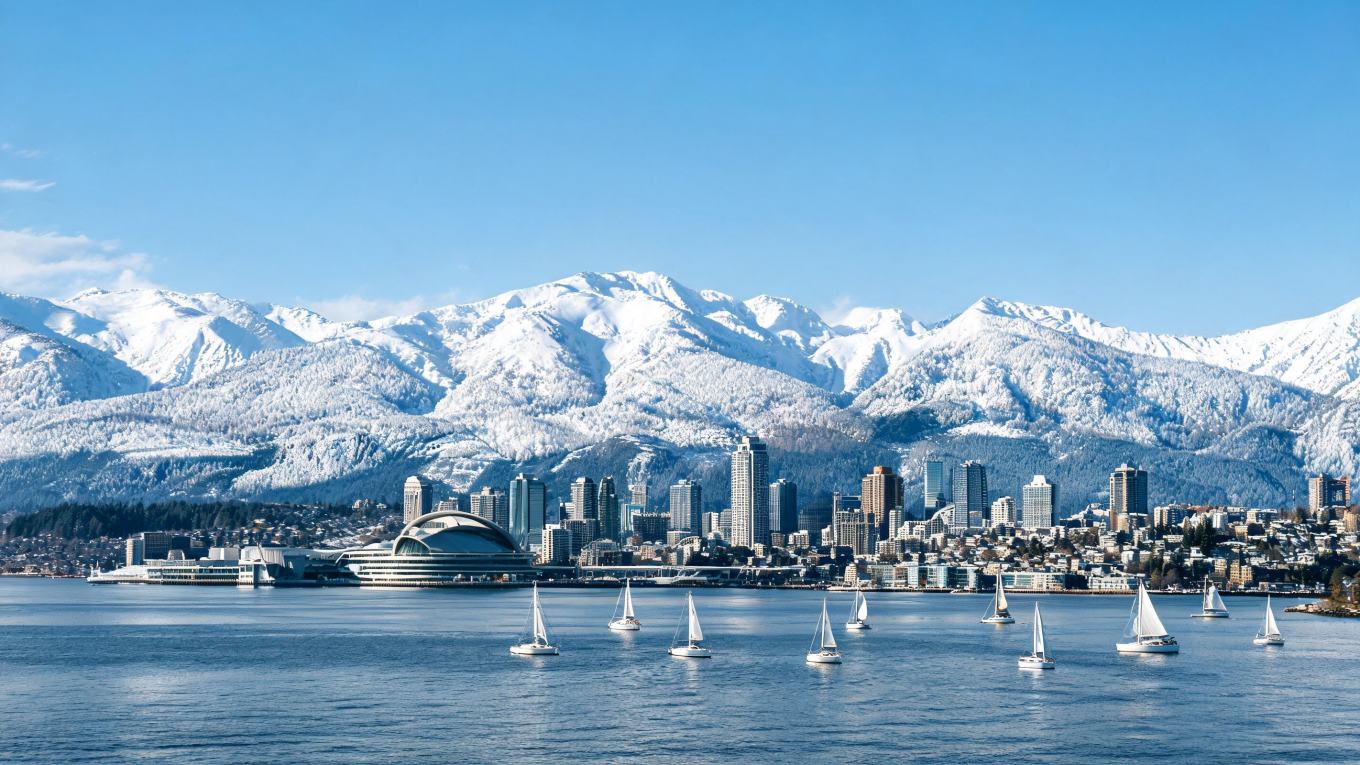
Bottom line: Vancouver's downtown core attractions are compact and can be explored thoroughly in 3 days, but if you want to include Whistler and Victoria's Butchart Gardens, plan for 4 to 5 days. The best season is June to September, with less rain, long daylight hours, perfect for seawall cycling and nearby excursions.
How many days & when to go
Vancouver is a destination with a "small downtown, big outskirts." The downtown peninsula packs Stanley Park, Gastown, Canada Place, and Coal Harbour into a 30-minute walking radius, so if you stick to the city, 2 days is enough for the main spots. What takes time is the surrounding areas: Whistler is about a 2-hour drive one way, and Victoria requires a 1.5-hour ferry plus a transfer to Butchart Gardens—each takes a full day. So my advice is straightforward: 2–3 days if only visiting downtown; 4 days if adding either Whistler or Victoria; and 5 days if you want both outer areas and are traveling with seniors or kids without rushing.
Seasonally, Vancouver enjoys a temperate oceanic climate, characterized by "mild but very wet winters." From November to March is the rainy season, often with two weeks of continuous drizzle, dampening the experience of outdoor attractions like the Stanley Park Seawall and Capilano Suspension Bridge. The true golden window is late June to September: long daylight (until 9 PM around the summer solstice), little rain, and the seawall cycling and whale-watching tours fully open. July and August are peak season—book hotels and ferries in advance; for fewer crowds and less rain, September offers the best value. Winter is possible too, but the purpose is usually skiing in Whistler, which is a whole different game.
Must-see attractions
Stanley Park & Seawall
This is Vancouver's soul—a city forest park three times larger than New York's Central Park, surrounded by sea on three sides. The classic way to experience it is to cycle or walk the 9-kilometer seawall that circles the park, offering ocean views, snow-capped mountains, totem poles, a lighthouse, and the Lions Gate Bridge. Renting a bike takes one to two hours to complete the loop easily—this is the half-day activity you shouldn't miss in Vancouver. The Totem Poles are a free window into Indigenous culture. Note that the seawall is one-way for cyclists; don't go against the flow.
Gastown & the Steam Clock
Gastown is Vancouver's birthplace, with cobblestone streets, Victorian architecture, and vintage iron lampposts—perfect for photos, coffee, and browsing boutiques. The landmark is the Steam Clock on the corner, which emits steam every 15 minutes and whistles on the hour. It's crowded but worth waiting for. This area is close to downtown and can be visited together with Canada Place. A heads-up: the area southeast of Gastown (around Hastings Street) has higher crime rates—don't wander that way after dark.
Granville Island
Despite its name, it's actually a peninsula arts district on the south shore of False Creek. The core is the Public Market, packed with fresh seafood, cheese, pastries, and artisan stalls—a must for foodies. There are also artist studios, a brewery, and a kids' playground, perfect for spending half a day with family. From downtown, take a mini ferry (Aquabus / False Creek Ferries) for a short boat ride with skyline views.
Capilano Suspension Bridge Park
Located in the rainforest canyon of North Vancouver, the main bridge spans 70 meters above a canyon and measures 137 meters long—it sways, thrilling and photogenic. Besides the main bridge, there's the Cliffwalk clinging to the cliff and the Treetops Adventure through the canopy. This is a paid attraction with a steep ticket price (around CAD 60–70 for adults, approximately RMB 320–380, subject to official rates). During peak season, a free shuttle runs from downtown, saving you parking hassles.
Grouse Mountain Skyride
Also in North Vancouver, this offers the best panoramic views of Greater Vancouver. Take the Skyride cable car up; summer features a grizzly bear refuge, lumberjack shows, and paragliding, while winter turns into a ski resort. A cable car ticket is about CAD 60+ for adults (around RMB 350, subject to official rates). Adventurous budget travelers hike the famously steep Grouse Grind trail up (then ride down), but it's not recommended for casual visitors—seniors and kids should take the cable car directly. Capilano Suspension Bridge and Grouse Mountain are both in North Vancouver and can be combined in one day.
Canada Place & Coal Harbour
The five white "sails" of Canada Place are Vancouver's most photogenic landmark, housing the cruise ship terminal and convention center. The adjacent Coal Harbour waterfront path is lined with yachts and offers views of seaplane takeoffs and landings—perfect for an evening stroll and sunset, and it connects to the Stanley Park Seawall. There's also a paid attraction, FlyOver Canada, a flight simulator that gives a bird's-eye tour of Canada's landscape (avoid if afraid of heights). This area is free to enter and fits well into early morning or dusk.
Suburb: Whistler
Drive north along Highway 99 (Sea-to-Sky Highway) for about 2 hours—the road itself is scenic with fjords, waterfalls, and snow-capped peaks. Whistler is a top North American resort: summer offers gondola rides, mountain biking, and hiking; winter boasts world-class skiing (host of the 2010 Winter Olympics). The village is a pedestrian-only European-style town with dining and shopping. You can stop at Shannon Falls and the Sea to Sky Gondola along the way. A day trip is tight; an overnight stay is better.
Suburb: Victoria & Butchart Gardens
Victoria, the capital of BC, is on Vancouver Island. Take the BC Ferries from Tsawwassen terminal (1.5-hour crossing) and then drive. The city has a strong British colonial feel; the Parliament Buildings and Fairmont Empress Hotel are worth seeing. The true highlight is Butchart Gardens, a world-class garden created from a former quarry, bursting with flowers in spring and summer, with evening illuminations—a reason many come to Vancouver. A day trip is very tight (3 hours round-trip on the ferry alone); strongly consider an overnight stay with seniors or kids.
Classic itineraries (2/3/4 days including Whistler or Victoria)
2-day downtown only: Day 1: Stanley Park seawall cycling + Coal Harbour + Canada Place + Gastown steam clock; Day 2: Granville Island Public Market + False Creek mini ferry + half-day shopping. Relaxed pace, ideal for layovers or short visits.
3-day downtown + North Vancouver: Same as above for first two days; Day 3 focuses on North Vancouver—Capilano Suspension Bridge in the morning, Grouse Mountain cable car for panoramic views in the afternoon. These two attractions are close together, making for an easy day. This is the recommended "standard 3 days".
4-day with one suburb: Based on 3 days, choose for Day 4: Whistler (Sea-to-Sky highway day trip or overnight) for nature and mountain scenery; or Victoria + Butchart Gardens (ferry day trip) for gardens and British charm. If traveling with seniors/kids or wanting both suburbs, spread them over two days for a comfortable 5-day trip.
Transport, tickets & costs (SkyTrain/Compass Card, airport to city, CAD)
Vancouver's public transit is operated by TransLink, including SkyTrain (3 lines), bus, and SeaBus. The best value is a Compass Card, with fare calculated by zone; UnionPay/Visa contactless (Tap to Pay) also works at gates—a physical card isn't mandatory. The easiest way from Vancouver International Airport (YVR) downtown is the Canada Line SkyTrain, about 25 minutes; a single ticket including the airport surcharge is around CAD 9 (approx. RMB 48, subject to official rates). A taxi costs about CAD 35–45. A DayPass is about CAD 11, good for multiple rides in a day.
Cost estimates (peak season, subject to official/real-time rates): Most downtown waterfront plazas and parks are free; paid attractions like Capilano Bridge, Grouse Mountain, and Butchart Gardens cost CAD 40–70 per adult (approx. RMB 220–380). Downtown 3–4 star hotels in peak season range from CAD 250–400 per night (approx. RMB 1,300–2,100). A full-service restaurant meal costs about CAD 25–45 per person; add 5% GST and 15–18% tip, and the final bill is often 20% above menu prices—factor that into your budget. Current exchange rate: 1 CAD ≈ 5.3 RMB, check real-time rates.
Food & shopping
Vancouver is a multicultural city with international cuisine. Seafood highlights: Pacific oysters, salmon, and Dungeness Crab. Local specialties include the California Roll (originating here), maple products, and Nanaimo Bar. Asian food lovers need not worry—Richmond has the densest concentration of authentic Chinese restaurants in North America, with excellent dim sum, Cantonese, and hotpot, accessible via the Canada Line from downtown. Granville Island Public Market is perfect for one-stop sampling of various fresh-made snacks.
For shopping, Robson Street is the main pedestrian retail strip, and Pacific Centre hosts major brands. For discounts, visit McArthurGlen Designer Outlet (near the airport, SkyTrain-accessible) or Metrotown mall. Local souvenirs include maple syrup, ice wine, Indigenous crafts, and Lululemon (yoga wear brand founded in Vancouver). Note: BC adds approximately 12% sales tax to most goods; prices shown are before tax.
Pitfalls (Canada eTA or visa, rain requires gear, suburbs need car or charter)
First pitfall: entry requirements. Chinese passport holders need a Canadian visitor visa; if you have a valid US visa, you may qualify for the simpler eTA (Electronic Travel Authorization)—but eTA eligibility and requirements change, so check official channels well in advance. Either way, apply early.
Second pitfall: weather. Vancouver rains often and suddenly; locals don't use umbrellas, but visitors should bring one—a waterproof jacket is more practical than an umbrella. Wear non-slip shoes at outdoor sites (seawall, suspension bridge, mountain top) when wet. Summer days are warm but evenings cool; bring a light jacket.
Third pitfall: suburban transportation. Public transit to Whistler, Victoria, and Butchart Gardens is weak with infrequent schedules. Independent travelers either need to drive (familiar with local road rules, left-hand driving, speed limits, and wildlife) or join a day tour / charter. With seniors or kids, or if you don't want to drive long mountain roads, charter/ride-share is often more relaxing. Also note: downtown parking is expensive, and break-ins happen—never leave valuables in the car.
Should you hire a Chinese-speaking guide/charter?
For the 2–3 downtown days, attractions are concentrated, SkyTrain works well, and signs are clear in English; you can explore independently without extra cost. Where a Chinese-speaking guide or charter is truly worthwhile: 1) Suburban trips to Whistler or Victoria/Butchart Gardens—public transit connections are poor and time-consuming; having someone drive saves hassle and allows you to hit small stops like waterfalls and gondolas along the way. 2) Traveling with seniors, kids, or multi-generational groups—lots of luggage, slow pace—customized timing and pick-up/drop-off beats scheduled buses. 3) Wanting in-depth knowledge of Indigenous culture, Sea-to-Sky Highway scenery, or arranging whale-watching tours that require local expertise.
On HeroGuide, you can post your needs (e.g., "Whistler round-trip charter with two elderly persons"), and local Chinese-speaking guides/drivers will bid with quotes. You compare their credentials, reviews, and prices before deciding; contact details and specific address are hidden from bidders until you confirm, ensuring privacy. Compared to finding help on arrival or being locked into expensive tours, this bidding model is usually more transparent and matches your budget and pace.
FAQ
Q: Can I visit Vancouver, Whistler, and Victoria all in one trip? A: Yes, but don't rush. 3 days downtown + 1 day Whistler + 1 day Victoria—5 days is ideal; if you only have 4 days, choose one suburb. Doing both as day trips is very tight, especially Victoria with 3 hours of ferry travel round-trip.
Q: I don't drive—can I still visit the suburbs? A: Yes. You can take BC Ferries + local transit to Victoria, or long-distance buses (like Epic Rides) to Whistler, but schedules are limited and inflexible. The most hassle-free option is a day tour or booking a Chinese-speaking charter through HeroGuide, which follows your pace—especially important with seniors or kids.
Q: When is the best time to go and how many days? A: June to September is best—less rain, long days, and all outdoor activities and whale-watching tours available; September avoids crowds and is more affordable. For days: 2–3 days is enough for just downtown, add one suburb for 4 days, both suburbs for a comfortable 5 days.