
One-sentence summary: The core of a Toronto free-and-easy trip is "2 days in the city + 1 day at Niagara Falls"—the CN Tower, Lake Ontario waterfront, Royal Ontario Museum, and a few markets make up the urban part, while the falls are essentially the suburban highlight that almost everyone visiting Ontario can't skip. The city itself is flat and walkable, has a large Chinese population, and ordering in Chinese at restaurants is easy. The real challenges aren't the attractions but three things: don't forget to apply for the eTA electronic travel authorization for entering Canada, how to arrange the 120-plus-kilometer round trip to the falls, and the serious cold from October to April. Once you get these three sorted, the rest is just taking your time to explore.
How many days do you need
Attractions in downtown Toronto aren't that densely packed. If you just hit the main must-sees, two full days are enough to cover the CN Tower, the waterfront, the ROM, Casa Loma, and a few markets. But if you want to go to Niagara Falls—and most people do—you must set aside a whole day, because the falls are about 130 km southwest, a 1.5 to 2-hour drive each way, so a day trip itself eats up a full day.
So my recommended number of days are:
- 3 days: 2 days in the city + 1 day at the falls. This is a moderate pace, the best value for money, and the length of stay for most people.
- 4 to 5 days: Add a day for the Niagara-on-the-Lake wine region, or spend half a day relaxing at the Toronto Islands and visit another suburban town. This makes the pace much more comfortable.
- Only 2 days: You'll have to make choices. Either skip the falls and just do the city, or only pick the CN Tower + waterfront + one market in the city and give the other day entirely to the falls. I don't recommend trying to cram both into 2 days—you'll end up rushing.
Toronto is a great hub for a trip to eastern Canada: Kingston and the Thousand Islands are two hours east, and further east are Ottawa and Montreal. Many people use it as the starting point for an eastern loop.
Must-see attractions
CN Tower & Ripley's Aquarium
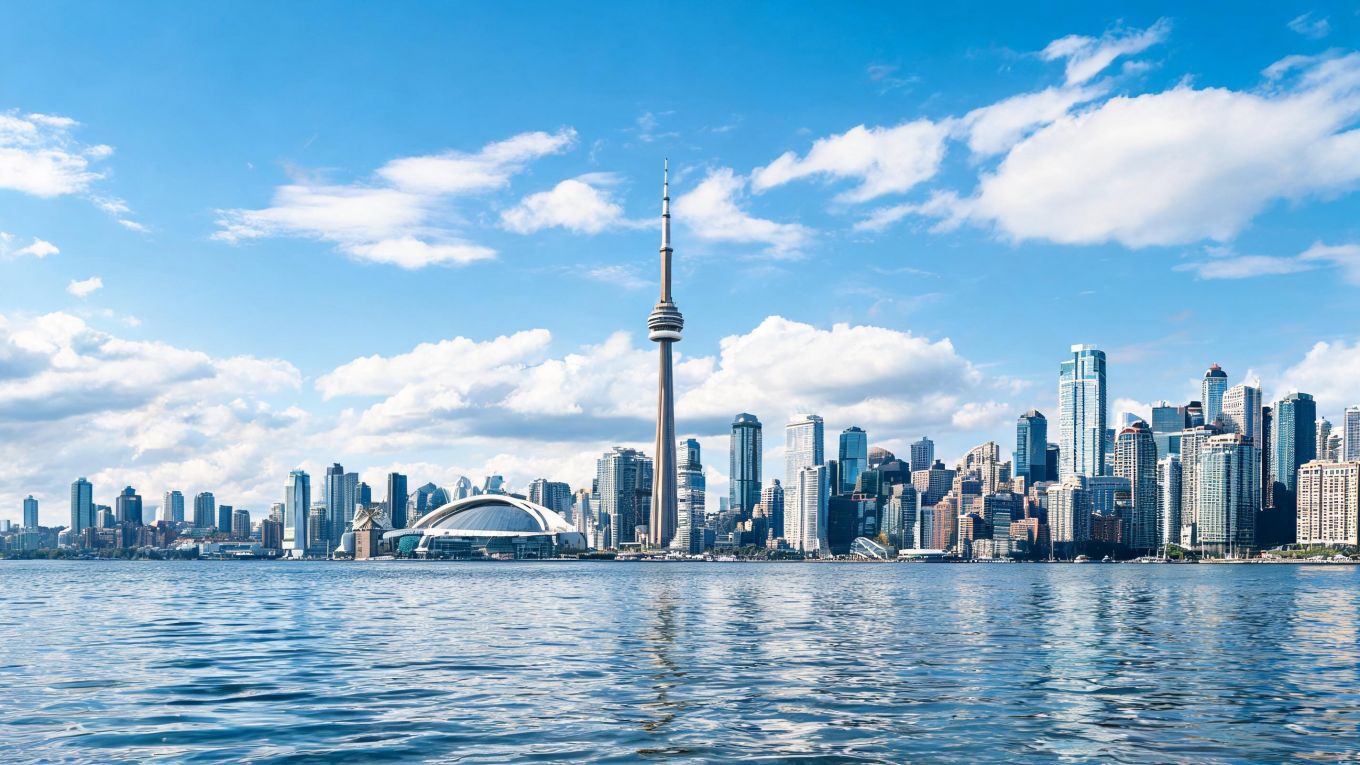
The CN Tower is Toronto's landmark. At 553 meters, it was once the world's tallest freestanding structure for a long time. On a clear day, the glass floor and 360-degree observation deck offer views all the way to Niagara on the other side of the lake. Daredevils can try the EdgeWalk outside the tower (separate ticket required, subject to season and weather). At the base of the tower is Ripley's Aquarium of Canada, which has an underwater tunnel through a shark tank. If you have kids, you can easily spend a morning visiting both, since they're right next to each other. Combo tickets are available. One note: if you dine at the CN Tower's revolving restaurant, it can offset the observation deck admission, but it's pricey—whether it's worth it depends on you.
Casa Loma
Casa Loma is a Gothic Revival mansion built by a financier in the early 20th century, now offering one of the few "castle" experiences in North America. The indoor oak hall, library, underground tunnel to the stables, and gardens (open in summer) are very photogenic and often used as film locations. It's on a hill north of downtown, reachable by subway and a short walk—half a day is enough.
Lake Ontario Waterfront & Toronto Islands
The southern edge of downtown is Lake Ontario. The Harbourfront trail is great for a stroll and watching sailboats. From the waterfront dock, a 15-minute ferry ride takes you to the Toronto Islands—this offers the best view of the Toronto skyline, no question. The islands have beaches, bike paths, and a small amusement park (Centreville, great for kids). In summer, it's a weekend retreat for locals. Check the official Toronto Islands Ferry for schedules and prices. The summer peak season can have long queues, so go early or book tickets online in advance.
Royal Ontario Museum (ROM)
The ROM is one of Canada's largest comprehensive museums, with strong collections of dinosaur fossils, ancient Egypt, and East Asian artifacts. The building itself is a sight—its crystal-like glass structure jutting out from the facade. On rainy or freezing cold days, this is a great place to spend half a day. It's right next to the University of Toronto campus, and the Art Gallery of Ontario (AGO) is nearby, which you can consider combining.
Kensington Market & Chinatown
Kensington Market is one of Toronto's most character-filled neighborhoods: colorful graffiti, indie shops, vintage clothing stores, and international street food crammed into a few narrow streets. It's relaxed and full of local flavor, perfect for wandering. It's right next to downtown's Chinatown (along Spadina Avenue), which has a block of Cantonese tea restaurants, Hong Kong-style roast meats, and Vietnamese pho. It's very welcoming for travelers who have just arrived and want a hot Chinese meal.
St. Lawrence Market
St. Lawrence Market is a historic indoor food market, often rated by media as one of the best in the world. Its signature item is the peameal bacon sandwich—a Toronto specialty—alongside various cheeses, seafood, and baked goods. It's in the old town, and after visiting you can walk to the nearby Distillery District, a pedestrian area converted from Victorian red-brick factory buildings. Its Christmas market in winter is especially atmospheric.
Suburban highlight: Niagara Falls (Must-see)
Niagara Falls is the suburban highlight that almost everyone visiting Toronto can't miss. It actually consists of three waterfalls. On the Canadian side, you get a direct view of the most spectacular Horseshoe Falls, which is much better than the view from the US side—that's why everyone comes from Toronto. The classic experience is to take the Hornblower cruise (the Canadian counterpart to the US's Maid of the Mist) right to the base of the falls—you'll get soaked in mist. It usually operates from late spring to fall, and stops in winter. The evening light show and summer weekend fireworks are worth waiting for. Clifton Hill in the falls town is a commercial street packed with amusement rides and souvenir shops—quite touristy, so decide based on your interest.
Suburban: Niagara-on-the-Lake & Wineries
About 20 minutes north of the falls is Niagara-on-the-Lake—a beautifully preserved Victorian-style town with flower-lined main streets and charming shops, often called one of the prettiest towns in Canada. It's surrounded by Ontario's famous wine region, especially known for icewine, and many wineries offer tastings. If you have enough time and an interest in wineries or small-town charm, combining the falls with this area makes for a much richer day than just seeing the falls alone.
Classic itinerary (2/3 days, including Niagara Falls)
Day 1 Downtown landmarks: Morning: CN Tower + Ripley's Aquarium (right next to each other, tour together). Midday: Stroll along the Harbourfront and admire the skyline. In summer, take the ferry to the Toronto Islands for half a day. Evening: Return to downtown, have dinner at St. Lawrence Market or the Distillery District, and stroll.
Day 2 Culture & neighborhoods: Morning: Royal Ontario Museum (ROM). Afternoon: Visit Casa Loma for the mansion and gardens. Late afternoon: Wander through Kensington Market, then head into Chinatown along Spadina for dinner. This day relies mainly on subway + walking, not too intense.
Day 3 Niagara Falls day: Leave early (self-drive or join a tour/private car, 1.5 to 2 hours one way). First, see Horseshoe Falls head-on. In peak season, take the Hornblower cruise to the foot of the falls. After lunch, depending on your schedule, head north to Niagara-on-the-Lake to explore the main street and do a winery tasting. In the evening, see the falls light show before returning. If you only have 2 days, cut Day 2 and squeeze the ROM or Casa Loma into Day 1, then devote the entire other day to the falls.
Transportation, tickets & costs (in CAD, with RMB reference)
Prices in this article are given as ranges based on public information for 2026. The exchange rate is roughly 1 CAD ≈ 5.2 RMB. Actual prices depend on official rates and current exchange rates.
City transit—TTC and Presto card: Toronto's public transit system is called TTC, which includes subway, streetcar, and bus, covering major attractions. A single adult fare is about 3.3 CAD (about 17 RMB). You can now pay directly by tapping a credit card or phone (contactless), or you can buy a Presto card or use a day pass. The subway network isn't very dense, but downtown attractions are often within walking distance or just one or two streetcar stops.
Airport transfer—UP Express: From Pearson International Airport (YYZ) to Union Station downtown, the fastest and most convenient option is the UP Express train—about 25 minutes direct. An adult single fare is about 12.35 CAD (about 64 RMB). Trains run frequently and are luggage-friendly. I highly recommend taking it into the city immediately upon arrival, rather than jumping into a taxi (a taxi from the airport downtown can cost dozens of CAD). There's also Billy Bishop Toronto City Airport (YTZ, mostly on the islands), which mainly serves domestic and some US/Canada routes.
Main ticket price ranges (adult, approximate): CN Tower observation deck: about 45–60 CAD (234–312 RMB); Ripley's Aquarium: about 45 CAD; ROM: about 26 CAD (about 135 RMB); Casa Loma: about 40 CAD (about 208 RMB); Niagara Hornblower cruise: about 30 CAD. It's often cheaper to buy tickets online or get combo tickets from official websites. Refer to official prices.
Per person cost reference: Excluding international flights, a day in the city (including admission, transit, and normal meals) is roughly 300–500 CAD per person for a comfortable budget. A day trip to Niagara Falls will cost more if you join a tour or hire a private car. In peak season, a mid-range hotel in the city center typically starts at around 200 CAD per night.
Food & shopping
Toronto is famously a diverse immigrant city, with an extremely wide range of food options. For Chinese food, there are many Chinese restaurants in downtown Chinatown and in the northern suburbs of Scarborough and Richmond Hill—Cantonese, Sichuan, hot pot, Hong Kong-style tea restaurants, and Taiwanese—all authentic. If you're missing home flavors, you're well covered. Local specialties worth trying include the peameal bacon sandwich at St. Lawrence Market, Ontario-style poutine (fries + gravy + cheese curds), and Niagara icewine. The Portuguese, Greek, Korean, Indian, and Caribbean communities also have their own neighborhoods and signature restaurants, so exploring by interest is fun.
For shopping, the CF Toronto Eaton Centre in the city center is the top comprehensive mall; Yorkville is the high-end brand district; if you want discounts, you can head to suburban outlets like Toronto Premium Outlets (on the way to the falls, many people stop by). Note that Ontario's HST (Harmonized Sales Tax) of 13% is usually not included in the listed price—it's added at checkout. This is different from what you might be used to in some places, so keep it in mind.
Pitfalls to avoid
Must get eTA or visa for entry: If you hold a Chinese passport, you need to apply for a Canadian visa in advance. If you hold a valid US visa or meet certain conditions, you may be eligible for an eTA (electronic travel authorization) when arriving by air—check the official rules of Immigration, Refugees and Citizenship Canada (IRCC) to confirm which applies to you and get it done before departure. Don't end up at the airport without authorization and be denied boarding. This is the most common area where things can go wrong.
Drive time and season for the falls day trip: The drive from Toronto to the falls is 1.5 to 2 hours each way, so the round trip plus playing takes a full day. Don't underestimate it. The cruise (Hornblower) typically only operates from late spring to fall; in winter you won't experience the boat ride to the foot of the falls, but the frozen falls and light show in winter have their own charm—the key is to check whether the experience you want is available in that season before you go. If driving, note that parking in the falls town is not cheap and summer weekends can be congested.
Winter is really cold: From November to March, temperatures in Toronto are often below freezing, and in January/February the wind chill can drop to -10°C or even lower, especially by the lake. If traveling in winter, bring plenty of warm clothing (down jacket, hat, gloves, non-slip boots). Downtown Toronto has the famous PATH underground city—a large network of underground walkways connecting malls and subway stations. On extremely cold days, you can move around indoors using PATH. Summer is the opposite—July and August are pleasantly warm and comfortable, making it the peak season.
Other: North American restaurants have a tipping culture. For dine-in, it's typical to tip 15% to 20%; be careful when crossing streets and around streetcars; sales tax is added separately as mentioned. Overall, Toronto is safe, but some areas at night still require normal caution.
Should you hire a Chinese-speaking guide/private car?
For downtown Toronto alone, honestly the threshold for independent travel is not high: public transit can get you around, there's a large Chinese population, and ordering food is easy. Young people can definitely manage on their own. The scenarios where it's really worth considering a Chinese-speaking driver/guide or private car are these:
Day trips to Niagara Falls and other suburbs. This is the most typical scenario. The falls, Niagara-on-the-Lake, and wineries are all outside the city. Without a car, you're stuck with a big bus tour (fixed schedule, superficial stops) or renting a car yourself (need an international driver's license, unfamiliar road conditions, finding parking). Hiring a local Chinese-speaking driver/guide for a private day trip lets you set your own pace for the falls + town + wineries, you get commentary along the way, and door-to-door pickup/drop-off makes it much more hassle-free.
Traveling with elderly or children. Elderly people can't walk long distances, kids get impatient with queues and cold weather. Public transit transfers and walking can be exhausting. A private car can drop you right at the attraction entrance, handle luggage and strollers, and is especially friendly in winter.
Short on time, want to see more in a few days. With a car, you're not limited by schedules. For cross-city trips like Toronto + Niagara Falls + Kingston/Thousand Islands, a private car is far more efficient than public transit.
On Dijiexia (a local guide platform), you can post your needs directly (e.g., "Toronto airport pickup + 2 days in the city + one-day private car trip to Niagara Falls, 2 adults, 1 child, and an elderly person"). Local Chinese-speaking guides/drivers will bid and quote. You compare their qualifications, real reviews, and quotes before choosing. Your contact info and address are hidden until you confirm, so it's more reliable than blindly finding strangers in groups. For suburban round trips and family travel, the money you spend often buys you more time and peace of mind.
FAQ
Q: How do I get from Toronto to Niagara Falls, and can I do it in one day?
A: Yes. The distance is about 130 km, 1.5 to 2 hours by car each way. Day trips are very common. Options include joining a one-day bus tour, renting a car and driving yourself, or hiring a Chinese-speaking driver/guide. For families or those who want flexibility to visit the falls + Niagara-on-the-Lake + wineries, a private car is best; budget-conscious travelers can take a public bus/tour. No matter which, set aside an entire day for the falls.
Q: For a Chinese passport holder going to Toronto, how do I handle the visa and eTA?
A: Chinese passport holders generally need to apply for a Canadian visa. If you hold a valid US visa and meet certain conditions, you may be eligible for an eTA (electronic travel authorization) when arriving by air. The rules differ, so be sure to check the official IRCC website and get it done before departure—this is the one step you cannot put off.
Q: What's the best season to visit Toronto? Is winter worth it?
A: May to October has pleasant weather and is the peak sightseeing season, and the falls cruise operates during this period—this is the most recommended time. Winter (roughly November to March) is very cold, often freezing, but you can see the frozen falls, Christmas markets, and light shows, and flights and accommodation are cheaper. As long as you dress warmly and make use of the PATH underground city, winter has its unique charm.