
One-sentence conclusion: Tashkent is not one of those "sights-heavy" influencer cities. Its charm lies in the crystal chandeliers of the metro stations, the mountains of spices in the bazaar, and a plate of oily, fragrant plov. Spend 2 days to get to know the capital, then extend 1–2 days to Samarkand and Bukhara for the "main event" of the Silk Road—this is the most cost-effective itinerary for independent travel in 2026. Language barriers and a cash-based economy are the biggest hurdles; sort these two things out in advance, and your trip will go smoothly.
How Many Days Are Enough
As the capital of Uzbekistan, Tashkent is the largest city in Central Asia, but it was almost entirely "rebuilt" after the 1966 earthquake, so its old town texture is less preserved than in Samarkand or Bukhara. For the city itself, 2 full days is enough: one day for the old town and religious sites (Hazrati Imam Complex + Chorsu Bazaar), and one day for the Soviet-era central axis (Independence Square, Amir Timur Square, metro stations, museums).
But almost no one flies to Central Asia just for Tashkent. A more realistic plan is to treat it as the gateway and transit hub of the Silk Road journey: most people arrive and depart through Tashkent International Airport, spend 2 days in the city, then take the high-speed train south to Samarkand (about 2 hours) and Bukhara (about 3.5–4 hours). The total itinerary usually spans 5–8 days: 2 days in Tashkent + 2 days in Samarkand + 1–2 days in Bukhara is the widely recognized "Three Silk Road Cities" golden combo. If you only have 3–4 days, stick to 2 days in Tashkent + 1–2 days in Samarkand—don't try to do too much.
Must-See Attractions
Hazrati Imam Complex & the World's Oldest Quran
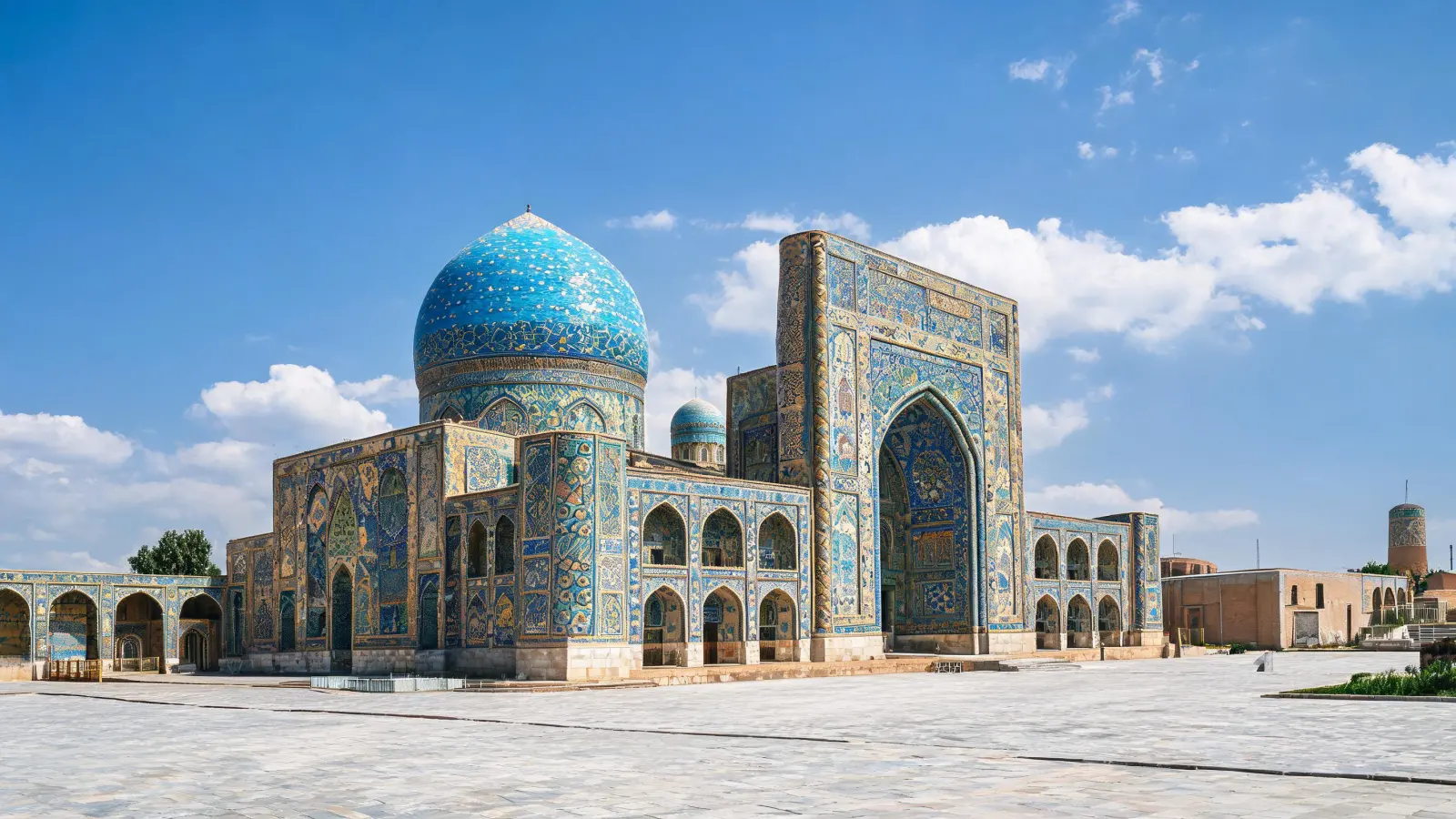
This is the most significant religious and historical site in Tashkent and the essence of the old town. The complex is enclosed by mosques, mausoleums, and madrasas, with turquoise domes and towering minarets that make for great photos in the sunlight. The true treasure is housed in the Muyi Muborak Library—claimed to be the world's oldest surviving Uthmanic Quran (from the 7th century, dated to the time of the third Caliph Uthman), written on deerskin, massive and heavy. No photos allowed when viewing it, and you must keep quiet, but the awe of seeing a manuscript over a thousand years old behind glass is something Tashkent can't offer elsewhere.
Amir Timur Square & Amir Timur Museum
Amir Timur is the national symbol of Uzbekistan. At the center of the square stands his statue on horseback, raising his hand, surrounded by greenery—a common leisure spot for locals. The Amir Timur History Museum nearby is a blue-domed circular building, lavishly decorated inside with chandeliers, murals, weaponry, and manuscripts from the Timurid Empire, well worth a close look to understand why Uzbeks revere Timur so much.
Independence Square (Mustaqillik Maydoni)
This is the state ceremonial square, spacious and solemn, featuring the globe monument, Independence Gate, and the "Crying Mother" statue with an eternal flame commemorating fallen soldiers. It's most pleasant in the evening when the fountains are on and lights are lit, perfect for a relaxing walk. Note that the square and surrounding government buildings are sensitive to photography—don't point your camera at security personnel, guard booths, or military personnel.
Ornate Tashkent Metro Stations
This is the most underrated yet most worthwhile "attraction" in Tashkent. Central Asia's first metro, each station is an independent work of art: Kosmonavtlar (Cosmonauts) Station uses blue tones and astronaut portraits to honor the space age, Pakhtakor (Cotton) Station features vibrant cotton-pattern mosaics, plus crystal chandeliers, marble columns, painted ceilings... Photography was banned here for a long time but has been allowed in recent years. Buy a metro ticket and spend an hour or two "hopping between stations" for a high-value experience.
Chorsu Bazaar & the Old Town
Chorsu is Tashkent's largest and most vibrant traditional market, marked by its huge turquoise dome. Under the dome are meat and dairy sections; around it, mountains of spices, strings of dried apricots, raisins, nuts, fresh naan bread, and freshly baked samsa (baked pastries). It's also the best place to experience local prices, haggle with Uzbeks, and find authentic street food. Keep your belongings secure at the bazaar and stay cautious of overly friendly strangers offering to "guide" you.
Museum of Applied Arts
If you like handicrafts, don't miss this museum. The building itself is a late-19th-century traditional mansion with carved plaster, painted wooden ceilings, and lattice windows as beautiful as artworks. Inside, it displays suzani embroidery, pottery, copperware, carpets, miniatures, and other traditional Uzbek crafts. Quiet and uncrowded, it's a great place to escape the heat.
By the way: Tashkent itself is more of a gateway; the truly stunning Silk Road cities are Samarkand (Registan Square, Bibi-Khanym Mosque) and Bukhara (its entire old town is a UNESCO World Heritage site). If time permits, be sure to take the high-speed train from Tashkent to these places—they are the soul of Uzbekistan.
Classic Itinerary (2/3 Days)
2-Day Highlights (Capital Only):
Day 1 (Old Town Line): Morning: Hazrati Imam Complex + the Quran → walk or take a taxi to Chorsu Bazaar for samsa and browsing the spice section → Afternoon: wander the old town, visit the Museum of Applied Arts → Evening: return to city center.
Day 2 (Central Axis + Metro Line): Morning: Amir Timur Square + Amir Timur Museum → Midday: use the metro for a "station-hopping" tour of Kosmonavtlar, Pakhtakor, and other ornate stations → Afternoon: walk around Independence Square → Evening: wrap up with the fountain lights and buy souvenirs.
3–4 Days (Capital + Samarkand): On top of the 2-day plan, take an early morning high-speed train (Afrosiyob, about 2 hours) to Samarkand on Day 3, visit Registan Square, Bibi-Khanym Mosque, and Shakhi-Zinda necropolis, stay overnight, and return to Tashkent on the evening of Day 4. Strongly recommend extending to Samarkand—it has a completely different vibe from Tashkent and is the highlight of the trip. High-speed train tickets, especially in peak season, are in high demand; book in advance through official channels or with local assistance.
Transport, Tickets, and Costs
City Transport: The metro is the best option—clean, cheap, and also a sightseeing experience in itself. A single ticket costs about ¥1–2 RMB (check on-site). For taxis, use a local ride-hailing app (like Yandex Go) for the safest option, avoiding haggling scams. A typical city ride costs ¥5–15 RMB. If you can't use the app, regular taxis work too, but be sure to agree on the price before getting in.
Currency & Prices: The local currency is the Som (UZS), with very large denominations (often tens of thousands), which can be confusing at first. Overall prices are very friendly for Chinese tourists: a serving of plov costs about ¥10–25 RMB, a proper restaurant meal averages ¥30–60 RMB per person, and bottled water is a few cents to a couple of RMB (all subject to on-site rates). Cash is king—many small shops, bazaars, and taxis only accept Som in cash. Bank cards and mobile payments are far less common than in China, so carry enough cash on hand and keep small denominations.
Entrance Fees: Most mosques, squares, and metro stations are either free or charge only a symbolic fee. Museum tickets are generally cheap (about ¥10–40 RMB per site, possibly slightly higher for foreigners; check on-site). Some places charge a small additional fee for "photography/video"—read the signs before entering.
Food
Uzbek cuisine is hearty, oily, and meat-heavy. You must try these:
Plov (pilaf) is the national dish—yellow rice coated in lamb fat, carrots, onions, chickpeas, topped with a large piece of tender lamb, incredibly rich. Locals eat plov for lunch, and it's often sold out by afternoon, so go to a specialized Plov Center at noon for the most authentic experience.
Samsa (baked pastry) is a national snack, baked in a tandoor, crispy on the outside, filled with lamb and onion or pumpkin. Found everywhere in bazaars and streets, a few cents each—best eaten hot. Other must-tries include skewers (Shashlik), hand-pulled noodle soup (Lagman), and the ubiquitous round naan bread, all served with a pot of green tea for a standard Uzbek meal.
Pitfalls to Avoid
Visa: Always confirm the policy for Chinese citizens before traveling. In recent years, Uzbekistan has had relatively convenient entry arrangements for Chinese passport holders (including visa-free stays for a certain number of days), but policies can change. Check the latest official/embassy announcements before departure—don't rely on old guides. Verify passport validity, length of stay, and whether you need to register your accommodation in advance.
Language: The local languages are Uzbek and Russian. English is not widely spoken, and even fewer people speak Chinese. Install an offline translation app in advance and save addresses as screenshots for smoother communication.
Cash Is King: Already emphasized—repeat: be sure to carry enough Som cash. Don't expect to rely on cards or mobile payments everywhere.
Mosque Dress Code: When entering mosques, mausoleums, or other religious sites, dress modestly. Women are advised to bring a scarf to cover their hair and avoid bare shoulders and knees. Men should not wear sleeveless shirts or shorts. Remove shoes before entering, stay quiet, and respect those who are praying.
Additionally: Government buildings, plaza security, and certain areas of the metro are still sensitive to photography. Put away your phone when you see a no-photo sign. At night, try to travel with others and keep your belongings secure.
Should You Hire a Chinese-Speaking Local Guide/Chauffeur?
For exploring central Tashkent, the metro + ride-hailing app + translation software are enough to get around on your own—no need to spend extra. However, in two situations, hiring a local Chinese-speaking guide or driver can make a big difference:
First, if you don't speak the language at all but want an in-depth experience—the stories behind the mosques, the origin of the Quran, the merits and faults of Timur—translation apps can't convey these well. A local guide who speaks Chinese brings the sights to life. Second, when extending to Samarkand, Bukhara, and other Silk Road cities—intercity car hire offers more freedom than cramped buses, allowing you to visit multiple scattered mausoleums and ruins in one go, with commentary along the way. This is especially cost-effective when traveling with a group. This is where platforms like Dijiexia (Local Guide Connect) come in handy: you post a request like "Tashkent city + two-day Samarkand with car and guide," and local Chinese-speaking guides and drivers will bid on it. You compare qualifications, reviews, and prices before confirming the deal. Your personal information is hidden from the other party until the transaction is completed, which is much safer than finding an unlicensed guide in an unfamiliar country. Whether to hire one and for how many days depends on your language skills and itinerary depth—don't feel pressured.
FAQ
Q: How is public security in Tashkent? Is it safe for women/solo travelers?
A: Generally, it's one of the safer capitals in Central Asia. Daytime attractions and bazaars are lively, and solo travel is feasible. Take standard precautions: guard against pickpockets in crowded places, avoid remote areas at night, use official ride-hailing apps, keep valuables secure, and maintain distance from overly friendly strangers.
Q: What is the best travel season?
A: Spring (April–May) and Autumn (September–October) are most comfortable, with mild weather perfect for walking. Summer (July–August) is hot and dry, with intense sun; winter is cold. If you plan to extend to Samarkand and Bukhara, spring and autumn are the prime seasons for sightseeing.
Q: Can I use Alipay/WeChat Pay and bank cards in Tashkent?
A: Very limited. Prepare for a cash-first approach. Some hotels catering to foreigners, large shopping malls, or supermarkets may accept international bank cards, but bazaars, small restaurants, taxis, and street stalls mostly only accept Som cash. Exchange enough cash through official channels upon arrival and keep small change handy.