
One-sentence summary: Sendai is the gateway city to Japan's Tohoku region. The city itself can be explored in a day or two, but its true value lies in using it as a "transit base" to pair with nearby destinations like Matsushima, Yamadera, and Zao. With tree-lined city streets, bay views, cliffside temples, and a volcanic crater lake, a three-day trip offers the best layered experience.
How many days to spend and when to go
Many people wonder how many days to stay in Sendai, but the key isn't Sendai city itself—it's how many nearby spots you want to visit. Core attractions in the city (Ruin of Aoba Castle, Zuihoden, Jozenji-dori, Ichibancho) can be covered in half a day to a full day. However, Matsushima, Yamadera, and Zao each require about half a day including travel. So realistic arrangements are: city only = 1 day; city + Matsushima or Yamadera = 2 days; city + Matsushima + Yamadera (or Zao) = 3 days at a relaxed pace. Using Sendai as the entry/exit point for Tohoku, and connecting it with Aomori, Iwate, and Yamagata, you can create a 5-7 day Tohoku loop—a more cost-effective plan.
Seasonal differences are especially pronounced in Sendai, as its signature activities are weather-dependent. Summer (July–August) features the Sendai Tanabata Festival, one of the three great festivals of Tohoku, with shopping streets adorned with huge paper decorations—lively but crowded and with expensive hotels. During the same period, Zao's "Okama" volcanic crater lake is only open for viewing during the warm season (approx. late April to early November), with water color shifting to emerald green depending on the light. Autumn (mid-to-late October to November) brings stunning autumn foliage at Yamadera and Zao, with comfortable weather—this is my personal recommendation. Winter (approx. late December to February) is the only season for Zao's "Juhyo" (snow monsters), where coniferous trees are encased in ice and snow, resembling a monster army; you need to take the Zao Ropeway up the mountain. During the same period, Jozenji-dori's "SENDAI Pageant of Starlight" turns the entire tree-lined avenue into a sea of lights. In other words, you cannot see the snow monsters and Okama in the same trip—decide your priority first, then pick your month.
Must-see attractions
Sendai Castle (Aoba Castle) Ruins & Date Masamune Statue on Horseback
Sendai's character was largely shaped by Date Masamune. Aoba Castle was built on Mount Aoba, a strategic location. The keep no longer exists, but the stone walls, honmaru plaza, and the famous bronze statue of Date Masamune on horseback remain. From the top of the honmaru, you can overlook all of Sendai city to the coast, especially beautiful in the evening. The castle site is free; the nearby "Aoba Castle Historical Museum" uses CG to recreate the original castle, worth visiting for history buffs.
Zuihoden
The mausoleum of Date Masamune. Walk up a cedar-lined approach; the architecture is a masterpiece of Momoyama style—black lacquer with gold leaf, colorful paintings, and intricate carvings, splendid yet solemn. The original was destroyed in war, now rebuilt faithfully; it's one of Sendai's most worthwhile cultural sites.
Osaki Hachiman Shrine
Also built by Date Masamune, one of Japan's oldest existing "Gongen-zukuri" shrine buildings, designated a National Treasure. Strong contrast of black lacquer and gold leaf, with detailed carvings. The "Donto-sai" festival on January 14 features half-naked men parading barefoot for blessings—a winter spectacle in Sendai.
Jozenji-dori Tree-Lined Avenue & Pageant of Starlight
Sendai is called the "City of Trees," and Jozenji-dori is its best footstep—a boulevard of zelkova trees with a central pedestrian green belt and sculptures. In summer, the dense green shade is pleasant; in winter, it becomes the main stage for the Pageant of Starlight, with hundreds of thousands of bulbs lighting up the canopy. Even on ordinary evenings, it's a lovely place for a stroll and to listen to street musicians.
Ichibancho Shopping Street
Sendai's liveliest covered arcade shopping street, connecting to Clis Road and Sun Mall. Ideal for eating, buying cosmetics, finding famous beef tongue restaurants, and staying dry in rain. About a 15-minute walk from Sendai Station; a convenient area for city-center accommodation.
Suburban: Matsushima (Japan's Three Scenic Views) Cruise & Zuiganji Temple
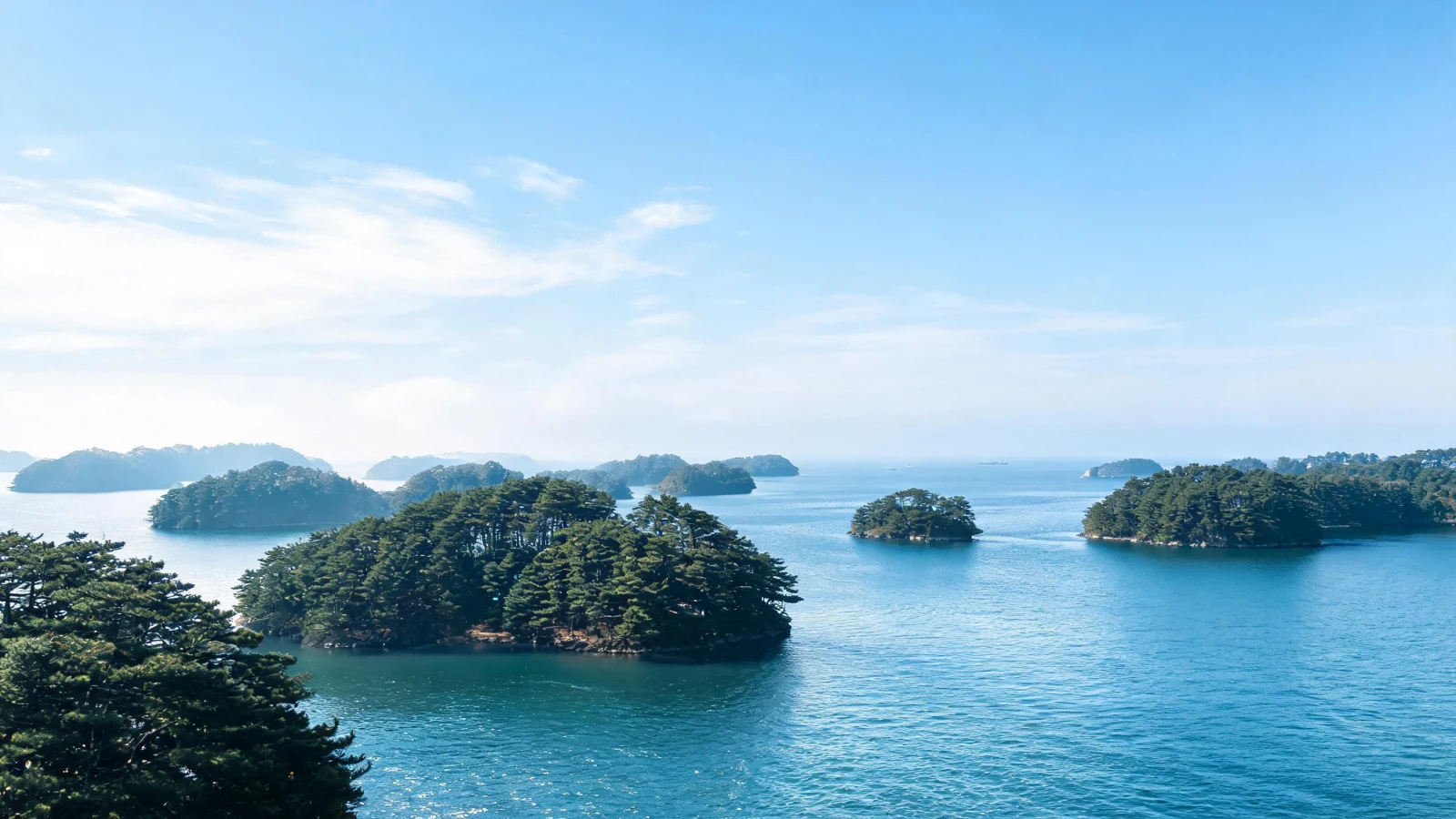
Matsushima, along with Amanohashidate and Itsukushima, is one of Japan's Three Scenic Views. A bay dotted with over 200 pine-covered islets; taking a sightseeing cruise through them is the classic experience. Onshore, Zuiganji Temple is the family temple of the Date clan, with National Treasure-class main hall and brilliant gold-painted sliding doors. Nearby Godaido Hall sits on a small islet connected by vermillion bridges, a signature photo spot. Fukuura Bridge and the Gyogyo-modori lookouts offer panoramic bay views. About 40 minutes from Sendai via JR Senseki Line.
Suburban: Yamadera (Risshakuji Temple)
Located in Yamagata Prefecture but easily accessible from Sendai, this mountain temple's official name is "Hojuzan Risshakuji." Haiku poet Matsuo Basho composed a famous poem here. The highlight: climbing about 1,000 stone steps through cedar forest and rugged rock faces, reaching the "Godaido" hall that juts out over the cliff—a dramatic scene with autumn leaves (or remaining snow). About 1 hour from Sendai via JR Senzan Line to Yamadera Station; the trailhead is right at the station, and even people with average fitness can manage the climb slowly.
Suburban: Zao (Snow Monsters / Okama Crater Lake)
The Zao mountain range straddles Miyagi and Yamagata, representing the pinnacle of Sendai-area natural attractions, but highly seasonal. Winter "snow monsters" require the Zao Ropeway; the ice-encrusted conifers look like fantastical creatures—the signature winter scene of Tohoku. In the warm season, go see "Okama"—a circular volcanic crater lake whose water shifts from emerald to blue-green depending on minerals and light. These seasons are mutually exclusive, and mountain weather is fickle; visibility is unpredictable. Always check the day's weather and ropeway/road conditions before heading out.
Suburban: Akiu / Sakunami Onsen
Two hot spring towns west of central Sendai, just 40 minutes to 1 hour by car. Perfect for a "relax after sightseeing" addition. Near Akiu, you can also see Akiu Great Falls and Raijin Gorge. Great for a final night in a ryokan with a kaiseki meal and open-air bath to wrap up the Tohoku trip.
Classic itineraries (2 / 3 days, including Matsushima and Yamadera)
2-Day Highlights:
· Day 1 (City): From Sendai Station, take the Loople sightseeing bus to Aoba Castle Ruins (statue and view) → Zuihoden → Osaki Hachiman Shrine → return to city in evening for Jozenji-dori and Ichibancho, dinner of grilled beef tongue.
· Day 2 (Matsushima): Early JR Senseki Line to Matsushima-Kaigan → sightseeing cruise → Godaido, Zuiganji, Fukuura Bridge → lunch grilled oysters (in season) → return to Sendai in afternoon for shopping or a city hot spring.
3-Day Relaxed Version: Add Yamadera or Zao to the above.
· Day 3A (Yamadera): JR Senzan Line to Yamadera Station → climb the 1,000 steps of Risshakuji → Godaido overlook → return to Sendai in afternoon; can stop at Sakunami Onsen for a soak on the way.
· Day 3B (Zao, season-dependent): In winter, do the snow monster route (ropeway up); in warm season, the Okama route. Zao has fewer public transit runs, so plan timing carefully. It's suggested to put Zao on Day 2 and Matsushima on Day 3 to avoid conflict with departure.
Transportation, tickets, and costs
From the Airport: Sendai Airport has the "Sendai Airport Transit (Access Line)" direct to Sendai Station, about 25 minutes, around 660 yen (approx. 32 RMB)—the most hassle-free option.
City Sightseeing Bus: The "Loople Sendai" is a loop bus connecting Aoba Castle, Zuihoden, Osaki Hachiman Shrine, and other main city spots. A one-day pass costs about 630 yen (approx. 30 RMB). It saves money and the trouble of transferring; perfect for a one-day city tour.
Intercity & Suburban: From Tokyo to Sendai, take the JR Tohoku Shinkansen (about 1.5–2 hours). Sendai to Matsushima via JR Senseki Line, to Yamadera via JR Senzan Line—single trips cost from several hundred to a thousand yen. If your itinerary is a multi-city Tohoku loop (Sendai + Aomori + Akita + Yamagata, etc.), consider the JR East "Tohoku Area Rail Pass" (JR EAST PASS · Tohoku area), which gives unlimited rides on JR lines and some Shinkansen within a set number of consecutive days. For multiple long hauls, it usually pays off. Always check the latest coverage, days, and prices on the JR official website before buying—calculate based on your actual route.
Ticket Prices (subject to official current rates): Temples and shrines like Zuihoden and Zuiganji have modest entry fees (hundreds of yen). Zao ropeway round trip is over a thousand yen. Matsushima cruise starts around a thousand yen per route. These amounts are small; the real costs are transportation and accommodation. Business hotels near Sendai Station in low season cost several hundred RMB per night; prices spike during Tanabata, Pageant of Starlight, etc.—book early.
Food
Charcoal-Grilled Beef Tongue (牛タン): Sendai's number one specialty, without equal. Unlike thin beef tongue in yakiniku, Sendai's version uses thick slices salted and slow-grilled over charcoal—crispy outside, tender and chewy inside. Standard set comes with barley rice, oxtail soup, and pickles. Famous shops cluster around Ichibancho and inside Sendai Station; look for "Charcoal-grilled Beef Tongue" signs.
Zunda Mochi (ずんだ): Sweet mashed edamame (green soybeans) draped over mochi—"zunda mochi"—sweet with a subtle bean aroma. This is a unique Sendai confection. Now also comes as zunda milkshake, sold at Sendai Station; the color is attractive and it makes a good souvenir.
Oysters (牡蛎): The Matsushima area is famous for oysters. During autumn/winter peak season (roughly October–March), you'll find grilled oysters, oyster hot pot, and fried oysters along the coast—plump and juicy. Note that oysters are highly seasonal; going to Matsushima in midsummer likely means no fresh catch—don't list it as a must-eat for summer trips.
Caveats and warnings
Visa: Chinese passport holders still need a pre-arranged tourist visa for Japan; no visa on arrival. Leave enough time for visa issuance, and double-check passport validity and visa type before departure.
Seasonal exclusivity—don't be greedy: As emphasized: Zao snow monsters only in winter, Okama only in warm season, Matsushima oysters mainly autumn/winter, Tanabata in August, Pageant of Starlight in December. These signature experiences are spread across different months. It's normal not to see them all in one trip. Set your primary goal first, then choose your month. Don't expect to "have it all."
Suburban routes have sparse schedules—always check timetables: Matsushima and Yamadera are okay, but Zao, Akiu, and other areas have infrequent public transport; last buses can be early. Mountain weather can also affect ropeways and roads. Before heading to any suburban spot, check the day's outbound/return schedules and leave plenty of buffer time. Never plan your last bus too tightly—you could get stranded or miss your return Shinkansen.
Should you hire a Chinese-speaking guide/driver?
Sendai city is very easy to explore on your own: Loople bus + walking covers most of it—no need to hire a guide just for the city. The real dilemma is the nearby spots: Matsushima, Yamadera, Zao, and Akiu are in different directions, require transfers, and have sparse public transport. Especially for Zao and other mountainous areas, scheduling and catching the last bus can be tricky; driving in winter snow without experience is risky.
This scenario—scattered attractions, time-consuming transfers, sparse schedules—is exactly where a local Chinese-speaking guide or private driver-guide shines: they can string together Matsushima + Yamadera in one day, time the Zao ropeway and weather window accurately, and advise on the best route for the season. Much more reliable than just checking a timetable, and saves you the hassle of hauling luggage between transfers. Whether you need one depends on how many suburban spots you plan and your preference for freedom—city-only can skip it; hitting multiple suburbs makes it worthwhile. Platforms like Dijiexia allow local Chinese guides, drivers, and interpreters to "bid" on your request; you compare qualifications, reviews, and prices before booking, and the platform hides your contact info until you agree. This suits the need: "I want a knowledgeable local to help me smoothly navigate Tohoku's suburbs." Use it as needed; no need to use it just for the sake of it.
FAQ
Q1: How to get between Sendai and Tokyo, and how long does it take?
The fastest is the JR Tohoku Shinkansen, Tokyo Station to Sendai Station in about 1.5–2 hours. If you plan to continue north to Aomori and Iwate, using Sendai as the first stop of a Tohoku loop works well. Whether to buy the Tohoku Area Rail Pass depends on your total mileage—it's cost-effective only for multiple long trips. Prices are as per JR official information.
Q2: Can I see both Zao snow monsters and Okama in one trip?
Basically no. Snow monsters only in winter (approx. late Dec to Feb); Okama crater lake only in warm season (approx. late April to early Nov). They are mutually exclusive. Decide your main focus first, then pick your travel month. Mountain weather is fickle—check ropeway and road status on the day.
Q3: First-time visit with limited time—how to choose between Matsushima and Yamadera?
For bay scenery, a relaxing time, and the chance to eat oysters in autumn/winter, choose Matsushima (also more convenient transport). For mountain hiking, cliff-side temples and autumn foliage, and if you're physically fit, choose Yamadera. If you have two days, you can easily do city one day + Matsushima or Yamadera one day. If you really want to cover both, stretch your itinerary to three days.