
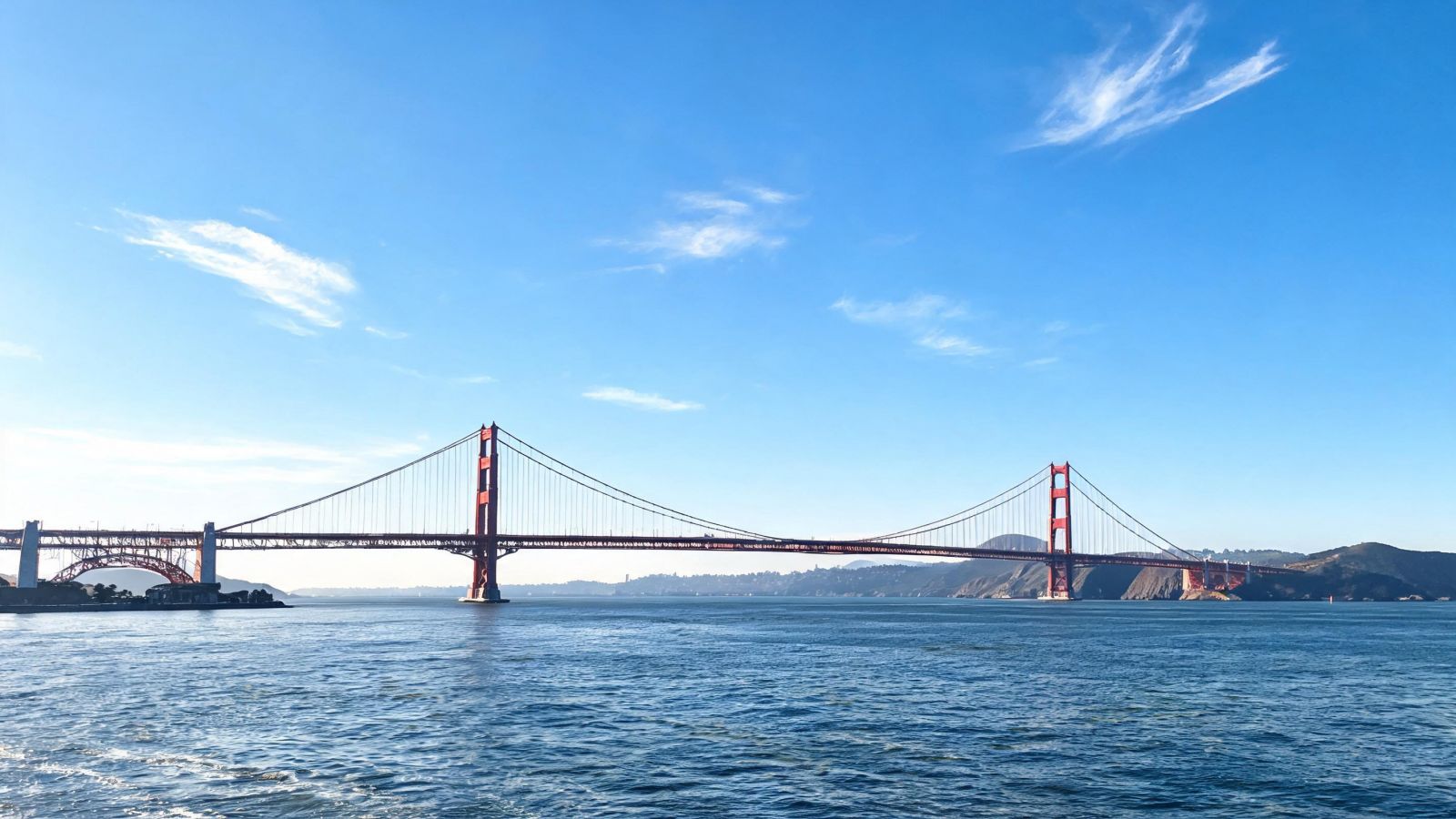
Bottom line: San Francisco is a "vertical" city—endless hills, stunning bay views, and unpredictable fog. With 3 days you can hit the classic downtown spots; adding Yosemite or Napa Valley extends it to 4–5 days for a more relaxed pace. It’s on the pricier side for US West Coast destinations. For two people over 5 days, excluding trans-Pacific flights, local costs range roughly from $1,500 to $3,500 (approx. RMB 11,000 to 25,000—just a reference, actual spending varies).
How many days to spend and when to go
If you stick to downtown—Golden Gate Bridge, Fisherman's Wharf, Lombard Street, cable cars, Union Square, and Chinatown—2 days of serious sightseeing will cover it, while 3 days lets you take it slow and add Alcatraz, Twin Peaks, and the Palace of Fine Arts. If you want to use San Francisco as a gateway to the Bay Area, set aside an extra day for Yosemite, the Napa/Sonoma wine country, or a drive down Highway 1 to see the 17-Mile Drive; 4 to 5 days total is ideal. Less than 3 days will feel rushed, because what really eats up time here isn’t the attractions themselves, but the steep hills and the somewhat unreliable public transport connections.
The season is where San Francisco defies common sense: it doesn’t have the distinct summer you find in Beijing or Shanghai. Due to the California Current and local topography, the city stays cool year-round, with June to August actually being the foggiest and coldest "fog season." The famous Karl the Fog (the locals’ nickname for the fog) rolls in from the Golden Gate in the afternoon, dropping the felt temperature to the low teens Celsius, and the wind at the coast is biting. The truly sunny and relatively warm period is fall, from September to October—that’s San Francisco’s "golden season." Late spring (April to May) is also nice. No matter when you go, the one essential dressing rule is: layer up and always bring a windproof jacket, even if the forecast says sunny.
Must-see attractions
Golden Gate Bridge & Presidio
This international orange bridge, completed in 1937, is San Francisco’s iconic symbol. There’s more than one spot to view it: the Welcome Center on the south shore is closest to the bridge but the most crowded; Battery Spencer in the Presidio sits high on the north side and offers the best angle to capture the entire bridge with the city skyline behind it; for that postcard shot with the bridge and the bay, head to Baker Beach. You can walk or bike across the bridge—about 2.7 km one way—but be prepared for extreme wind and dress accordingly. The surrounding Presidio is a huge forested green space converted from a former military base—quiet and perfect for relaxing, a completely different vibe from the bustling waterfront.
Fisherman's Wharf & Sea Lions at Pier 39
Fisherman's Wharf is the most tourist-packed area. On the floating docks at Pier 39, a colony of wild sea lions lounges year-round, sunbathing and jostling for space—free to watch and a favorite stop for kids. The area is lined with seafood restaurants; clam chowder served in a hollowed-out sourdough bread bowl is the signature dish. A heads-up: the wharf is heavily commercialized, souvenir shops tend to be overpriced and similar. Just see the sea lions, have a bowl of chowder, snap a photo, and move on.
Alcatraz Island (book tickets well in advance)
This former federal prison in the middle of the bay once held notorious criminals like Al Capone and is now a popular national park attraction. Its biggest challenge isn’t the cost—it’s the availability. The official ferry service, Alcatraz City Cruises, often sells out weeks ahead, especially in peak season. As soon as you finalize your itinerary, book tickets on the official website—the sooner, the better. The audio guide (available in Chinese) features recordings from real inmates and guards and is of exceptional quality—it’s the soul of the experience. The round-trip ferry and island visit take about half a day.
Lombard Street
Known as the "crookedest street in the world," this single block features eight tight switchbacks lined with hydrangeas. Cars creep down the serpentine descent at a snail’s pace. It’s free and open anytime, with great views of Coit Tower and the bay from the top. It’s very crowded; come early in the morning for clean photos.
Cable Cars
The clanging cable cars are a living piece of San Francisco history—the last manually operated cable car system in the world. They’re not just transportation; they’re an experience. Hanging onto the outside as the car climbs and dips over steep hills while watching the city roll by is a must-do. The Powell-Hyde line passes Lombard Street and offers bay views—it’s the most scenic route.
Union Square & Chinatown
Union Square is the heart of downtown shopping and hotels, packed with luxury flagship stores and department stores. Right next to it is San Francisco’s Chinatown, the oldest and one of the largest Chinatowns in North America. Step through the Dragon Gate and you’re in a different world—great for Chinese food, souvenirs, and experiencing the old overseas Chinese community. For Chinese travelers, it’s especially practical and familiar.
Twin Peaks & Palace of Fine Arts
Twin Peaks offers one of the highest viewpoints overlooking the entire city and the bay. On a clear day at sunset, the whole city stretches out below you—but it’s extremely windy and often shrouded in fog, so check the real-time weather before heading up. The Palace of Fine Arts is a Roman-style structure left from the 1915 World’s Fair, reflected in a pond—a great spot for photos and a leisurely walk. It’s free to enter.
Day trips from the city: Yosemite, Napa Valley, 17-Mile Drive
Once you’ve explored San Francisco itself, the real gems often lie just outside the city. Yosemite National Park is about a 3.5- to 4-hour drive each way—giant sequoias, waterfalls, and massive granite walls are breathtaking, but a day trip is exhausting; if possible, stay overnight nearby. Napa and Sonoma wine country is about 1.5 hours away—perfect for wine tasting and pastoral scenery at a relaxed pace. Heading south on Highway 1 to the 17-Mile Drive between Monterey and Carmel offers a classic coastal route with rocky shores, the Lone Cypress, and famous golf courses. Public transport to these areas is extremely limited, making this the part where renting a car or hiring a driver is most worthwhile.
Classic itineraries (2 or 3 days)
Two-day highlights: Day 1: Start at Union Square in the morning, take the Powell-Hyde cable car north, get off to see Lombard Street, then head to Fisherman’s Wharf and Pier 39 for the sea lions and a sourdough clam chowder lunch. In the afternoon, walk or take a taxi to the Palace of Fine Arts, then head to Battery Spencer in the Presidio for sunset at the Golden Gate Bridge. Day 2: Pre-booked Alcatraz half-day tour in the morning; lunch in Chinatown, shopping at Union Square in the afternoon, then catch sunset from Twin Peaks.
Three-day relaxed version: Build on the two-day plan, but dedicate a full morning to Alcatraz and use the extra time to walk or bike across the Golden Gate Bridge and explore the Presidio in depth. On Day 3, take a day trip: if your budget and energy allow, go to Yosemite; for a more relaxing option, head to Napa for wine tasting. Day 3 is the best day to hire a local guide or driver.
Tickets, transportation, and costs
Public transit in the city is mainly Muni (buses, streetcars, cable cars) and BART (regional rail connecting the airport and cross-bay cities). I highly recommend getting a Clipper card (physical or digital on your phone)—it works on both Muni and BART, automatically deducting fares per trip, which is more convenient and cheaper than buying single tickets. A standard Muni single ride is about $2.75 (includes free transfers within 120 minutes), while a cable car single ride is about $8 and not covered by the regular fare. If you plan to ride the cable car frequently, consider a Muni day pass (around $13, which includes cable cars—actually a better deal). BART fares are distance-based. For current rates, check the official SFMTA/BART websites.
Airport to city: From San Francisco International Airport (SFO), take BART downtown in about 30–40 minutes for around $11—the most hassle-free option; a taxi or ride-hailing service typically costs $50–$70, more during peak hours. Alcatraz ferry with audio guide standard adult ticket is about $47 (check the official website). Overall, San Francisco is among the more expensive US cities in terms of food, hotels, and parking. Please budget in US dollars; RMB figures are rough estimates only.
Food & shopping
Must-try list: sourdough clam chowder at Fisherman’s Wharf, Dungeness crab (in season, at its best); Mission-style California burrito in the Mission District—big, affordable, and filling, a local favorite; Chinatown and the Richmond District have plenty of authentic Cantonese and Sichuan cuisine, very friendly to Chinese palates; local specialty coffee (Blue Bottle originated here) and California wine are also worth trying. For shopping, Union Square has luxury brands and department stores; outlet malls like Gilroy (a bit further out) are good for deals; Chinatown offers cheap and practical souvenirs. Reminder: prices in California generally don’t include tax; you’ll need to add about 8.6% sales tax at checkout, and restaurants expect an 18% to 20% tip. Be sure to factor both into your budget.
Tips to avoid trouble
Visa & entry: Mainland Chinese passport holders need to obtain a B1/B2 tourist visa in advance. The ESTA visa waiver program does not apply to Chinese passports (it’s only for citizens of visa-waiver countries)—don’t confuse the two. Visa interviews require an appointment and can have long wait times during peak season, so apply well in advance.
Safety & car break-ins: Some neighborhoods in San Francisco (such as the Tenderloin, certain stretches near Civic Center, and around UN Plaza) have higher crime rates, with many homeless individuals and drug users. Avoid walking alone there after dark. The most common and real risk is "car break-in" (smash-and-grab theft): whether you rent a car or use a ride-hailing service, never leave any visible items inside a parked car—backpacks, cameras, luggage, even empty shopping bags can attract thieves. Many parking lots have warning signs; take this seriously.
Fog season dressing: As emphasized repeatedly—layer up and bring a windproof jacket. Don’t let the word "California" trick you into thinking it’s T-shirt weather, especially near the coast and in the evening.
Alcatraz early booking: Book ferry tickets on the official platform as soon as you have confirmed dates; last-minute tickets are almost impossible. Only use the official authorized channel and avoid overpriced resellers.
Should you hire a Chinese-speaking guide/driver?
In the city itself, public transit plus walking is sufficient—cable cars and BART are convenient—so there’s no real need to hire someone just for Fisherman’s Wharf. The situations where a Chinese-speaking guide or chauffeur is truly worth considering are: first, day trips to Yosemite, Napa Valley, or the 17-Mile Drive along Highway 1—these places have almost no public transport, and driving yourself means dealing with left-hand traffic, steep hills, long distances, and unfamiliar road conditions. A local Chinese-speaking driver-guide can handle all the transfers, route planning, stops, and narration, making the day much more relaxing. Second, if you’re traveling with elderly or children, or if you’re uneasy about the safety issues and car break-ins mentioned earlier, having a fixed private driver for point-to-point transfers will give you significantly more peace of mind.
If you happen to need a Mandarin-speaking guide or driver who knows the area and can follow your pace, you can post your requirements on platforms like "Dijiexia" (地接侠)—for example, "Yosemite day round trip with Chinese commentary" or "Wine-tasting tour with driver for a day." Local Chinese-speaking guides and drivers can then bid for your job. You compare their qualifications, reviews, and prices before deciding who to hire. The platform doesn’t reveal your contact information until after you’ve made a decision, which is relatively hassle-free. This isn’t essential, but for suburban day trips and when safety is a concern, it can definitely elevate your travel experience.
FAQ
Q: What should I wear in San Francisco during summer? Do I really need a jacket?
A: Yes, you really do. June through August is the foggy season; in the city, the feels-like temperature often drops to the low teens Celsius in the afternoon, especially near the coast and in the evening with strong wind. No matter how sunny the forecast, prepare with "layers plus a windproof jacket." That’s the ironclad rule that locals follow.
Q: Can I buy Alcatraz tickets on the spot?
A: Basically no. Official ferry tickets often sell out weeks in advance, especially in peak season. As soon as you finalize your schedule, book on the official website and only use the authorized official channel to avoid overpriced resold tickets.
Q: Is it safe to drive in San Francisco? What should I watch out for?
A: The roads themselves are fine, but there are two real risks: first, downtown has many extremely steep hills, scarce and expensive parking; second, "car break-ins" are common—never leave anything visible inside a parked car. If you mainly plan to visit Yosemite, wine country, and other outlying areas and don’t want to deal with these hassles, hiring a Chinese-speaking driver-guide can be safer and more convenient.