
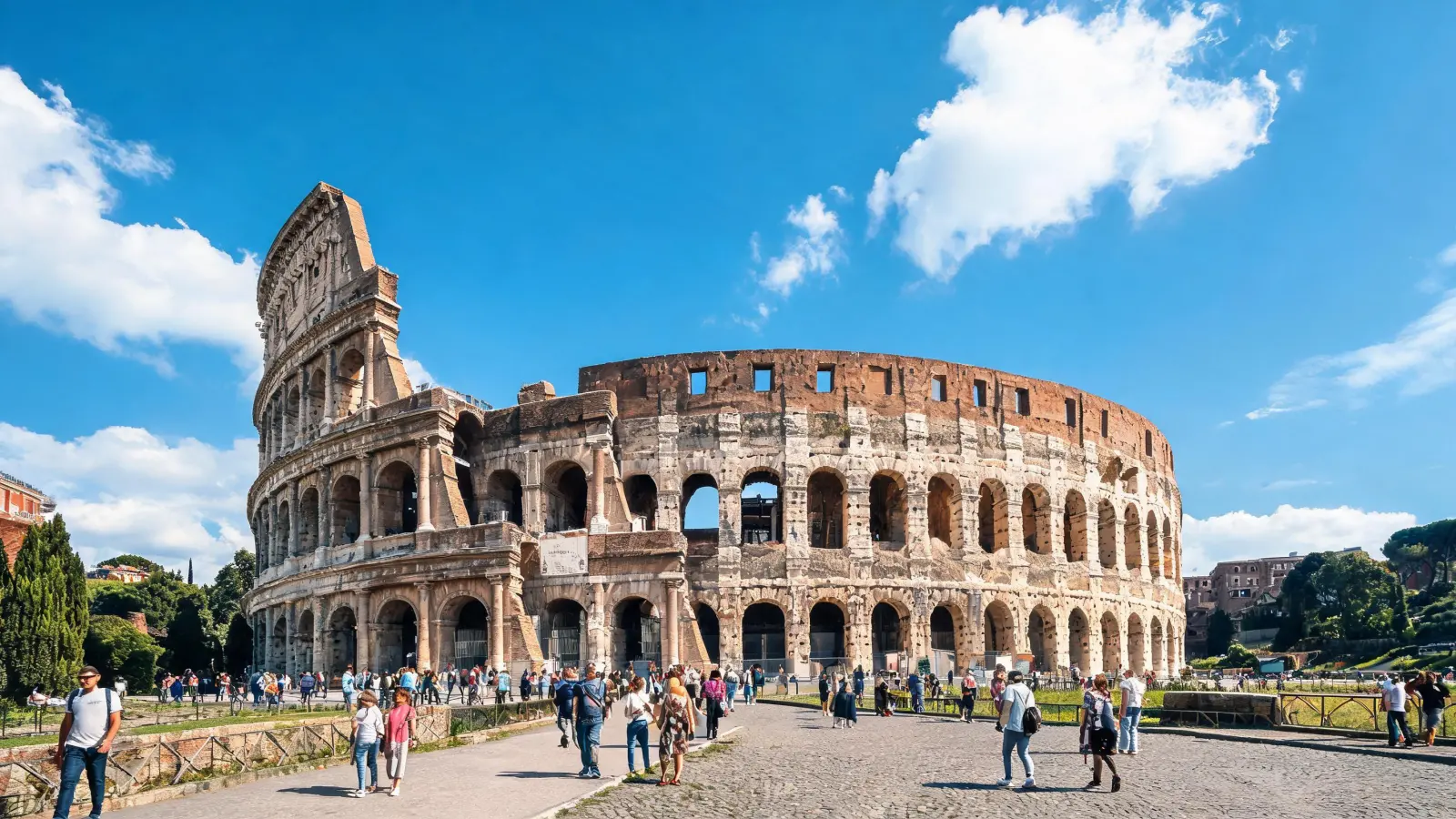
One-sentence summary: Spend at least 3 full days in Rome to avoid rushing; the core consists of two major areas — ancient Roman city (Colosseum area) and Vatican City across the river, plus the fountains, piazzas, and churches in the old town that are walkable. Average ticket and transport costs run around €30–60 per person per day. The real challenges aren't the route but that "Vatican Museums and Colosseum tickets must be booked online in advance for specific time slots" and "the old town has many pickpockets and long queues." Sort out these two things, and Rome is one of the best cities in Europe to explore.
How many days should you stay? (1/3/5 days)
Rome's attractions are highly concentrated, but each site is packed with information; a quick glance and a slow, immersive visit are two different experiences. Here's a practical assessment:
- Only 1 day (layover/cruise stop): Don't overreach. Lock in "Colosseum + Roman Forum" for the morning, then spend the afternoon on the old-town walking route covering the Pantheon, Trevi Fountain, and Piazza Navona. Don't force Vatican City into this day — the Museums alone can take 2–3 hours in line, and you can't cover both in one day.
- 3 days (most recommended): Day 1 ancient Roman area, Day 2 Vatican City, Day 3 old town + Borghese Gallery or Trastevere across the Tiber. This is the "just right" itinerary for most people.
- 5 days: Add a day trip to the outskirts (Villa d'Este in Tivoli, Hadrian's Villa) and another day for a longer excursion — a day trip to Florence and back, or south to Naples for Pompeii, both classic add-ons from Rome.
One often overlooked point: Rome has many churches, most are free, but heavy hitters like the Vatican Museums, Colosseum, and Borghese Gallery are almost all reservation-only. The tighter your schedule, the more you need to lock in time slots on your calendar in advance.
Must-see attractions (by area, with ticket info and suggested time)
Ancient Rome: Colosseum / Roman Forum / Palatine Hill
These three sites share one combo ticket and are the soul of Rome. The Colosseum is a 1st-century amphitheater, more impressive than its photos; the Roman Forum was the city's ancient center, now a field of broken columns and ruins that come alive with a guided explanation; Palatine Hill was the imperial residence, and from its top you can overlook the Forum.
- Tickets: The combo ticket starts at about €16–18, includes Colosseum + Forum + Palatine Hill (one entry within 48 hours); to access the arena floor or underground level, you need a higher tier ticket, starting around €22–24. Book a time slot online in advance via the official website — walk-up tickets often sell out on the day. Check the official site for the latest prices.
- Suggested time: Half to a full day for all three together.
Vatican City: St. Peter's Basilica / Vatican Museums / Sistine Chapel
The Vatican is the world's smallest independent country, embedded in Rome — just cross the street to reach it. St. Peter's Basilica itself is free — you only queue for security; climbing the dome costs extra (about €8–10). The Vatican Museums are ticketed, and the visit route culminates in the Sistine Chapel — where Michelangelo's "The Creation of Adam" and "The Last Judgment" are located, the highlight of the tour. No photos allowed inside, silence required.
- Tickets: Official Vatican Museums tickets start at about €20 (includes the Sistine Chapel), strongly recommended to book a time slot in advance; in peak season, queuing 2–3 hours on-site is common. St. Peter's entry is free, dome climb is extra.
- Suggested time: Museums + Sistine Chapel at least 2.5–3 hours (huge collection), St. Peter's 1–1.5 hours. You can do both on the same day (morning and afternoon), but it's physically demanding.
Old town walking circuit: Pantheon / Trevi Fountain / Spanish Steps / Piazza Navona
This area is Rome's most "relaxed" part, with attractions just a 10–15 minute walk apart, perfect for a leisurely stroll. The Pantheon is the best-preserved ancient Roman building, with an oculus letting in light; it now requires a ticket, about €5. The Trevi Fountain is free; tossing a coin over your shoulder is a tradition, but it's extremely crowded — to get an empty shot, go around 7–8 AM. The Spanish Steps and Piazza Navona are both free; the latter features Bernini's Fountain of the Four Rivers, best in the evening.
If you're into art, don't miss the Borghese Gallery, with stunning Bernini sculptures and Caravaggio paintings, but it has strict capacity limits and requires advance booking. Tickets start at about €13–15.
Classic itineraries (ready to use)
1-day highlight (Ancient Rome + old town walk):
- Morning: Colosseum (book the first entry slot) → Roman Forum → Palatine Hill.
- Lunch near Piazza Venezia, climb the Altare della Patria for a city view.
- Afternoon: Pantheon → Trevi Fountain → Spanish Steps → Piazza Navona, all connected on foot.
3-day classic (includes Vatican):
- Day 1 Ancient Rome: Morning Colosseum + Forum + Palatine Hill, afternoon old town around the Pantheon.
- Day 2 Vatican: Morning Vatican Museums + Sistine Chapel (book early entry), afternoon St. Peter's Basilica + dome climb, evening Castel Sant'Angelo.
- Day 3 Old town + art: Morning Borghese Gallery (reservation) + park stroll, evening dinner in Trastevere — the alleys and taverns have the most authentic Roman vibe.
5-day deep dive: First 3 days as above, Day 4 a day trip to Tivoli for Villa d'Este's water gardens, Day 5 a major excursion — day trip to Florence by high-speed train (about 1.5 hours) or south to Pompeii, both worth a full day.
Transport, tickets, and budget
City transport: Rome has metro lines A, B, and C. Tourists mainly use Line A (to Vatican, Spanish Steps) and Line B (to Colosseum). Single ticket about €1.5, valid for 90 minutes with transfers; day pass about €7. However, the core old-town attractions are dense, and walking is often faster — the metro is mainly for cross-district travel. Taxis: look for official white cars with roof signs; airport to city has a fixed fare.
Key ticket tips: Remember one rule — "book all heavy hitters in advance on official websites". Colosseum, Vatican Museums, Borghese Gallery, Pantheon all recommend online time-slot tickets to skip queues and avoid sellouts. Most churches are free, just queue for security. If your schedule is tight, consider whether Roma Pass or similar city cards are worth it.
Estimated daily spend (per person):
- Tickets: €30–50 on museum days, €0 on pure old-town days.
- City transport: €5–8.
- Dining: €25–45 for a simple meal plus one sit-down dinner; sit-down meals often have a cover charge (coperto) of €1–3 per person.
- Total: relaxed spending about €60–100 per day (excluding accommodation); higher in peak season or at fine restaurants. These are ballpark estimates; check on-site.
Food and shopping
Roman cuisine is simple and hearty. Must-try local pastas: Cacio e Pepe, Carbonara (authentic version has no cream), Amatriciana. Street food staples: Supplì (fried rice balls) and fresh Pizza al taglio (square pizza sold by weight) — a few euros fill you up. For gelato, look for shops where pistachio isn't fluorescent green and the display isn't piled high — that's more likely handmade. Coffee is cheap; drinking at the bar (al banco) is the cheapest; sitting down adds a surcharge.
For shopping, the area around Spanish Steps to Via Condotti is luxury brand central; affordable souvenirs can be found in supermarkets (olive oil, pasta, coffee grounds). Non-EU tourists can claim Tax Free on single purchases above a certain amount — request the tax refund form and get it stamped at the airport upon departure.
Pitfalls and tips
- Visa: Italy is in the Schengen Area. Chinese passport holders need a Schengen visa in advance, with required documents (itinerary, hotel, flight, insurance). Apply at the embassy of the country where you'll stay longest/enter first, per official requirements.
- Pickpockets: This is Rome's most practical issue. Metro Line A, Termini Station, crowded areas near the Colosseum and Vatican are high-risk. Wear your backpack in front, don't keep your phone in your back pocket, be wary of "sign this petition / give you a bracelet" distractions. Leave your passport locked in the hotel safe.
- Church dress code: St. Peter's and other religious sites have a dress code — no bare shoulders, shorts/skirts above the knee will get you turned away at security. Bring a shawl or light jacket in summer.
- Language: Major attractions have decent English signage, but taxis, small shops, and many restaurants have limited English; menus are often only in Italian. Chinese is almost never used, so guided tours, negotiation, or unexpected communication can be difficult.
- Other: Many restaurants close for afternoon break (riposo), so don't time meals too late; ancient Roman water fountains (nasone) on streets are drinkable — bring an empty bottle to save on water.
Should you hire a Chinese-speaking guide/driver?
Rome is fine for independent travel; most people manage with walking + metro + advance tickets. But in the following situations, a local Chinese-speaking guide or driver will noticeably improve your experience:
- You want to understand the Vatican Museums / Colosseum: About 80% of their value lies in the stories behind them. A guided tour makes a huge difference, and professional guides often have fast-track access.
- Traveling with elderly or children: Rome's cobblestones, intense sun, and long queues can be tough. Someone to help plan the pace, find nearby restrooms and restaurants, and handle contingencies makes it much easier.
- Cross-city excursions: Day trips to Florence, Pompeii, or Tivoli involve more complex language and navigation; a Chinese-speaking driver/guide with a private car is more hassle-free.
- Language barriers and tight schedule: Letting a local handle tickets, queues, ordering food, and on-the-spot communication saves time.
How to find reliable help: Check credentials (guide/driver licenses, vehicle compliance), look at genuine reviews rather than just price; ask for a detailed breakdown of fuel, tolls, tickets, parking, guide meals, overtime charges in writing to avoid "low-ball lead-in with on-site surcharges"; pay through a platform, never via private transfer, and keep records.
If you don't want to shop around one by one, you can post your requirements on Dijiexia (destination, dates, group size, whether you need a guide or private car/transfer/translation escort, budget) and let local Chinese-speaking guides bid and offer quotes. Compare qualifications, real reviews, and prices before deciding. Getting multiple quotes is fairer; contact details are anonymized until you agree, and communication and payment are traceable. Specifics depend on each offer's actual commitments.
Frequently Asked Questions (FAQ)
Do you really need to book all Rome tickets in advance?
Not all, but it's recommended for "popular paid attractions". Colosseum combo, Vatican Museums, Borghese Gallery, and Pantheon all suggest online time-slot booking; Borghese is almost impossible to get on the spot. Free churches, squares, and fountains don't need tickets, but St. Peter's Basilica still requires queuing for security.
What's the best month to visit Rome?
Spring (April–June) and autumn (September–October) have the most comfortable weather and beautiful light, but they're peak seasons — higher prices and crowds. July–August is scorching hot, with brutal midday sun. Winter has fewer people and lower prices; indoor attractions and churches remain open, making it quieter. Avoid Easter, Christmas, and other holidays for fewer crowds.
Is Rome and Vatican ticketed and entered separately?
The Vatican is an independent country, but there is no border control between it and Rome — you just walk across. No visa or immigration. Tickets are separate: Colosseum combo and Vatican Museums tickets are bought independently; St. Peter's entry is free, dome climb is extra. Treat them as two districts within the same city for planning.