
One-sentence conclusion: Since 2019, Saudi Arabia has opened tourist visas to China and other countries (e-visas can be approved same-day), and Riyadh is no longer the closed city that "only business visa holders could enter." It is a capital of extreme contrasts—with glass-curtain skyscrapers and entertainment zones accessible by card swipe on one side, and rammed-earth forts and desert cliffs that feel like the origin of the world on the other. As long as you avoid the summer heat and respect local customs, it's actually quite fun to explore, and with few tourists, the city hasn't been "flattened" by tourism.
How many days to spend and when to visit (avoid the heat)
Riyadh's core attractions can be roughly 70–80% covered in two full days. If you want to add the "Edge of the World" cliff outside the city, I recommend 3 days. Going further south for hiking in the Tuwaiq Mountains or east for half a day to visit ancient ruins could stretch it to 4 days, but for most people, 3 days is enough.
Season is the most critical decision for a Riyadh trip. This is a typical desert climate—from April to October, temperatures easily exceed 40°C during the day, and in July and August, the ground can approach 48°C. Standing outside at noon for ten minutes is unbearable, and off-road trips to the cliffs are dangerous. The truly comfortable window is November to March: daytime temperatures around 20°C with clear skies, and cool evenings—you might even need a jacket. This is also the peak season for Riyadh's outdoor activities and large seasonal events like Riyadh Season. Simply put: choose winter if you can; coming in summer basically locks you into malls and museums.
Must-Visit Attractions
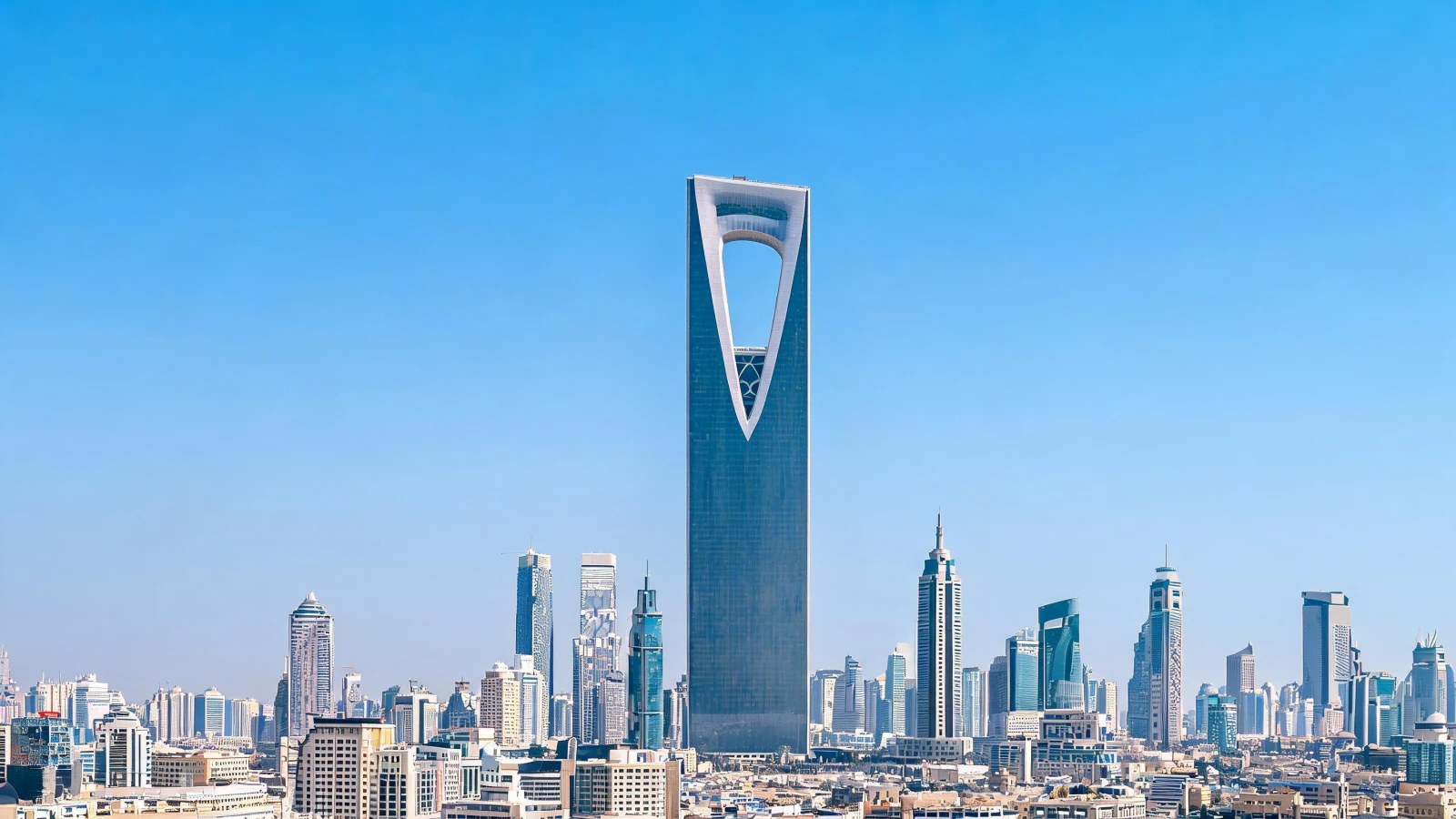
Kingdom Centre Sky Bridge
Riyadh's most iconic skyline building, topped with a bottle-opener-shaped arc that holds the Sky Bridge at 99 meters high. Go up just before sunset to watch the city transition from warm gold to sparkling lights—it's the best vantage point to understand "a modern city rising from the desert." The tower sits above a high-end mall, and the women-only floor is interesting.
Masmak Fortress
Built in the 19th century from rammed earth and palm wood, this fortress is where Abdulaziz (the founder of modern Saudi Arabia) recaptured Riyadh in 1902, marking the beginning of modern Saudi Arabia. The gate still bears the marks of a broken spear from that battle. It's small but worth visiting along with the surrounding old Deira district and Al Zal Souq to see what modern Saudi looked like before. Free entry.
Diriyah (UNESCO World Heritage, birthplace of Saudi Arabia)
If I had to pick just one "must-see" in Riyadh, it would be Diriyah. It was the capital of the First Saudi State and the birthplace of the entire Saudi nation. The core At-Turaif district is a UNESCO World Heritage site—expansive Najdi-style rammed-earth buildings, with ochre palaces, mosques, and walls stretching through palm groves, stunningly photogenic when lit up in the evening. Today it has been transformed into a pedestrian heritage area, with the Bujairi Terrace dining zone overlooking the ancient city. Set aside half a day for this area.
Edge of the World (Tuwaiq Escarpment)
About 90–100 km northwest of Riyadh, the Tuwaiq cliff (Jebel Fihrayn) drops vertically hundreds of meters like a knife cut. Standing on the edge, you see an endless, uninhabited desert plain—the horizon literally looks like the edge of the world—hence the name. It's the most stunning natural attraction near Riyadh and a social media hotspot. But be clear: the last section is an unpaved off-road track that ordinary cars cannot handle—you need a 4×4 vehicle. There is no mobile signal, no guardrails, and no supplies, so going alone is risky. Most people join a local off-road tour, and this is the most worthwhile trip to hire a specialist guide in Riyadh.
Boulevard Entertainment District & Riyadh Season
Boulevard World / Boulevard City is a massive entertainment complex that Riyadh has heavily invested in recently—restaurants, light shows, themed zones, concerts, and international food courts all together, lively and bustling at night. It's the most direct place to observe "New Saudi" nightlife. It is highly dependent on the annual winter Riyadh Season, which usually opens around November and runs into early next year, with different activities each year. Be sure to check the official schedule and ticket information beforehand. This is a major bonus for visiting Riyadh in winter.
National Museum of Saudi Arabia
Located in the Al Murabba historical district, it's the most systematic place to learn about the Arabian Peninsula from prehistory, the rise of Islam, to the founding of modern Saudi Arabia. The exhibits are modern with English labels, and you can spend half a day here. It's an excellent indoor backup for summer days or during heatwaves/sandstorms. Low ticket price.
Classic Itineraries (2/3 days)
2-Day Highlights:
• Day 1 (City & History): Morning: Masmak Fortress + old Deira Souq → Noon: National Museum → Afternoon: Diriyah At-Turaif UNESCO site, evening dinner at Bujairi Terrace watching the old town light up.
• Day 2 (Modern & Nightlife): Daytime: catch up on museums or shop in air-conditioned malls → Late afternoon: Kingdom Centre Sky Bridge for sunset views → Evening: Boulevard Entertainment District (overlapping with Riyadh Season in winter).
3-Day with Nature: Add a full day on top of the above: join an off-road tour early morning to the Edge of the World, return to the city in the afternoon to rest—this is the highlight both physically and visually. Slot it in the middle or last day, but make sure it's a daytime round trip to avoid driving on desert dirt roads after dark.
Transport, Tickets & Costs (taxis mainly, off-road tours needed for Edge of the World, Saudi Riyal)
Currency: Saudi Riyal (SAR), pegged to the USD, approximately 1 SAR ≈ 1.9–2 RMB (RMB estimates in parentheses are for reference only; all prices subject to on-site confirmation).
Getting around: primarily taxis—Uber and local Careem are widely available and easy to use, avoiding language barriers and haggling. Riyadh's metro now has several lines connecting the airport, city center, and major commercial areas with cheap fares, but attractions are scattered so some trips still require taxis. A typical ride within the city costs 15–40 SAR (approx. 30–80 RMB). The city is built for cars; neighborhoods are kilometers apart, so walking between attractions is not recommended.
Tickets: Masmak Fortress free; National Museum usually 10–25 SAR (about 20–50 RMB); Diriyah's outer areas are free to walk, some venues/exhibits charge separate fees; Kingdom Centre Sky Bridge about 60–70 SAR (approx. 120–140 RMB); Boulevard and Riyadh Season events sell tickets individually per project/show, varying greatly—check current year's info.
The big expense is the Edge of the World off-road round trip: joining a shared tour typically costs 250–450 SAR per person (approx. 500–900 RMB) including vehicle and guide; renting a private 4×4 for a personal itinerary costs more per vehicle. This fee covers the off-road vehicle, route knowledge, safety, and peace of mind—worth it for most tourists.
Food & Shopping
Riyadh's signature dish is Kabsa (Saudi national rice dish)—spiced rice with a whole roast lamb or chicken, huge portions, best ordered for a group. Also try Mandi (slow-cooked lamb rice), Jareesh, grilled meat skewers, Arabic flatbread with hummus, and the ubiquitous Arabic coffee (Gahwa) with dates—this is the local hospitality, don't refuse if offered. For desserts, try Kunafa and Luqaimat (fried dough balls with syrup). Note that alcohol is strictly prohibited throughout Saudi Arabia; restaurants only serve juices, soft drinks, and non-alcoholic beverages—don't look for alcohol.
Shopping has two sides: modern malls like Kingdom Centre and Al Nakheel offer international brands; traditional shopping at Souq Al Zal for carpets, copperware, spices, dates, and Arabic incense (Oud). Saudi dates are of excellent quality and make the best souvenirs.
Pitfalls to Avoid (tourist e-visa, dress code & local customs, prayer time closures, extreme heat, alcohol ban)
• Visa: Saudi Arabia offers tourist e-visas (eVisa) to Chinese citizens, usually multiple-entry with a maximum stay of 90 days per entry, applied online and typically processed quickly. Check the latest official policies and required documents before departure—don't assume Saudi is "hard to enter" anymore.
• Dress & Etiquette: Saudi no longer requires foreign women to wear an abaya or headscarf, but dress modestly, loosely, covering shoulders and knees; men should avoid shorts and sleeveless tops in formal settings. This is about respect, not restriction—following local customs saves a lot of awkwardness. Avoid overly intimate behavior in public.
• Prayer Times: During the five daily prayers (Salah), some shops, restaurants, and attractions close briefly for 15–30 minutes, especially in traditional souqs. Build some flexibility into your schedule—if you encounter one, just have a coffee and wait, don't rush.
• Extreme Heat: Outdoor activities at noon in summer are nearly impossible. Off-road trips to the cliffs should be avoided during this season. Always carry water, sunscreen, and a hat; schedule outdoor activities for early morning and evening.
• Absolute Alcohol Ban: Alcohol is prohibited nationwide. Do not bring any alcohol-containing items into the country; penalties are severe. There is no gray area.
• Weekend: Friday and Saturday: Saudi's weekend is Friday and Saturday. On Fridays, the pace slows down around midday for the main Jumu'ah prayer—plan visits to avoid this time.
Should You Hire a Chinese-speaking Guide/Driver?
Riyadh is a destination where "you can travel without a guide, but having one greatly improves the experience." Its unique challenges: scattered attractions requiring taxis, significant cultural differences from China, and—most importantly—the Edge of the World requires an off-road vehicle and has real risks if attempted alone.
If you're visiting the Gulf region for the first time, don't speak Arabic, want to go to the Edge of the World, or are traveling with elderly or children, hiring a local Chinese-speaking guide/off-road driver significantly enhances the experience—they know which dirt roads are passable, the best times for safety and photos at the cliff, how to schedule around prayer times, which restaurant serves authentic Kabsa, and can help you communicate with locals and avoid cultural awkwardness. HeroGuide is designed for this: you post the places you want to visit and your dates, local Chinese-speaking guides and drivers bid with quotes, you compare qualifications, ratings, and prices before confirming—your private information is hidden until you accept. Especially for trips like the Edge of the World off-road tour where "safety and route knowledge are valuable," finding a reliable local is more cost-effective than risking it alone or being overcharged. Of course, if you only plan a relaxed two-day city tour with Uber, doing it yourself is fine—choose according to your needs.
FAQ
Q: Is Riyadh safe? Can a woman travel alone?
A: Riyadh has a good safety record in the Middle East, with low crime rates and calm streets. Solo female travel is fairly common. The main concern is etiquette, not safety: dress modestly, behave respectfully, and use official taxis (Uber/Careem) at night. With a respectful attitude, experiences are usually very friendly.
Q: Can I drive to the Edge of the World myself?
A: The last section is an unpaved off-road track that ordinary cars cannot handle—you need a 4×4 vehicle. There is no mobile signal, no guardrails, and no supplies. It is strongly recommended to join a local off-road tour or hire a 4×4 with a driver. Do not attempt alone, especially not after dark.
Q: What's the best one-day itinerary in Riyadh?
A: If you have only one day, skip the cliff outside the city and focus on the urban-historical line: morning at Masmak Fortress and old souq, afternoon at Diriyah UNESCO site, late afternoon at Kingdom Centre Sky Bridge for sunset, evening at Boulevard. In one day you'll grasp both the "modern and traditional" sides of the city.