
One-sentence summary: For a self-guided trip to Paris, the core attractions are concentrated along the banks of the Seine. 3 days lets you see the landmarks, 5 days is comfortable, and 7 days allows you to add the Musée d'Orsay, Musée de l'Orangerie, Palace of Versailles, and one or two nearby châteaux. Excluding flights and accommodation, the average daily cost per person for tickets and市内交通 is about 200–400 RMB. The biggest challenges aren't the cost, but booking popular museums online in advance, pickpockets, and transport connections for nearby destinations like Versailles. Below, I'll clarify "how many days to spend, must-see attractions, how to plan routes, ticket prices, how to avoid pitfalls, and whether to hire a Chinese-speaking guide," with price ranges noted. Please refer to the latest official and on-site information and check the official websites before your trip.
How many days should you spend in Paris? How to choose between 1/3/5/7 days
- 1 day (just a layover or passing through): Enough only for a quick tour of landmarks—Eiffel Tower, photo at Champ de Mars, walk along the Seine to Place de la Concorde, down the Champs-Élysées to the Arc de Triomphe, and back to the Eiffel Tower for the evening light show. You won't have time for the Louvre this day, save it for next time.
- 3 days (classic choice): Day 1: Eiffel Tower and Right Bank landmarks. Day 2: Louvre plus Île de la Cité (Notre Dame exterior, Sainte-Chapelle). Day 3: Musée d'Orsay plus Montmartre. A reasonable pace.
- 5 days (comfortable and in-depth): Add a full day for Palace of Versailles to the 3-day itinerary, plus an extra day for the Musée de l'Orangerie, Le Marais, Latin Quarter leisurely exploration, and a Seine river cruise.
- 7 days or more: You can also add Château de Fontainebleau or Giverny Monet's Garden (seasonal) for a day trip, Père Lachaise Cemetery, Musée Picasso, plus a full day for shopping and café lounging.
Reminder: Many "8-day, 9-day Paris itineraries" online actually cram in the Loire Valley castles, Provence, or even Normandy—those require separate transportation and accommodation, and are no longer just "Paris." For central Paris plus standard nearby attractions, 5–7 days is enough; if you want more, it's better to plan a combined "Paris + one nearby city" trip rather than stretching 9 days in Paris.
Must-see attractions (categorized by area and theme, including prices and suggested duration)
① Left Bank of the Seine: Eiffel Tower and Museum District (1–2 days)
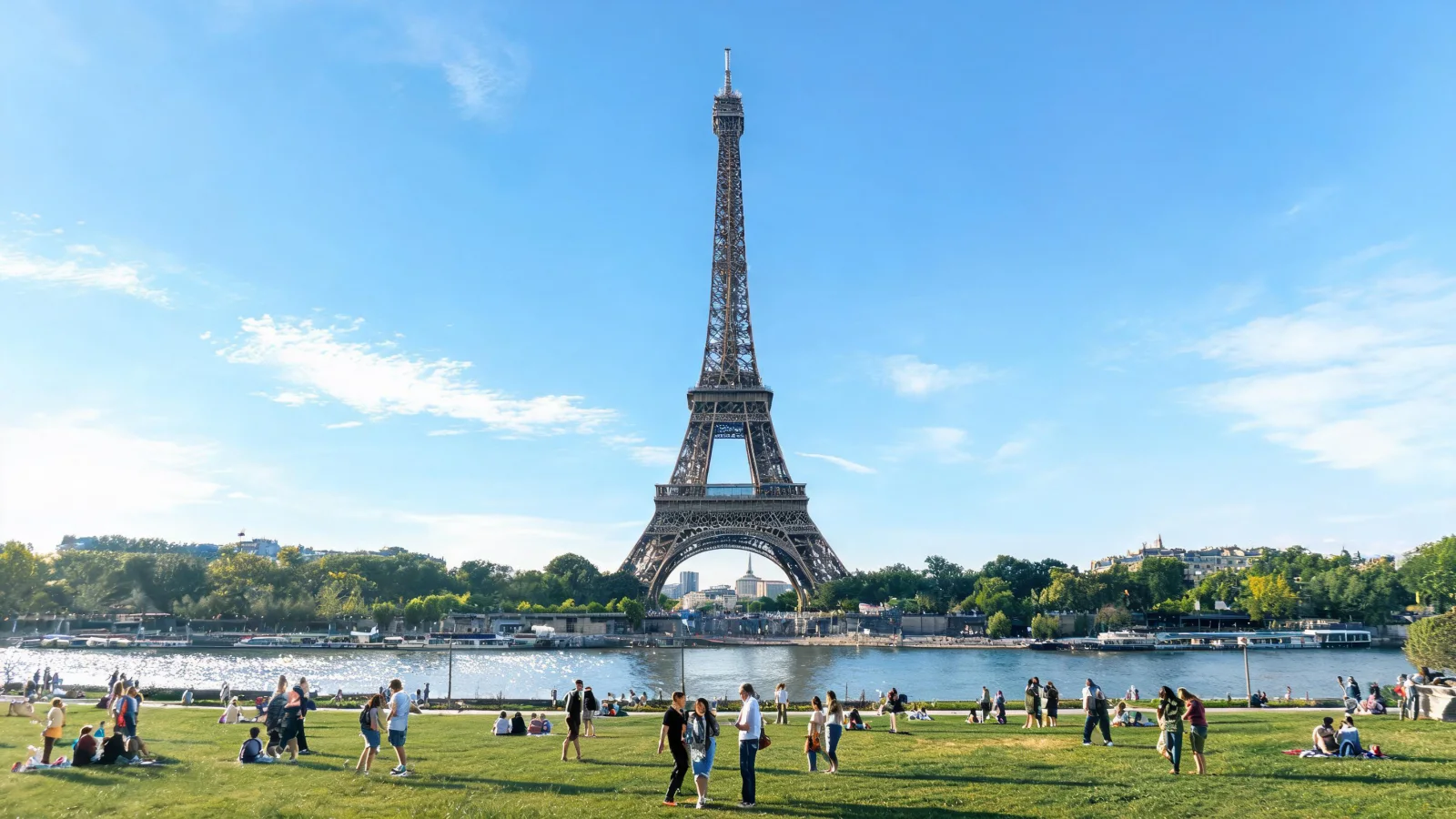
- Eiffel Tower: The absolute symbol of Paris. Summit elevator ticket approx. 28–35 €, stairs to the second floor cheaper (about 11–18 €); strongly recommend booking a timed slot online in advance, otherwise on-site queues can be 1–2 hours. Allow 2–3 hours. Opposite Place du Trocadéro is the best spot for a full view of the Eiffel Tower, free.
- Musée d'Orsay: Housed in a former railway station, home to the Impressionists with real masterpieces by Monet, Van Gogh, Renoir, Degas—many find it more enjoyable than the Louvre. Ticket approx. 14–16 €, allow 2–3 hours, late opening on Thursdays.
- Musée de l'Orangerie: Built for Monet's eight large-scale Water Lilies, the oval rooms are unique. Ticket approx. 12–13 €, 1 hour is enough, often sold as a combined ticket with Musée d'Orsay.
- Les Invalides and Napoleon's Tomb: Gold-domed building, contains the Army Museum, ticket approx. 14–15 €, allow half a day if interested in military history.
② Right Bank of the Seine: Louvre and Grand Boulevards (one day)
- Louvre Museum: World-class collection, three major treasures: Mona Lisa, Venus de Milo, Winged Victory of Samothrace. Ticket approx. 22 €, must book a timed ticket online, otherwise you'll face long queues under the glass pyramid. The museum is huge; plan to see a few specific works in 3–4 hours, don't try to see it all at once.
- Champs-Élysées & Arc de Triomphe: Place de la Concorde (obelisk) → Champs-Élysées → Arc de Triomphe, walking about 2 km. Arc de Triomphe rooftop offers views of 12 radiating avenues, ticket approx. 13–16 €.
- Grand Palais and Petit Palais: Petit Palais permanent collection is free, worth a visit if passing by; Grand Palais has temporary exhibitions, entry fee varies.
③ Île de la Cité and Historic Quarter (half to one day)
- Notre Dame Cathedral: Reopened recently after the 2019 fire. Exterior and square are free, interior visit may require reservation; check the official website for latest arrangements.
- Sainte-Chapelle: The pinnacle of Gothic stained glass, entire walls of color, sunny days feel like stepping into a kaleidoscope, ticket approx. 11–13 €, highly recommended.
- Conciergerie: Next to Sainte-Chapelle, where Marie Antoinette was imprisoned. Combined ticket available with Sainte-Chapelle.
④ Montmartre and Neighborhood Stroll (half day)
- Sacré-Cœur Basilica and Montmartre: White dome overlooks all of Paris, church free, dome access extra. Place du Tertre is filled with artists, one of Paris's most vibrant neighborhoods, but also a hotspot for pickpockets and aggressive bracelet sellers, guard your belongings.
- Le Marais and Latin Quarter: Marais is a mix of boutique shops, Jewish cuisine, and LGBTQ+ culture; Latin Quarter has the Panthéon, Sorbonne University, and Luxembourg Gardens, dense with cafés—ideal for a leisurely non-sightseeing day.
⑤ Classic Nearby Attractions (add for 5–7 day itineraries, half to full day round trip)
- Palace of Versailles: The palace of the Sun King Louis XIV, must-see Hall of Mirrors and French gardens, extremely crowded in peak season. Palace ticket approx. 18–21 €, full pass including fountain show more expensive (approx. 24–32 € depending on water show schedule). Take RER C line about 40 minutes, must book a timed ticket online in advance, buying on site and queuing can waste half a day. Allow a full day.
- Château de Fontainebleau: Another royal palace, quieter and less crowded than Versailles, surrounded by forest. Train plus shuttle about 1 hour, ticket approx. 12–14 €, suitable for a second visit or those avoiding crowds.
Classic Route Plans (ready to use)
- 1-day highlights: Photo at Trocadéro → Visit Eiffel Tower → Walk along Seine → Place de la Concorde → Champs-Élysées → Arc de Triomphe, return to Eiffel Tower for evening light show (every hour after sunset, about 5 minutes).
- 3-day classic: D1: Eiffel Tower area + Musée d'Orsay + Seine cruise; D2: Louvre (morning) + Île de la Cité (Sainte-Chapelle, Notre Dame exterior) + Champs-Élysées & Arc de Triomphe; D3: Musée de l'Orangerie + Montmartre + Le Marais stroll.
- 5-day in-depth: Add to 3-day: D4: Versailles full day; D5: Les Invalides + Latin Quarter (Panthéon, Luxembourg Gardens) + free shopping.
- 7-day: Add D6: Fontainebleau or Giverny (seasonal) day trip; D7: Père Lachaise Cemetery + Musée Picasso + café and shopping, relaxing pace.
Transportation, Tickets, and Budget
- City transport: Métro is dense, cheap, and the main way to get around, 14 lines cover almost all attractions. Buy a Navigo weekly pass or single tickets; many gates now accept contactless payment with phone or bank card directly, saving you from buying tickets. From airport to city: Charles de Gaulle (CDG) can take RER B line about 40–50 minutes, more reliable than taxis; also Roissybus direct.
- Nearby destinations: Versailles via RER C, Fontainebleau via Transilien R line plus shuttle bus. Be aware of "city zone tickets" vs "cross-zone tickets"; wrong ticket can result in fines if checked.
- Tickets: For popular spots like Louvre, Musée d'Orsay, Versailles, Eiffel Tower, always book timed e-tickets online, scan to enter. If staying multiple days and planning to visit many museums, consider the "Paris Museum Pass" – it covers Louvre, Musée d'Orsay, Versailles, etc., but does not include Eiffel Tower entry, and some venues still require a separate time slot even with the pass.
- Cost reference: Excluding flights and accommodation, average daily ticket and transportation costs per person about 200–400 RMB; meals vary widely: street crêpe or baguette sandwich around 10 €, casual restaurant about 30–40 € per person, Michelin-starred more. All estimates, check latest official and on-site prices.
Food and Shopping
Parisian dining isn't about "checking in famous places" but everyday street life: fresh croissants and baguettes from the bakery in the morning, crêpes (sweet and savory) at street corners, a steak frites, onion soup, duck confit, and a variety of cheeses and oysters. Café culture is the soul of Paris: order a coffee and sit for an afternoon watching the street, no one will rush you; Left Bank classics like Café de Flore and Les Deux Magots are historic but pricey, more about ambiance. For desserts, don't miss macarons, éclairs, and opéra cake.
For shopping, Galeries Lafayette and Printemps are two major department stores near the Opéra. Their golden domes are worth seeing, most offer tax refund (Tax Refund): eligible for same-store minimum amount, process at the airport before departure—allow time and keep receipts and unused items. Perfume, skincare, and affordable luxury bags are common souvenirs. Reminder: "asking for signatures / giving bracelets" and "finding a gold ring and asking if you lost it" near stores and attractions are scams—ignore them.
Pitfalls and Tips
- Visa: For France, a Schengen visa is required; apply in advance, confirm latest requirements and appointment channels before travel. Prepare complete documents and financial proof.
- Language: French people's English proficiency varies. Attractions and metro have English signs, but using a few French phrases (Bonjour, Merci) helps when ordering or asking directions; Chinese service is basically non-existent.
- Payment: Bank cards (Visa/Mastercard) are almost universally accepted; card payments are the norm. Bring an international card with contactless enabled and small amount of cash as backup; many places no longer accept large bills.
- Pickpockets and street scams (very important): Metro, Eiffel Tower, Sacré-Cœur, Louvre queue areas are high-risk for pickpocketing. Wear backpack in front, keep phone out of pockets; beware "signature surveys," "fake charity donations," "bracelet traps," "illegal taxi touts." Keep copies of documents separate from originals.
- Booking and queues: Louvre, Musée d'Orsay, Versailles, Eiffel Tower almost always require advance timed tickets online; buying on the spot often means sold out or long waits. Some museums close on Mondays or Tuesdays (Louvre Tuesday, Musée d'Orsay Monday); check before you go.
- Strikes and timing: France occasionally has transport strikes (grève), which can affect metro and trains. Keep schedule flexible and check local notices.
Should you hire a Chinese-speaking guide / private driver?
Self-guided Paris isn't too difficult, but in some situations, hiring a local Chinese-speaking guide or driver-guide can save a lot of hassle: traveling with elderly or children, itinerary includes Versailles / Fontainebleau etc. (managing RER and shuttles can be confusing and you might buy wrong tickets and get fined), want to save time researching booking and queuing, first time in Europe, or language barrier and fear of pickpockets and scams. A guide knows the ropes, can help book timed tickets for museums, avoid peak hours, and let you spend time enjoying sights and walks instead of navigating and queuing.
How to find a reliable one: prioritize credentials, real reviews, ask them to clearly itemize fuel, tolls, parking, whether tickets are included, guide's meals in the quote. Don't pay full amount privately or off-platform. You can also post a request on Dijiexia (specify dates, number of people, places you want to visit, e.g., "one day central Paris + one day Versailles") and let multiple local Chinese-speaking guides bid and quote – compare credentials and prices before confirming. With multiple quotes for the same itinerary, you get fairer pricing and easier to find the right person; contact details are protected before confirmation. Decide whether and for how many days to hire based on your schedule and budget, not just for convenience.
Frequently Asked Questions (FAQ)
Is Paris safe for independent travel? Core tourist areas are well-managed and crowded; main risks are pickpocketing and small street scams, not violence. Keep your bag secure, don't trust strangers approaching you, store valuables separately – you'll be fine; at night, stick to main streets and crowded areas.
Can I visit without speaking French? Yes. Attractions and metro have English; card payments and online booking reduce language dependency significantly. As long as you pre-book timed tickets and save offline maps, you're good. If you feel overwhelmed, or are traveling with elderly or children, you can hire a Chinese-speaking guide for half a day or a day to cover key areas and Versailles.
Is the Paris Museum Pass worth it? It depends on how many museums you plan to visit. If you intend to enter Louvre, Musée d'Orsay, Versailles, Arc de Triomphe, etc., within two or three days, the pass can be cost-effective and save queue time. However, it does not include Eiffel Tower entry, and popular museums even with the pass may still require a separate time slot. List the attractions you want and do the math before buying.