
One-sentence summary: Melbourne's city center itself is compact—two or three days are enough to explore it thoroughly—but what makes it worth a dedicated flight is its outskirts: the Great Ocean Road, Phillip Island penguins, and Yarra Valley wineries. Taking these into account, I recommend 4 to 5 days; if you want to drive the Great Ocean Road and stay overnight without rushing, add one more day. Before you go, remember that the seasons are reversed in the Southern Hemisphere—November to March is the warm season, and Christmas is actually the peak of summer there.
How many days to stay and when to go (Southern Hemisphere reversal)
Many people lump Melbourne and Sydney together, assuming "one city, two to three days," and end up making a mistake in Melbourne: the city center is indeed small—Flinders Street, Federation Square, graffiti lanes, and the Botanic Gardens can be covered in a day and a half; but Melbourne's real highlights lie in the half-day to full-day suburban routes beyond the city. The Great Ocean Road alone can eat up an entire day or even two. So pure city center takes 2 days, plus the Great Ocean Road takes 1 day, plus Phillip Island or Yarra Valley takes 1 day, totaling 4 days—the most comfortable pace for most people; for those traveling with elderly or children and not wanting to rush every day, 5 days is more relaxed.
Season is the most important thing to get straight in your head beforehand about Melbourne. It's in the Southern Hemisphere, so seasons are completely opposite to those in China: December to February is summer (often 25–35°C during the day, Christmas is the local summer holiday peak season, with the most expensive flights and hotels); June to August is winter, cold and wet, feeling colder than the temperature suggests. The most comfortable times are autumn from March to May and spring from September to November—cool, less crowded, great light, and the Botanic Gardens and wineries are most beautiful then. There's an old local saying: "Melbourne has four seasons in one day." Even in summer, temperature differences between morning and evening and sudden rain showers can come at any time, so bring a jacket and umbrella with you; don't just rely on the temperature you checked before departure.
Must-see attractions
Flinders Street Station and Federation Square
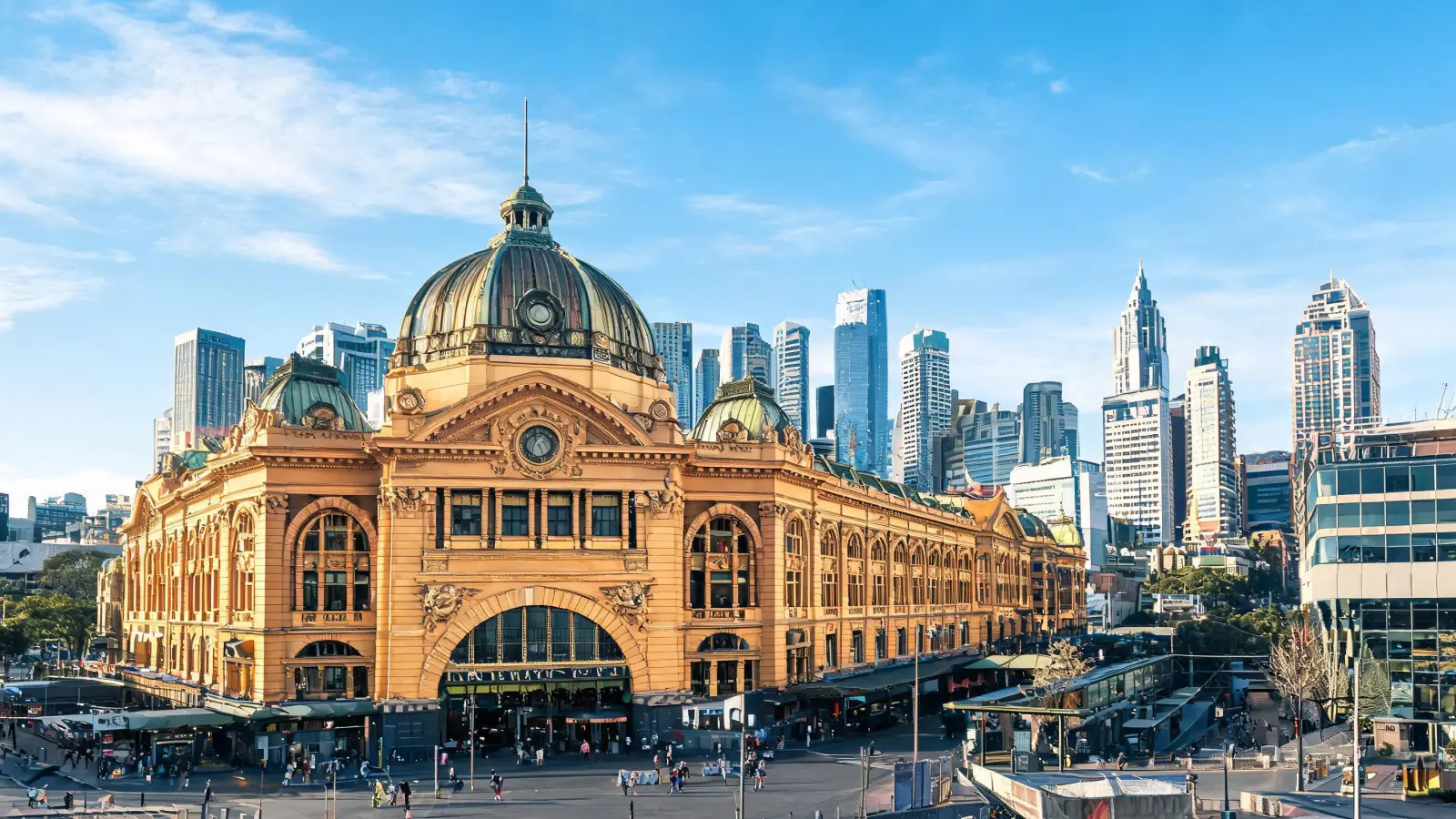
Flinders Street Station is Melbourne's iconic landmark, with its yellow facade and green dome. The row of clocks at its entrance is a classic meeting point for locals. Directly opposite is Federation Square, a group of angular modern buildings that serves as the city's central gathering place for events, exhibitions, and relaxation. The two face each other across the intersection, are free to enter, and are the natural starting point for a walking tour of Melbourne. A few steps north takes you into the laneway district.
Hosier Lane graffiti lane and laneway coffee
Melbourne's soul is hidden in its laneways. Hosier Lane is the most famous graffiti lane, with entire walls covered in layers of street art that change almost weekly; nearby AC/DC Lane and Degraves Street are narrow lanes packed with cafes and small restaurants. These lanes are crowded during the day, so go before 9 a.m. if you want clear photos. The right way to explore the lanes is to stroll and duck into a small cafe for a seat—this is precisely Melbourne's most authentic urban experience.
Royal Botanic Gardens and Shrine of Remembrance
The Royal Botanic Gardens, on the south bank of the Yarra River, is the largest green lung in the city center, with lawns, a lake, and various trees—perfect for a leisurely walk or picnic with kids or elderly, free to enter. Adjacent is the Shrine of Remembrance, a solemn memorial building. Climbing to its top platform offers a view across the lawns straight to the CBD skyline opposite—a great free vantage point for overlooking the city. The two are connected and can be covered in half a day.
Queen Victoria Market
Queen Victoria Market is one of the largest open-air markets in the Southern Hemisphere, over a hundred years old, with fruits, vegetables, cheese, seafood, deli items, and souvenirs. Locals also shop here. It's usually closed on Mondays and Wednesdays (holidays excepted), and has a night market in summer. Check opening hours online before you go. Have lunch at the market—doughnuts, sausages, and oysters are all worth trying.
Yarra River and Southbank
The Yarra River runs through the city, and the Southbank side is a waterfront strip with restaurants, theaters, the casino, and a promenade. Strolling along the river at dusk while watching the CBD lights come on across the water is very pleasant. You can also take a Yarra River cruise. Further southeast is the Crown Entertainment Complex area, lively at night. Southbank is best visited in the late afternoon to evening, separate from daytime city walks.
Suburban Great Ocean Road—Twelve Apostles day trip
The Great Ocean Road is Melbourne's flagship nearby attraction, stretching about 240 km along the coastline. Near its end are the Twelve Apostles—a row of limestone pillars standing in the sea—one of Australia's most iconic coastal sights. Along the way are points like Loch Ard Gorge, Apollo Bay, and Bells Beach. The drive from Melbourne city center alone takes about 3 hours each way, so a day trip is quite tight (see pitfalls below), but the scenery is worth it.
Phillip Island Penguin Parade
Phillip Island is about 1.5 to 2 hours' drive from the city. Its main draw is the Penguin Parade at dusk, when little blue penguins (the world's smallest penguin species) come ashore in groups to return to their burrows. The viewing area opens after sunset, times vary by season, and tickets must be booked in advance. The island also has a Koala Conservation Centre and Seal Rocks, suitable for a full day combined with the penguins. Note that photography is prohibited at the viewing area (flash disturbs the penguins), so don't bother bringing a camera.
Dandenong Ranges / Yarra Valley wineries
The Dandenong Ranges are a rainforest mountain area east of the city, home to the famous Puffing Billy steam train (a hit with kids). The Yarra Valley is Melbourne's wine region, with rows of wineries where you can taste wine, enjoy farm lunches, and maybe catch a hot air balloon if you're lucky. These two areas are close to each other and often form a separate suburban route from Penguin Island, suitable for those who prefer a slower pace and don't want to see the sea every day.
Classic itineraries (2 / 3 / 5 days, including Great Ocean Road)
2-day highlights (city only): Day 1: Flinders Street Station → Federation Square → Hosier Lane graffiti lane → Degraves Street cafe laneway → Queen Victoria Market, evening at Southbank along the river; Day 2: Royal Botanic Gardens → Shrine of Remembrance → Yarra River cruise, afternoon shopping in the CBD (Bourke Street, Royal Arcade). Suitable for layovers or tight schedules.
3-day classic (city + Great Ocean Road): First two days same as above, Day 3 full-day Great Ocean Road tour (Twelve Apostles), departing early and returning late. This is the most common "minimum to not miss out" option for Melbourne.
5-day relaxed (most recommended): Day 1 city walking (Station—Federation Square—graffiti lanes—coffee lanes); Day 2 Botanic Gardens—Shrine—Queen Victoria Market—Southbank; Day 3 Great Ocean Road day trip (or self-drive overnight two days, then extend the itinerary accordingly); Day 4 Phillip Island Penguin Parade (including Koala Conservation Centre, Seal Rocks); Day 5 Yarra Valley winery tasting or Dandenong Ranges Puffing Billy steam train, return in the late afternoon. If traveling with elderly or children and wanting to cover all suburban highlights, follow this route.
Transport, tickets, and costs (Myki card, free tram zone, airport to city, AUD is expensive)
City public transport uses the Myki card (similar to a transit card, valid for trams, trains, and buses). You can buy and top up the card at stations or convenience stores. Most useful tip: Melbourne's CBD has a "Free Tram Zone"—within this zone, tram rides are completely free, no need to tap on/off. Most major city attractions are within this zone, meaning you can walk around the city center with almost no transport costs. Once you go outside the free zone or take a train, you must use Myki, with fares based on zones and a daily cap.
The airport (Melbourne's main airport Tullamarine, code MEL) has no direct metro into the city. The main option is the SkyBus airport bus to Southern Cross Station, about 40 minutes, one-way adult fare around 20–25 AUD (approx. 95–120 RMB); taxi/rideshare into the city costs about 60–80 AUD (approx. 290–380 RMB), depending on traffic.
For suburban day trips like the Great Ocean Road or Penguin Island, if joining a tour (with vehicle and guide), the per-person range is typically 120–220 AUD (approx. 570–1050 RMB); Phillip Island penguin viewing tickets are extra, standard tickets around 30 AUD (approx. 140 RMB); winery tasting fees vary per estate. All prices above are reference ranges; check official/merchant listings for actual prices. Overall reminder: AUD prices are relatively high; a decent lunch in the city costs 20–35 AUD per person (approx. 95–165 RMB), a coffee is 4–6 AUD, so budget accordingly that it's significantly more expensive than in China.
Coffee and food
Melbourne is considered by many to be the "coffee capital of the world," and that's not an exaggeration—the local coffee culture runs deep: independent boutique cafes line the laneways, almost all roast their own beans, and latte art and quality are generally high. When ordering, knowing two local terms helps: "Flat White" (a signature milk coffee invented in Australia/New Zealand, with thinner milk foam and stronger coffee flavor than a latte) and "Long Black" (similar to Americano but with the opposite order—water first, then espresso). Just duck into any cafe on Degraves Street or AC/DC Lane—it's more authentic than chasing internet-famous spots.
Food-wise, Melbourne is an immigrant city, especially strong in Asian cuisine: Chinatown, Box Hill, and Footscray all serve authentic Chinese, Vietnamese, and Southeast Asian food, very friendly to Chinese palates. For seafood, try oysters and fish & chips at the Queen Victoria Market or Southbank; for dessert, don't miss Italian gelato and coffee on Lygon Street (Little Italy). Brunch is a Melbourne city religion—avocado toast with a Flat White is almost a weekend staple, well worth dedicating a morning to experience.
Pitfalls (Australian visa, Southern Hemisphere season reversal, Great Ocean Road day trip is tight, drive on the left)
Apply for a visa well in advance. Chinese passport holders need to apply for a tourist visa (600 electronic visa) before traveling to Australia—it's not visa-on-arrival. Materials and processing take time; don't leave it until the last minute or you may miss your trip. Be sure to prepare according to the latest official requirements.
Don't assume the seasons. As stressed above: seasons are reversed in the Southern Hemisphere. Going in winter in China means it's summer in Melbourne; going in summer in China means it's winter. Packing based on your departure season will lead to big mistakes. Also, the "four seasons in one day" weather means you must carry a jacket and rain gear at all times.
The Great Ocean Road day trip is indeed tight. The one-way drive is about 3 hours; joining a day tour means departing before dawn and returning after dark, spending most of the day on the bus—tiring for the elderly and children. If budget and time allow, self-driving or hiring a car to stay overnight for two days is much more comfortable. If you can only do a day trip, be mentally prepared for a very full day.
Australia drives on the left. Opposite to China. If driving, the steering wheel is on the right and you drive on the left; you'll need to relearn traffic circles and crossing habits. Even as a pedestrian, look right first when crossing the street—don't follow your Chinese habit of looking left first. This is where tourists are most likely to have accidents.
Other small pitfalls: Queen Victoria Market is often closed on Mondays and Wednesdays; photography is banned at the Penguin Parade viewing area; suburban attractions have very inconvenient public transport—you basically need to drive, hire a car, or join a tour; tipping is not mandatory but restaurants often add surcharges on weekends/public holidays.
Should you hire a Chinese-speaking local guide/driver?
For the two days in the city, you can easily handle it yourself: attractions are within the free tram zone, signs are clear, and plenty of Chinese-language information is available. Self-guided tours work great. The real dilemma is for the suburbs—the Great Ocean Road, Phillip Island, and Yarra Valley are almost unreachable by public transport. You either rent a car and deal with left-hand driving and long distances, or join a bus tour with fixed routes and times.
This is where finding a local Chinese-speaking guide/driver for a private hire becomes very valuable: you get native-language communication throughout the trip, you control the pace at attractions (want to spend an extra half hour at the Twelve Apostles or add a winery along the way—no problem), you avoid crowded buses and don't have to tough out the 3-hour one-way left-hand drive yourself. Especially when traveling with elderly or children, or as a family/group splitting a car, the per-person cost may not be higher than a group tour, but the flexibility and peace of mind are much greater. For trips like the Penguin Parade that end late at night, having someone safely drive you back to your hotel makes a huge difference.
On Dijiexia, you can directly post your suburban needs (e.g., "Great Ocean Road day trip, 4 people, want to add a winery in Yarra Valley"), and local Chinese-speaking guides/drivers can bid on the job. You then compare their qualifications, past reviews, and prices, and choose. The other party cannot see your contact details until you finalize, so communication and price comparison happen on the platform. Leaving the two days in the city for your own free exploration and outsourcing the more tiring suburbs to reliable locals is a convenient way to divide the work when traveling to Melbourne with family.
FAQ
Q: How many days is suitable for Melbourne? Is it okay to just visit the city center?
A: Just the city center is enough in 2 days, but you'll miss the Great Ocean Road and Penguin Island—the attractions that really make Melbourne famous. I recommend at least 3 days (2 city + 1 Great Ocean Road); 4 to 5 days if you want to cover all suburbs at a comfortable pace.
Q: When is the best time to visit Melbourne?
A: Autumn from March to May and spring from September to November are the most comfortable—cool, less crowded, great scenery. December to February is local peak summer and holiday season, with expensive flights/hotels and heat; June to August is cold and wet. Remember the Southern Hemisphere seasons are opposite to China's, and pack according to the actual local season.
Q: Do I have to drive the Great Ocean Road myself? What if I can't drive?
A: Not necessarily. If you don't drive, you can join a one-day group tour—hassle-free but with fixed routes and time, and the 3-hour one-way drive is tight. Alternatively, you can find a local Chinese-speaking driver/guide on Dijiexia for a private hire, with native-language communication and flexible pace; this is often more cost-effective and relaxing for groups with elderly/children. Since Australia drives on the left, don't force yourself if you're not confident.