
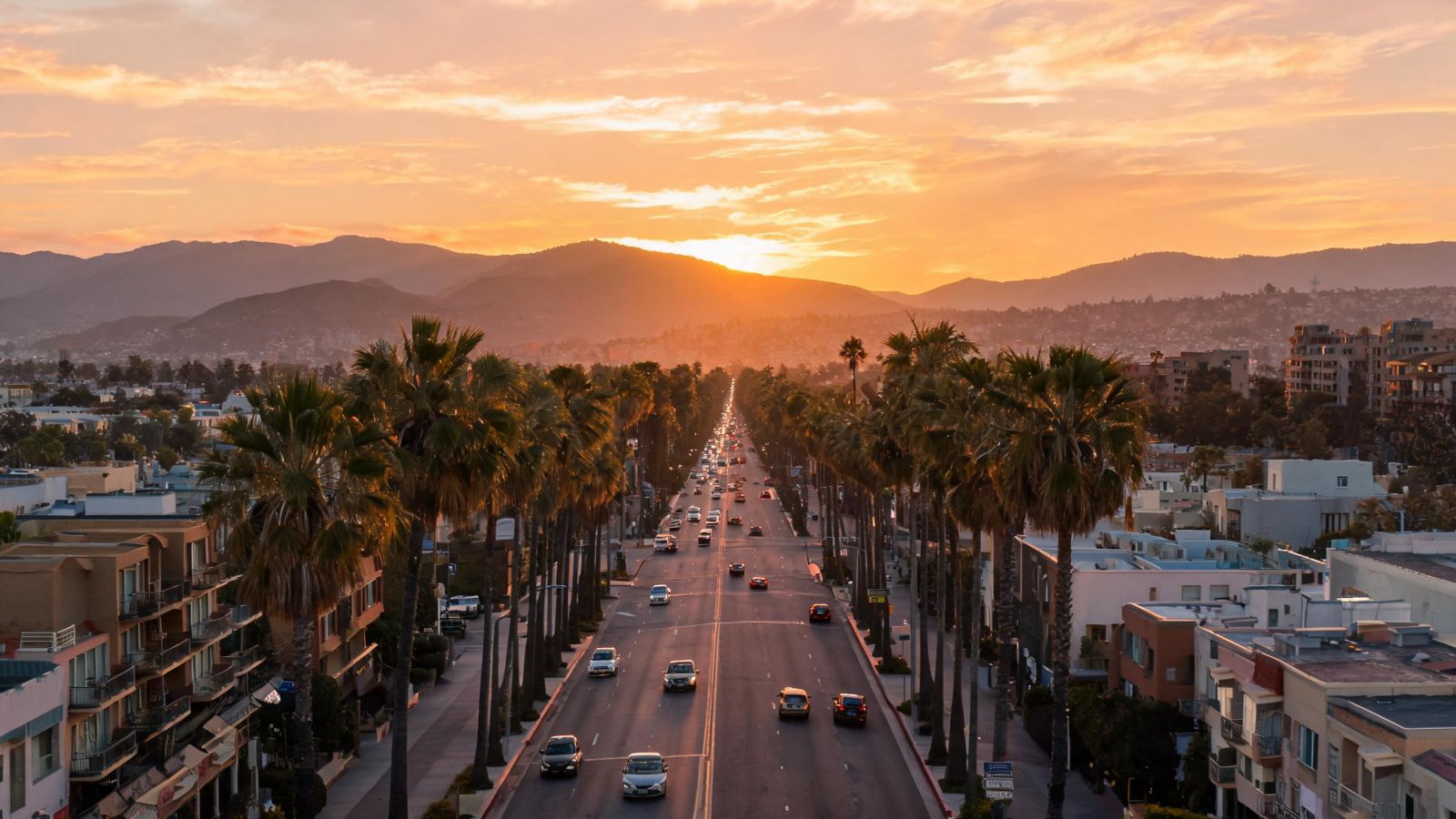
One-sentence conclusion: Los Angeles is not a city you can "finish exploring" — it's a sprawling metropolitan area spread across hundreds of kilometers between mountains and the ocean, with no real downtown core. It doesn't have the dense subway network of Beijing or Shanghai, and landmarks are often 30 to 50 kilometers apart. So the only strategy here is to pick two or three districts to dive deep into based on your interests, and connect them by car or private driver. Don't expect to cover the whole city in one day. Once you decide whether you're here for Hollywood, theme parks, or the beach, most of your itinerary is set.
How many days are enough
Los Angeles itself doesn't have a huge number of "must-see attractions," but because it's so spread out and commuting takes time, you can easily waste hours stuck in traffic. Here's a practical recommendation:
3 days is the minimum — enough to cover Hollywood, one beach (Santa Monica), and one theme park (choose either Universal Studios or Disneyland). The pace will be tight, and you'll need to start early every day. 4 to 5 days is the sweet spot — you can fit in both theme parks (Universal in Hollywood, Disney in Anaheim), plus leave room for The Getty Center, Beverly Hills, beach wandering, and Downtown. If you also want to squeeze in San Diego or Desert Hills Premium Outlets in Palm Springs, aim for 6 to 7 days.
If you're traveling with elderly or children, or if this is your first time in the American West and you're making Los Angeles one stop on a West Coast loop (Las Vegas, Grand Canyon, San Francisco), give it a full 3 days — don't cut it to a day and a half. One theme park alone takes a full day, and watching the sunset at the beach eats up half a day. Time goes fast.
Must-see attractions
Hollywood Walk of Fame & TCL Chinese Theatre
The Hollywood Walk of Fame is the sidewalk embedded with over 2,000 star-shaped brass plaques bearing celebrity names. Right next to it is the TCL Chinese Theatre (formerly Grauman's Chinese Theatre), with its iconic Chinese-style eaves and the handprints and footprints of movie stars set in concrete out front. To be honest, this area is a classic "since you're here" checkpoint — crowded, a bit commercialized, with costumed characters hustling for tips. Plan for half a day, combine it with the Dolby Theatre (home of the Oscars) and the Ovation Hollywood shopping center, then move on. Don't expect too much.
Griffith Observatory & the Hollywood Sign
This is my favorite free attraction. Griffith Observatory sits on a hill, with free entry and exhibits (only the planetarium show costs extra). It offers the best panoramic view of the Los Angeles Basin and the white "HOLLYWOOD" sign in the distance. Come in the evening to watch the city lights come on and the sun set toward the Pacific. La La Land filmed scenes here. Parking is limited, and the mountain road can get congested on weekends and holidays, so head up in the afternoon and stay until dark.
Universal Studios Hollywood & Disneyland Resort in Anaheim
These two world-class theme parks are the real reason many people come to Los Angeles. Universal Studios Hollywood features The Wizarding World of Harry Potter, Super Nintendo World, and the exclusive "Studio Tour" tram ride through actual movie sets. It's close to the city and doable in one day. Disneyland Resort is in Anaheim, Orange County — about 45 km (40+ minutes drive) from downtown. It includes Disneyland Park and Disney California Adventure Park. The very first Disneyland in the world is here, with a more classic atmosphere. Tickets for both parks should be bought in advance on the official websites — they use dynamic pricing, and during peak season they may sell out on the day. More on that in the tips section below.
Santa Monica Beach & Venice Beach
Santa Monica has the iconic wooden pier, the Route 66 end sign, a small amusement park, and wide sandy beaches perfect for sunset — it's the easiest way to experience Southern California beach culture. Just south is Venice Beach, with a completely different vibe: street performers, Muscle Beach outdoor gym, skate park, murals — edgier and more gritty. You can link both beaches in one afternoon; renting a bike to ride along the beachfront path is a great way to do it.
The Getty Center
The Getty Center is an art museum founded by oil tycoon J. Paul Getty. Admission is free (only parking costs money). It sits atop a hill, accessible via a dedicated tram. Besides masterpieces like Van Gogh's Irises, the architecture itself — white travertine stone, geometric gardens, and panoramic views of Los Angeles — is worth the visit. Art and architecture lovers can easily spend half a day here. It's a quiet, high-value escape from the crowds.
Beverly Hills & Rodeo Drive
Beverly Hills is the celebrity mansion district, and Rodeo Drive is its iconic luxury shopping street, famous from Pretty Woman. Even if you don't shop, you can soak up the atmosphere and snap photos of the palm-lined avenues. An hour or two is enough. It's close to West Hollywood and the Getty Center, so you can include it in a Westside itinerary.
Downtown (DTLA)
Downtown Los Angeles has been revitalized in recent years. Highlights include: The Broad (a contemporary art museum with free admission, but requires advance online reservation), the Walt Disney Concert Hall (with its silver curved exterior), the retro Grand Central Market food hall, and the Angels Flight funicular. It's not a traditional "city center" but a cultural and dining district. Half a day is enough.
Nearby options worth a quick mention: San Diego (SeaWorld, naval port, near Mexican border) is about two hours south; Palm Springs (desert resort town and Desert Hills Premium Outlets) is about two hours east. Both work as separate day trips.
Classic itineraries (3/4/5 days, including parks and beaches)
3-Day Essential (Hollywood + one park + one beach)
Day 1 Arrival, afternoon at Hollywood Walk of Fame, TCL Chinese Theatre, Ovation Hollywood. Evening at Griffith Observatory for night views. Day 2 Full day at Universal Studios Hollywood. Day 3 Morning at The Getty Center, afternoon at Santa Monica + Venice Beach for sunset. End.
4-Day Comfort (two parks)
Add a full day at Disneyland (Anaheim) to the 3-day plan, and combine The Getty, Beverly Hills, and Rodeo Drive into a Westside half-day + beach half-day "Culture + Beach" day.
5-Day In-Depth
Day 1 Hollywood area + Observatory. Day 2 Universal Studios. Day 3 Disneyland (Anaheim). Day 4 The Getty Center + Beverly Hills + Rodeo Drive + Santa Monica sunset. Day 5 Downtown (The Broad, Walt Disney Concert Hall, Grand Central Market) half-day, then shopping (outlets) or free time. Mix theme parks and beach days to avoid two straight days of heavy walking.
One key principle for route planning: group attractions in the same district on the same day. Don't do Hollywood in the morning, then drive 50 km to Disneyland and back — or a third of your day will vanish on the 405 or 101 freeways.
Transportation & Costs (USD, with RMB reference)
This is the thing you need to figure out before you go: public transportation is very unfriendly to tourists here. While there is a Metro train and bus system, the lines are sparse and don't cover most attractions. Getting between theme parks, beaches, and The Getty almost always requires a car. I strongly recommend renting a car or hiring a private driver — this isn't a luxury, it's a necessity.
Self-driving: Economy rental about $40–70/day (~290–510 RMB), plus insurance and gas. You'll need a valid driver's license (Chinese license holders should get an international driving permit or a notarized translation — policies vary by rental company, check their requirements). Los Angeles has some of the worst traffic in the country. Highways 101, 405, and 10 turn into parking lots during rush hours. Build extra buffer time into every leg of your trip.
Parking: Attractions and hotels charge separately for parking. In popular areas like downtown and Hollywood, expect $15–40/day (~110–290 RMB). Beach and theme park lots run $20–35 per entry. Street meters have time limits and street-cleaning schedules — read the signs carefully, as towing is expensive.
Rideshare (Uber/Lyft): Convenient but expensive for long distances. A trip from the airport to downtown can easily be $40–70. Only suitable for occasional short trips, not as a primary mode.
Private driver / Chinese-speaking guide: Pricing varies by vehicle type and duration. A half-day or full-day service takes care of "driving + parking + navigation," which is especially hassle-free for those unfamiliar with local roads, those who don't want to drive, or families with elderly or children. See below for details. All prices above are rough ranges; actual costs depend on official rates and vendor quotes.
Food & Shopping
Los Angeles is an immigrant melting pot, so the food scene is incredibly diverse. Mexican food is the soul of the city — tacos and burritos from street-side shops are cheap and authentic. Koreatown has top-notch Korean BBQ and tofu stew, open late. The San Gabriel Valley area has a large Chinese community with authentic Chinese, Sichuan, and Cantonese dim sum that rivals what you'd find back home — perfect if you're craving familiar flavors. Grand Central Market in downtown gathers international bites under one roof. In-N-Out Burger is a California institution — almost a must-try "initiation rite."
For shopping: luxury goods on Rodeo Drive in Beverly Hills; bargain hunting at outlets — Citadel Outlets east of downtown is closest, Disney's shopping district in Anaheim, and Desert Hills near Palm Springs for a bigger selection. Universal CityWalk and Santa Monica's Third Street Promenade are good for browsing and eating. US prices are listed without tax, so add about 9.5% sales tax at checkout.
Tips & Pitfalls
Visas & ESTA: To visit the US, you need a B1/B2 tourist visa in advance. If you hold a passport from a Visa Waiver Program country, you need ESTA authorization. Chinese mainland passport holders are not in the VWP and need a regular visa — allow plenty of time for appointment scheduling and processing.
Allow extra time for traffic: I can't stress this enough — LA commuting times are unpredictable. For flights, park openings, show times, always factor in highway congestion. Better to arrive early.
Safety in some areas: Downtown's Skid Row area, Hollywood Boulevard at night, and some Metro stations can feel sketchy. Avoid walking alone at night in those places, keep valuables out of sight, and never leave anything visible in your parked car — break-ins are common. Take all belongings with you when you park.
Buy theme park tickets in advance: Both Universal and Disney use dynamic pricing and may sell out on peak days. Always purchase tickets in advance on the official websites and select your date. Consider adding a fast pass option (Express / Genie+ / Lightning Lane — check official names) to save hours in line. Without it on crowded days, you won't get on many rides.
Tipping culture: Expect to tip 15–20% at sit-down restaurants. The payment screen will prompt you to choose an amount, so have it in mind so it doesn't shock you.
Should you hire a Chinese-speaking guide/driver?
It depends on your situation, but in Los Angeles, the question of "whether to hire a car" carries more weight than in most cities. I've already laid out the reasons: the city is huge, attractions are spread out, public transport is unreliable, and traffic and parking are extra painful.
If your English is good, you're comfortable driving on US highways, and your schedule is flexible, then renting a car gives you the most freedom and is the cheapest option. But if you fall into any of these categories, a Chinese-speaking local guide with a car often ends up being more convenient and even cost-effective: you're unfamiliar with US road rules, uncomfortable with left-hand driving and wide highways; traveling with elderly or children and need help with luggage and flexibility; you want to efficiently link scattered points like Hollywood, the Observatory, The Getty, and the beach without fiddling with navigation and parking; or you need theme park drop-off/pickup — parking once and having a place for tired kids to nap changes the whole experience.
This is where HeroGuide (地接侠) can help: you post a request on the platform (e.g., "5 days in LA with Universal + Disney transport, beach + Getty route, two elderly persons"), and local Chinese-speaking guides and drivers will bid on it. You compare their credentials, reviews, and prices before deciding. Your contact info is hidden until you accept a bid. Outsourcing the most tiring parts — driving, parking, navigating — frees up time and energy that often outweighs the extra cost. Of course, whether you need this and to what extent depends entirely on your budget and plans. No pressure.
FAQ
Q: Universal Studios or Disneyland if I only have time for one?
A: Depends who you're with. For young kids, classic fairy-tale atmosphere, parades, and fireworks, choose Disneyland in Anaheim. For movie fans, thrill rides, Harry Potter, and Super Nintendo World, and if you want to stay closer to the city, choose Universal Studios Hollywood. Universal is more doable in one day; Disney has more content and deserves a full day.
Q: Can I get around LA without a car, using only public transport?
A: It's very difficult. Metro trains and buses don't reach most major attractions, and relying on Uber for long distances gets expensive. The practical options are to rent a car or hire a private driver to link the scattered spots. Relying solely on public transit will eat up your time waiting and transferring.
Q: How safe is LA? Should I be worried?
A: The areas most tourists visit — beaches, theme parks, The Getty, Beverly Hills — are generally safe if you use common sense. The main concern is car break-ins: never leave anything visible in your parked car. Also avoid walking alone at night in Downtown's Skid Row area and Hollywood Boulevard. Follow those precautions and you'll be fine.