
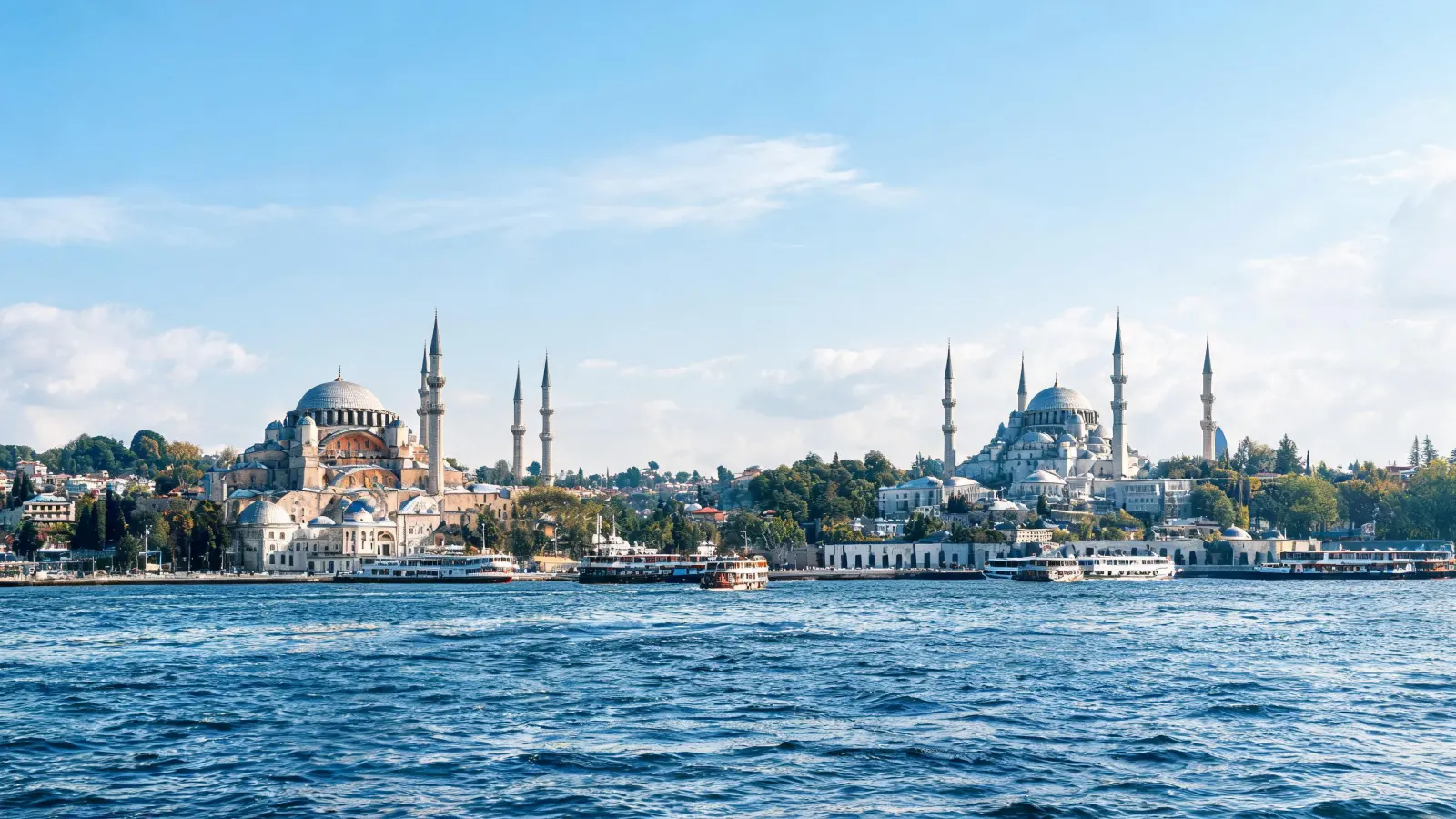
One-sentence conclusion: Istanbul straddles Europe and Asia, with the highlights almost entirely on the European side—the old town (Sultanahmet) and the district across the Golden Horn (Beyoğlu), separated by the Golden Horn and the Bosphorus Strait. Allow 3 full days for a relaxed pace; 2 days is a "highlights express," and 5 days lets you add a deep Bosphorus tour and the Asian side. The real challenge isn't the route—attractions are dense and walkable plus tram—but three things: Hagia Sophia and Topkapı Palace need crowd avoidance, mosques have dress codes and prayer time restrictions, and the rapid depreciation of the lira means prices change daily and rip-off schemes are common. Sort these out, and Istanbul becomes a highly cost-effective destination straddling two continents.
How many days are ideal? (How to choose 2 / 3 / 5 days)
Attractions are highly concentrated, but each site has deep historical layers—Byzantine, Ottoman, modern Turkey stacked on top of each other. Here’s a practical judgment:
- 2 days (transit stopover / tight on time): Day 1 focus on the old town Sultanahmet—Hagia Sophia, Blue Mosque, Basilica Cistern, Topkapı Palace all within walking distance; Day 2 morning at the Grand Bazaar, afternoon Bosphorus cruise, evening Galata Tower sunset. "Minimum configuration without regrets."
- 3 days (most recommended): Loosen the pace on top of the 2-day plan; Day 3 for the new town (Galata Tower, Istiklal Street, Taksim), plus a ferry to the Asian side Kadıköy for markets and seafood. Most people find this "just right."
- 5 days: First 3 days same as above; Day 4 in-depth exploration of both sides of the strait (Dolmabahçe Palace, Ortaköy, Rumeli Fortress); Day 5 a nearby excursion—Princes' Islands or a day trip to Bursa.
A commonly overlooked point: Mosques hold prayers 5 times daily; during prayer times (especially Friday noon Jumu'ah), tourists are temporarily not allowed inside. When planning, it's best to schedule mosques early in the morning or between two prayer times.
Must-visit attractions (by district, with price ranges and suggested time)
Old town Sultanahmet: Hagia Sophia / Blue Mosque / Topkapı Palace / Basilica Cistern
This area is the soul of Istanbul, with four major sights all within a 10–15 minute walk. Hagia Sophia (Ayasofya) is the pinnacle of Byzantine architecture, having served as an Eastern Orthodox cathedral, mosque, and museum; now restored as a mosque, with a paid upper gallery viewing area. The coexistence of mosaics and a giant dome, Christian and Islamic elements, is most striking. Blue Mosque (Sultanahmet Camii) sits right across, named for its interior of over 20,000 blue Iznik tiles; entry is free, just queue off-peak between prayer times. Topkapı Palace (Topkapı Sarayı) was the Ottoman sultans' residence for 400 years; highlights include the Treasury, Harem, and courtyards overlooking the strait. Basilica Cistern (Yerebatan Sarnıcı) is a Byzantine underground reservoir with over 300 columns reflecting in the water and the famous "Medusa heads," offering a unique atmosphere.
- Price range: Hagia Sophia upper gallery ticket approx. 25–30 EUR equivalent in lira (priced in EUR for foreign tourists, about RMB 200–240); Topkapı Palace approx. 1500–1700 lira, Harem extra; Basilica Cistern approx. 700–1000 lira, evening tickets more expensive; Blue Mosque free. These are rough ranges; check official on-site prices, as lira fluctuates and prices change frequently.
- Suggested time: All four together take half a day to a full day; Topkapı Palace including Harem at least 2.5–3 hours. Recommended to hit Hagia Sophia or Topkapı Palace early in the morning to avoid tour groups.
Grand Bazaar & Spice Bazaar
Grand Bazaar (Kapalıçarşı) is one of the world's largest and oldest covered markets, with over 4,000 shops and thousands of lanes selling carpets, copperware, lamps, gold jewelry; it's like a maze, free entry, pure experience. Spice Bazaar (Mısır Çarşısı, also called Egyptian Bazaar) is near the New Mosque and Galata Bridge, offering spices, Turkish delight (lokum), nuts, tea; smaller but more down-to-earth. Both are negotiable.
- Price range: Free entry.
- Suggested time: Grand Bazaar 1–2 hours, Spice Bazaar 30–60 minutes; they're a 10–15 minute walk apart and can be visited together.
Bosphorus Strait cruise & both shores
You haven't truly seen Istanbul without a Bosphorus cruise. Bosphorus (Boğaziçi) separates Europe and Asia; from the water, you see mosques, palaces, wooden waterside mansions (yalı), and suspension bridges on both sides—the most classic view of the city. Cruises come in two types: public ferries (Şehir Hatları) are cheap, pay with transport card; tourist-oriented sightseeing boats include round-trip and stops, pricier but hassle-free. Worth disembarking on the shores include Dolmabahçe Palace (Dolmabahçe Sarayı)—a late Ottoman European-style palace with a crystal staircase—and Ortaköy mosque and square.
- Price range: Public ferry one-way with Istanbulkart about a few dozen lira; sightseeing boat short route 1–1.5 hours approx. 400–800 lira, longer full route more expensive. Dolmabahçe Palace ticket approx. 1500 lira. Check on-site.
- Suggested time: Short cruise 1.5 hours; in-depth exploration of both shores can take half a day to a full day.
New town Beyoğlu: Galata Tower / Istiklal Street / Taksim
Cross Galata Bridge and you're in the new town, where the atmosphere shifts from ancient to trendy. Galata Tower (Galata Kulesi) is a medieval stone tower built by Genoese; climb to the top for a 360-degree view of the old town, Golden Horn, and the strait—most beautiful at sunset, also longest queue. Uphill from there is Istiklal Street (İstiklal Caddesi), a 1.4 km pedestrian shopping avenue with a nostalgic red tram clattering through, lined with shops, bookstores, dessert shops, and historic alleys, ending at Taksim Square—the heart and transport hub of modern Istanbul.
- Price range: Galata Tower ticket approx. 30 EUR equivalent in lira (about RMB 240); Istiklal Street and Taksim free. Check official.
- Suggested time: Galata Tower 1 hour (including queue); Istiklal Street browsing and eating 1.5–2 hours.
Asian side: Kadıköy & Üsküdar
A 20-minute ferry takes you to the Asian side, where you'll find a more local, less touristy Istanbul. Kadıköy market district is full of seafood, cafes, and bars—young and relaxed; Üsküdar waterfront offers views of the Maiden's Tower (Kız Kulesi) and the old town skyline. No major must-visit sights, but the atmosphere and value are great for a half-day addition to itineraries of 3+ days. Cross-strait ferry with transport card costs a few dozen lira; entry-free within the area, half a day is enough.
How to string together classic itineraries (ready to use)
2-day highlights:
- Day 1 Old Town: Early morning Hagia Sophia → Blue Mosque (avoid prayer times) → Basilica Cistern → afternoon Topkapı Palace, evening stroll in Sultanahmet Square.
- Day 2 Bazaars + Bosphorus: Morning Grand Bazaar + Spice Bazaar, noon grilled fish sandwich at Galata Bridge, afternoon short Bosphorus cruise, evening Galata Tower for sunset.
3-day classic: Day 1 Four major sights in old town; Day 2 Grand Bazaar, Spice Bazaar + Bosphorus cruise + Dolmabahçe Palace; Day 3 morning Galata Tower + Istiklal Street + Taksim, afternoon ferry to Kadıköy for market and seafood.
5-day in-depth: First 3 days same as above; Day 4 deep exploration of both Bosphorus shores (Rumeli Fortress, Ortaköy, Üsküdar); Day 5 an excursion—Princes' Islands for bike/carriage and relaxation, or a day trip to Bursa to see the first Ottoman capital.
Transportation, tickets & budget
Transport card Istanbulkart: Get one as soon as you arrive in Istanbul. It works on metro, tram, bus, ferry, funicular—almost the entire city. Tapping with the card is cheaper than buying single paper tickets, and there's a "90-minute transfer discount." You can buy and top up the card at machines in the airport and metro stations (card fee + credit amount). Highly recommended for everyone—saves money and avoids the hassle of buying tickets each time.
Airport to city: The main Istanbul New Airport (IST) is in the far outskirts of the European side. Ways to get to the city: metro M11 (requires transfer to old/new town), Havaist airport bus (direct to Taksim and other points), and taxi/ride-hailing (approx. 700–1000+ lira, higher at night and in traffic). Sabiha Gökçen Airport (SAW) is on the Asian side; traveling to the European old town is farther and more time-consuming—check which airport you're landing at when booking.
About the lira and exchange rates: This requires the most mental preparation—the Turkish lira depreciates quickly, and attractions increasingly price tickets in euros for foreign tourists. The lira figures in this article are merely "estimates at the time of writing"; they will likely have changed by your visit. Always rely on on-site and official latest prices. Don't exchange currency at the airport (poor rates); use official exchange offices (Döviz) in the city. For large payments, use credit cards; carry a small amount of cash.
Estimated daily cost per person (excluding accommodation):
- Entry fees: On days with major sights, approx. 60–100 EUR equivalent (foreign tourist tickets like Hagia Sophia, Topkapı, Galata Tower are pricier); on pure market and neighborhood days, can be near zero.
- Local transport: With Istanbulkart, about 50–150 lira per day.
- Food: Street snacks + one proper meal approx. 300–600 lira; seafood and waterfront restaurants more.
- Total: Roughly RMB 300–600 per day, higher during peak season and days with palace tickets. These are estimates; lira fluctuates, check on-site.
Food & shopping
Turkish cuisine is one of the "three great world cuisines." Must-try list: Döner kebab, Şiş kebab, Turkish pizza Pide and Lahmacun, yogurt drink Ayran; the grilled fish sandwich (Balık Ekmek) under Galata Bridge is a classic street food. Desserts: don't miss Baklava and Turkish delight (Lokum), paired with a tulip-shaped glass of Turkish tea (Çay) or Turkish coffee—grounds settle at the bottom, and fortunes can be read. For breakfast, order a spread of cheese, olives, jams—a Turkish breakfast (Kahvaltı) is well worth it.
Shopping centers on the Grand Bazaar and Spice Bazaar: carpets, copperware, tiles, tea, Turkish delight, nuts are all worth bringing. Haggling is the norm—start by offering 50–70% of the quoted price and negotiate; compare prices at several shops. For big-ticket items like carpets and precious metals, be sure to check material certificates and keep receipts. Non-EU visitors can claim Tax Free on single purchases above a certain amount; get the form stamped at the airport upon departure.
Pitfalls & tips
- Visa: Chinese ordinary passport holders can apply for a Turkish e-Visa—fill in and pay online via the official website, much easier than traditional sticker visas. (Specific eligibility, allowed stay, whether a valid third-country visa is required, etc., depend on latest official policy; be sure to use the official Turkish e-Visa website, not scam proxy sites.)
- Mosque etiquette: When entering a mosque, remove shoes, women cover hair with a scarf, and both men and women must not wear shorts, short skirts, or sleeveless tops. Scarves are often available for borrowing at the entrance. 5 daily prayers and Friday noon Jumu'ah mean tourists cannot enter during prayer times; schedule visits in the early morning or between prayers for best timing.
- Shoeshine & restaurant scams: Classic trick—a shoeshiner "drops" his brush in front of you; if you pick it up and hand it back, he will insist on polishing your shoes and then demand a high price. Ignore and walk away. At restaurants, especially seafood and those with waterfront views, always confirm prices before ordering. Beware of "market price," "per serving," unrequested appetizers added to the bill, or inflated totals. Ask for unit prices before ordering and check the bill carefully.
- Crossing continents & distance awareness: The city is huge; traveling between the two sides by ferry/metro requires enough time. Don't cram sights on opposite sides into a single afternoon. During rush hour, traffic is severe; for crossing, prefer ferries or the underwater metro (Marmaray).
- Taxis: Look for yellow cabs with a working meter (taksimetre). Confirm that the meter is on before departure to avoid detours. Using local ride-hailing apps (e.g., BiTaksi) is more reliable. During peak season, queues for Hagia Sophia and Topkapı Palace are long; arrive early or book online if possible.
Should you hire a Chinese-speaking guide/driver?
Istanbul's old town is actually suitable for independent travel—you can handle most of it by walking, tram, and transport card. But in the following situations, hiring a local Chinese-speaking guide or driver-guide can significantly improve your experience:
- Language barrier & on-the-spot communication difficulties: Turkish is the main language; outside major attractions, English is limited and Chinese is almost non-existent. Ordering food, bargaining, and asking for directions can be exhausting. A Chinese-speaking guide makes things much more efficient.
- Want to avoid tourist traps: Market haggling, restaurants with hidden charges, taxi detours, shoeshine scams—a local can help you avoid pitfalls and is more cost-effective than learning by mistake.
- Bosphorus cruise & cross-city arrangements: The routes/stops for Bosphorus cruises, day trips to the Princes' Islands or Bursa—traffic and transfers are complicated. A Chinese-speaking driver-guide with a private car saves hassle.
- Traveling with elderly/children or wanting to understand history: Eighty percent of the value of Hagia Sophia and Topkapı Palace lies in "the stories behind them." Visiting with a guide is a completely different experience. Elderly and children also need someone to help plan the pace and find restrooms and restaurants nearby.
How to find a reliable one: Check credentials (guide/driver license, vehicle compliance), look at real reviews, not just price. Have the provider list all items clearly: fuel, tolls, entrance fees, parking, guide's meals, overtime charges to avoid "low price to attract customers, then add charges on site." Pay through a platform in full, don't transfer privately, and keep records.
If you don't want to compare one by one, you can post your requirements on Dijiexia (destination, dates, number of people, whether you need a guide or private car/airport transfer/translation accompaniment, budget) and let local Chinese-speaking guides actively bid and quote. Compare credentials, real reviews, and prices before deciding. Receiving multiple quotes is fairer; before negotiation, contact details are anonymized for protection, and funds and communication are recorded. Specific terms depend on each quoter's actual commitments.
Frequently Asked Questions (FAQ)
Do I need a visa in advance for Istanbul?
Yes. Chinese ordinary passport holders can usually apply for a Turkish e-Visa—fill out the form and pay online on the official Turkish e-Visa website, much more convenient than a traditional sticker visa. Be sure to use the official channel and avoid overpriced proxy sites. Specific eligibility, duration of stay, and whether a valid third-country visa is required depend on latest official policy.
What is the best time to visit Istanbul?
Spring (April–May) and autumn (September–October) have the most comfortable weather and beautiful light; these are the peak seasons, with higher prices for flights and accommodation, and more crowds. Summer (July–August) is hot and crowded; winter is cold, rainy, and less crowded with lower prices—indoor attractions and mosques remain open, and snow on Hagia Sophia is particularly charming. Avoid local public holidays and Friday Jumu'ah prayers for a more relaxed experience.
Can I see Istanbul well in 2 days?
You can cover the highlights, but it's a "speed run." 2 days is enough for the four major sights in the old town (Hagia Sophia, Blue Mosque, Basilica Cistern, Topkapı Palace), the Grand Bazaar, and a short Bosphorus cruise. To add the new town (Galata Tower, Istiklal Street) and a ferry to the Asian side, you need at least 3 days. For deep exploration of the Bosphorus shores or a nearby excursion, 5 days is recommended. If you're short on time, focus on the old town plus a Bosphorus cruise to avoid regrets.