
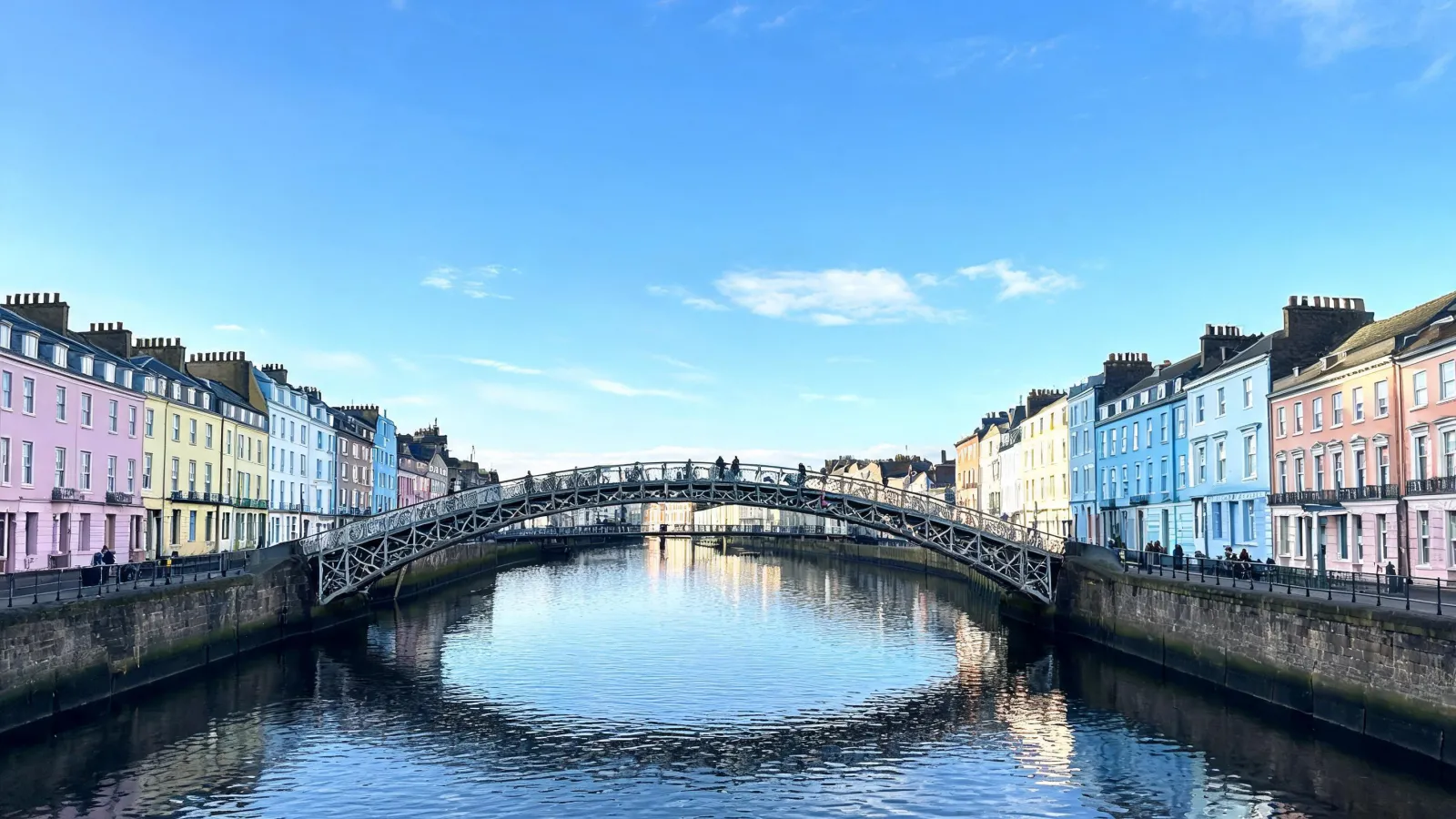
One-sentence conclusion: Dublin's city center is compact and walkable—2 days is enough to explore it thoroughly. But what truly makes Ireland legendary are the Cliffs of Moher and the Wicklow Mountains outside the city, so I recommend staying 3 days and dedicating the third to a day trip to the suburbs. Before you go, remember: Ireland is not in the Schengen Area, so you need a separate visa. Don't set off with just a Schengen visa.
How Many Days to Spend
Dublin is a very "small" capital. The city center is split by the River Liffey, with Trinity College, the castle, and the pub district on the south bank, and the Spire and O'Connell Street shopping area on the north bank—all easily connected on foot. Just focusing on the city center, two full days are enough to comfortably cover the main attractions.
But it would be a shame to fly over a dozen hours just for a pint in the city center. Ireland's most stunning scenery lies outside the city: the Cliffs of Moher on the west coast and the Wicklow Valley to the south, each requiring a full day for travel and exploration. So my advice: 2 days in the city + 1 day in the suburbs = 3 days is the most comfortable. If time is tight, you can squeeze it into 2 days, but you'll have to choose between "thoroughly exploring the city" and "seeing nature at least once." If you want to add Glendalough or the Galway direction, 4 days gives you a more relaxed pace.
Must-See Attractions
Trinity College, the Book of Kells & the Long Room Library
Trinity College is Ireland's oldest university, founded in 1592. Its limestone old buildings surround a courtyard, and entry to the campus is free. What you pay for is two things in the Old Library: first, the 9th-century illuminated manuscript Gospel book, the Book of Kells, with intricate gold and color work that seems beyond human hands; second, upstairs is the 65-meter-long Long Room with dark oak bookshelves reaching the vaulted ceiling—many people find it reminiscent of scenes from Harry Potter and Star Wars, making it the most photographed indoor space in Dublin. Queues are long in peak season, so it's strongly recommended to book timed tickets on the official website in advance. Tickets cost about €18–25 (about 140–195 RMB, subject to official prices).
Guinness Storehouse
The Guinness Storehouse is the most popular paid attraction in all of Ireland. It's built on the St. James's Gate Brewery, where a "9,000-year lease" was signed in 1759. Seven floors form the shape of a giant pint glass, covering everything from raw ingredients and brewing to advertising history. The top-floor Gravity Bar is a 360-degree glass viewing platform where you can enjoy a complimentary pint of stout while overlooking the entire city. It's more of an immersive brand museum, interactive and great for families with kids. Tickets cost about €26–36 (about 200–280 RMB, subject to official prices). It's advisable to book online in advance and avoid the afternoon peak.
Temple Bar District
Temple Bar is an old quarter on the south bank of the Liffey, made up of cobblestone lanes with red brick buildings, colorful flags, and almost every pub offering live traditional Irish music. The much-photographed The Temple Bar pub is just a landmark—you don't have to go inside. It's more pleasant to browse the galleries and flea markets during the day; the atmosphere is great at night, but this is the most expensive corner of the city. A pint here can cost half as much again as elsewhere, so if you just want a drink, head into the surrounding side streets.
Dublin Castle & Christ Church Cathedral
Dublin Castle has been in continuous use since the 13th century, once the center of British rule in Ireland, now used for state ceremonies and banquets. The courtyard is free to enter; the State Apartments and underground remains require tickets (about €8–12, about 60–95 RMB, subject to official prices). A few minutes' walk away is Christ Church Cathedral, built around 1030, with a medieval crypt that is one of the largest and oldest in Ireland. The castle, Christ Church, and a short walk to St. Patrick's Cathedral form a very convenient "old city route."
St. Patrick's Cathedral
St. Patrick's Cathedral, founded in 1191, is the largest cathedral in Ireland. Tradition says St. Patrick himself baptized people on this site. Jonathan Swift, author of Gulliver's Travels, served as dean here, and his tomb and epitaph are inside. Outside the cathedral is a peaceful park, a good place to rest when tired. Tickets cost about €9–11 (about 70–85 RMB, subject to official prices). It's best visited together with Christ Church Cathedral and the castle on the same walking route.
Phoenix Park
Phoenix Park covers about 700 hectares, making it one of Europe's largest enclosed urban parks—several times bigger than New York's Central Park. Inside, you'll find a free-roaming herd of wild fallow deer, the presidential residence, and Dublin Zoo. It's a bit far from the city center, ideal for a half-day trip by bike or bus. It's worth it for kids to see the deer, and entry to the park itself is free.
Suburbs: Cliffs of Moher / Wicklow Day Trip
Cliffs of Moher are on the west coast in County Clare: 200-meter-high black cliffs plunging into the Atlantic, the most iconic natural attraction in all of Ireland—but they are about 250 km from Dublin, a nearly 3-hour drive each way. Guided day tours usually leave early and return late, often stopping at the karst wilderness of The Burren along the way. Wicklow is much closer, known as "the Garden of Ireland," with the highlight being the 6th-century monastic site of Glendalough with its twin lakes and round tower. Cliffs of Moher is for those who can only choose one distant destination; Wicklow is more relaxed, suitable for families with elderly or children, or when the weather is uncertain.
Classic Itineraries (1/2/3 days)
1 day (only one day): Morning: Trinity College + Book of Kells / Long Room Library → walk to Dublin Castle + Christ Church Cathedral → lunch → Guinness Storehouse (enjoy a drink at the top-floor viewing bar) → evening: walk back to Temple Bar for dinner and live folk music. Mostly walking; only the Guinness Storehouse may require a short bus ride.
2 days: Day 1 follow the city center route; Day 2 morning: Phoenix Park (see deer / zoo) or the National Museum (free, with stunning Celtic gold artifacts and "bog bodies"), afternoon: walk along O'Connell Street on the north bank, shopping, see the Spire and the GPO (General Post Office, site of the 1916 Easter Rising), evening back to the south bank for a wrap-up.
3 days: First two days cover the city + museums; the third day is entirely a day trip to the suburbs—choose Cliffs of Moher for grand scenery, or Wicklow + Glendalough for a relaxed outing. Return in time for a farewell dinner in Temple Bar.
Transportation, Tickets & Costs
City transport: Most core attractions are within walking distance. You'll actually need a ride to go to Guinness Storehouse, Phoenix Park, or the airport. Buses, the Luas light rail, and the DART commuter rail all accept a Leap Card (similar to a transit card), which is cheaper than cash and has a daily fare cap. You can buy a Leap Card at the airport or convenience stores; the deposit is about €5 and is refundable. You can also use contactless bank cards or mobile payments on board.
Airport transfer: Dublin Airport (DUB) has no direct metro to the city center; the main option is the airport bus. Airlink Express (route 700) goes directly to the city center, single ticket about €7–9 (about 55–70 RMB); regular bus 16 is cheaper but slower. A taxi into the city costs about €25–35. For specific schedules and prices, check official sources.
Overall costs: Ireland uses the euro. Prices are high by European standards, especially for dining—a typical meal costs €15–25 per person (about 115–195 RMB), a proper restaurant dinner is often €30 (about 235 RMB) or more per person, a pint of stout costs €6–8 (about 47–62 RMB). Tickets are not cheap either; the two most popular paid attractions (Trinity + Guinness) together cost nearly €50. Booking tickets online in advance is usually cheaper and saves queuing time compared to on-site purchase.
Food
In Dublin, your first drink should be a Guinness stout. Locals say "a good pint needs to be poured in two parts and left to settle for 119.5 seconds." The quality of a freshly pulled pint from a local pub is completely different from canned Guinness elsewhere—smooth, slightly bitter, topped with a creamy foam. The classic pairing is Irish stew, made with lamb or beef, potatoes, and carrots, hearty and warming. Other dishes to try: seafood chowder with soda bread, fish and chips, a hearty Irish breakfast (bacon, sausage, fried eggs, black and white pudding). For a sweet ending, try an Irish coffee with whiskey and cream—it was popularized right here in Dublin.
Pitfalls to Avoid
① Visa: Ireland is not a Schengen country; you must apply for a separate Irish visa. This is the biggest pitfall. A Schengen visa does not allow entry to Ireland, and an Irish visa does not allow entry to Schengen countries. Ireland and the UK are part of the Common Travel Area (CTA), but their visa systems are still separate. Please apply for an Irish visa according to official requirements and allow plenty of processing time. If you also plan to visit mainland Europe, you will need both visas.
② Weather: rainy and changeable. Dublin can get rain at any time of year, often cycling through sun, clouds, rain, and wind in a single day. A windproof jacket and waterproof shoes are essential. Don't rely on the forecast; layering is the safest approach.
③ Drive on the left. Ireland, like the UK, drives on the left with right-hand drive. When crossing the street, look right first; you'll often see "LOOK RIGHT" painted on the road. If you plan to drive to the Cliffs of Moher, be aware that country roads are narrow, two-way lanes with roundabouts—very stressful for those without left-side driving experience. This is why many people prefer to join a tour or hire a private driver.
④ Pub costs. The Temple Bar area is significantly more expensive than the rest of the city. The same beer can cost noticeably more, and many pubs add a surcharge for live performances in the evening. If you want to enjoy the atmosphere, that's fine; to save money, head to side streets or local community pubs. Tipping is not mandatory in Irish restaurants; good service typically gets about 10%.
Should You Hire a Chinese Guide / Private Driver?
For central Dublin alone, you really don't need one—attractions are concentrated, walkable, and English is widely spoken; exploring on your own is no problem at all.However, there are three situations where finding a Chinese guide or private driver will make things much easier:
First: visiting distant suburban attractions. The Cliffs of Moher are nearly 3 hours each way; public transport in the Wicklow mountains is scarce. Joining a group tour leaves you with a rigid schedule and mostly English commentary. Hiring a car with a Chinese-speaking driver-guide lets you stop for photos at your own pace, adjust the itinerary flexibly, and learn about Celtic history and movie filming locations along the way. Second: traveling with elderly or children. Left-side driving + rainy weather + long distances = high stress; having someone to drive and assist gives you peace of mind. Third: extremely tight schedule—if you only have 2 days but want to see both the city and the cliffs, a private car customized to your flight and energy level is far more efficient than relying on public transport.
Ditiexia (Di Jie Xia) is a platform that does exactly this: you post your requirements (e.g., "Cliffs of Moher day trip with 2 elderly people, need Chinese driver-guide"), and local Chinese-speaking guides, drivers, and interpreters bid on your job. You compare qualifications, read reviews, and decide who to hire. The other party won't see your contact details before you confirm, ensuring transparency. Exploring the city on your own and leaving the long-distance suburban trips to a local often offers the best value.
FAQ
Q1: I have a Schengen visa. Can I go directly to Dublin?
No. Ireland is not in the Schengen Area; you must apply for a separate Irish visa. A Schengen visa cannot be used to enter Ireland, and an Irish visa cannot be used for Schengen countries. If your itinerary spans both Ireland and mainland Europe, you need both visas and should allow plenty of processing time. Check official Irish sources for details.
Q2: Can the Cliffs of Moher be done in a day trip?
Yes, but it's very tight. The drive is about 250 km each way, nearly 3 hours. Most guided day tours leave early and return late, with a lot of time on the bus. If you want a more relaxed experience but still want to see nature, consider the much closer Wicklow Mountains and Glendalough. If you're determined to see the cliffs and don't want to be rushed by a tour group, a private car with a Chinese-speaking driver-guide is more comfortable.
Q3: How many days are appropriate for Dublin, and what is the budget?
Two days are enough to see the city center; I recommend 3 days to add a day trip to the suburbs. Prices are high for Europe: a typical meal €15–25 per person, a pint of stout €6–8, popular attraction tickets €18–36. Book tickets online in advance when possible; prices are subject to official sources.