
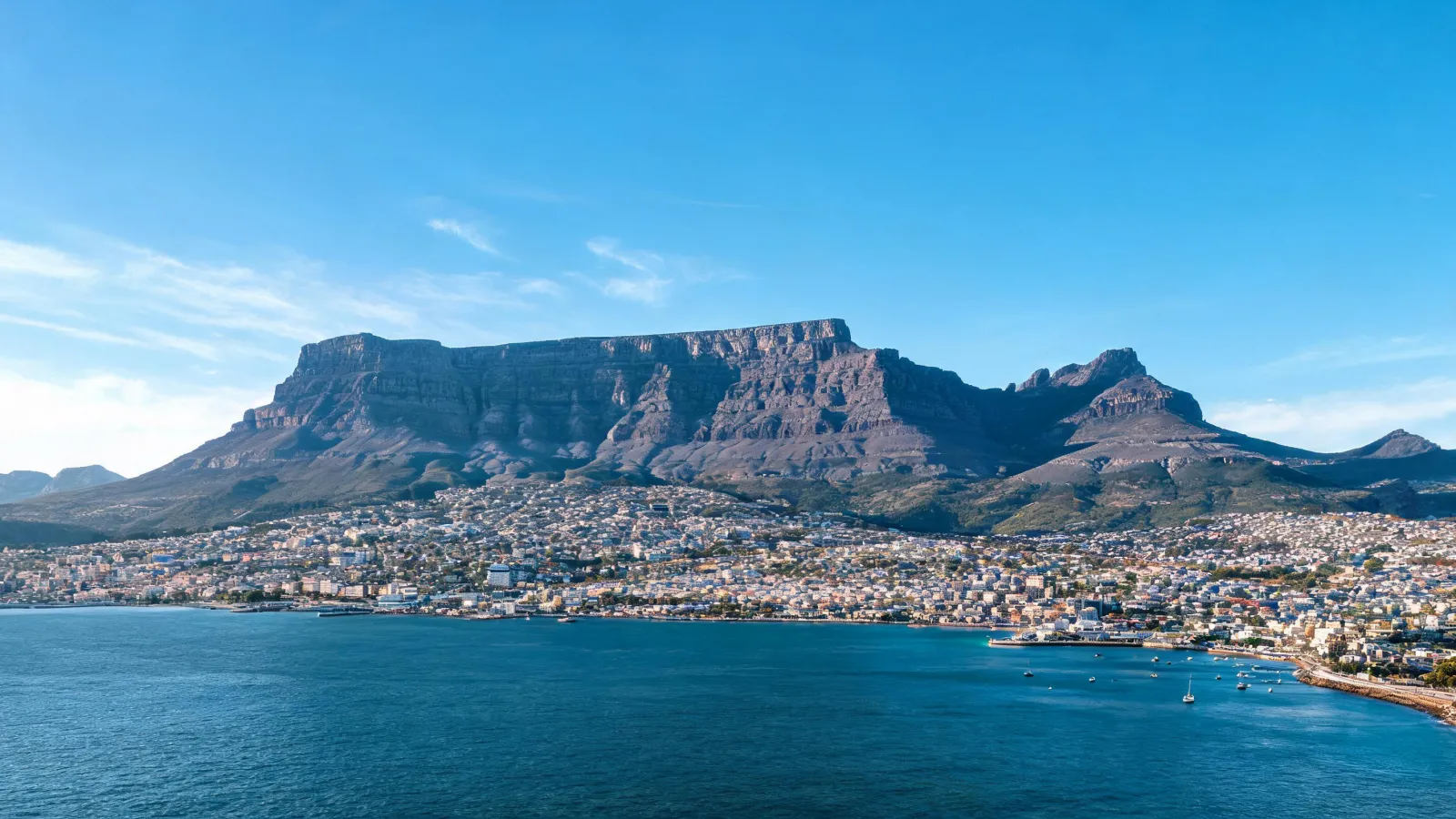
One-sentence conclusion: The best time to visit Cape Town is during the Southern Hemisphere summer from November to March (opposite to the Northern Hemisphere), when the weather is clear, the Table Mountain cable car is more likely to be operating, and the coastal scenery is at its finest. It is a city defined by mountains and sea—Table Mountain, the Cape of Good Hope, and Boulders Beach form a classic route. However, local safety must be taken seriously: no going out at night, no flaunting wealth, and keeping valuables on your person at all times are non-negotiable. Attractions are spread out, and driving on the right side of the car on the left side of the road has its challenges, so hiring a private car with a local Chinese-speaking driver-guide is often safer and more hassle-free than public transport.
How many days to spend and when to go (Southern Hemisphere seasons are opposite, November–March is best)
Cape Town is in the Southern Hemisphere, so its seasons are completely opposite to those in China. A counterintuitive but crucial point: many people come in winter to "escape the cold," only to hit the local rainy season. Cape Town has a Mediterranean climate, with May–August (local winter) being rainy, windy, and chilly. Table Mountain is often shrouded in clouds (locals call it the "tablecloth"), and when the cable car closes, you're stuck waiting. The true peak season is November to March, the Southern Hemisphere summer: long days, abundant sunshine, little rainfall—perfect for seeing the Cape, climbing Table Mountain, and visiting the penguin beach. December to January is the欧美 Christmas holiday period with the most crowds and highest accommodation prices. For budget-conscious travelers, November or February–March (the "shoulder seasons") offer great weather at better rates.
How many days? For central Cape Town plus the classic Cape Peninsula, 4–5 days is recommended. 3 days can cover Table Mountain, Cape of Good Hope, Boulders Beach, and the colorful houses, but it's rushed. With 4–5 days, you can add a day trip to the Stellenbosch wine region at a relaxed pace. If you plan to combine with Kruger National Park or the Garden Route, allocate about 4 days for Cape Town alone.
Must-see attractions (planned by area to avoid backtracking)
Table Mountain: The city's landmark, weather-dependent
Table Mountain, with its flat-topped peak, is the soul of Cape Town, standing about 1,085 meters high. The ascent is via a 360-degree rotating cable car, reaching the top in minutes for panoramic views of the city and the Atlantic Ocean. Key point: Table Mountain depends on the weather and wind—strong winds or heavy cloud can cause the cable car to shut down temporarily. So don't fix it on a specific day; keep your schedule flexible and go as soon as the weather is clear. Morning visibility is often better, and you'll avoid the afternoon crowds.
Cape of Good Hope & Cape Point Nature Reserve
This is the top reason many come to Cape Town. The Cape of Good Hope is not the southernmost point of Africa (that's Cape Agulhas farther east), but it is the symbolic meeting point of the Atlantic and Indian Ocean currents, with dramatic scenery. Inside the reserve, you'll find an old lighthouse (reachable by a funicular-style cable car or on foot), coastal trails, and occasional sightings of ostriches, baboons, and antelope. The wind here is extreme, and UV levels are very high—windproof jacket, hat, and sunscreen are essential. Baboons will steal food, so keep all edibles out of sight inside the car.
Boulders Beach: Get up close with penguins
Located in Simon's Town, Boulders Beach is home to a colony of African penguins. Wooden boardwalks let you observe the penguins up close as they waddle among the granite boulders and white sand—a highlight for families. It's on the same route as Cape of Good Hope, so combine both in one day. Please do not feed or touch the penguins.
Signal Hill: The best sunset spot
Signal Hill is right next to the city center and can be driven up directly. It's the top choice for sunset, with evening clouds spreading over the Atlantic and city lights gradually illuminating. Note: after sunset, the crowds disperse and the area becomes isolated. It's best to descend before dark and not linger late.
Robben Island: Mandela's prison
Nelson Mandela was imprisoned here for many years. Now a UNESCO World Heritage site, tours are led by former political prisoners, offering a profound insight into South Africa's history. You need to take a ferry from the V&A Waterfront. Book tickets well in advance online—popular dates often sell out, and sailings may be canceled in high winds.
Bo-Kaap: Colorful houses neighborhood
The Bo-Kaap, home to the Cape Malay community, is famous for its rows of brightly colored houses and is a photo hotspot. It's a residential area, so please respect residents' privacy and do not enter private courtyards. Visit during the day and go with company.
V&A Waterfront (Victoria & Alfred Waterfront)
A revitalized old harbor area with shopping, dining, a Ferris wheel, and an aquarium. It's relatively safer and more orderly in the evening, making it a good spot for late-afternoon activities and dinner. It's also the departure point for ferries to Robben Island.
Nearby: Stellenbosch wine region - a day trip
About 45 minutes' drive from Cape Town, Stellenbosch is a leading wine-producing region in South Africa. The oak-lined, Dutch-style town is complemented by numerous wine estates where you can taste wines, enjoy food pairings, and take in the scenery. A full day is sufficient. If you're tasting wine, you must have a designated driver or choose a private car service—South Africa enforces strict drink-driving laws.
Classic itineraries (3 / 4 / 5 days)
3-day highlight version: Day 1: Arrive, explore V&A Waterfront and Bo-Kaap colorful houses, then head to Signal Hill for sunset. Day 2: Full day on the Cape Peninsula—Cape of Good Hope Nature Reserve + Boulders Beach penguins, returning via Chapman's Peak Drive (scenic coastal road). Day 3: Take the Table Mountain cable car if weather permits, then visit Robben Island or a city museum to wrap up.
4-day comfortable version: Based on the 3-day plan, move Table Mountain to a clear-weather day and add a day trip to Stellenbosch for wine tasting and lunch—much more relaxed pace.
5-day in-depth version: Add another day to visit two of the "Three Wine Towns" (Stellenbosch, Franschhoek, Paarl), or arrange a seasonal whale-watching trip (check season) / shark-cage diving. Table Mountain remains a flexible slot—slot it in on whichever day is sunny.
Transport, tickets & costs (mainly self-drive or private car; currency: ZAR)
Cape Town's attractions are widely dispersed—the Cape Peninsula and wine regions are all on the outskirts. Public transport is not tourist-friendly, with limited coverage and nighttime safety concerns. The main options are self-drive or hire a car with a driver. Self-drive offers flexibility, but South Africa is right-hand drive, left-side traffic, which can be stressful for newcomers unfamiliar with the roads and safety concerns. Hiring a private car (including a Chinese-speaking driver-guide) takes care of navigation, parking, and security, making it ideal for most travelers.
The local currency is the South African Rand (ZAR). Below are reference ranges—actual prices may vary. Check the current exchange rate (at time of writing, approx. 1 ZAR ≈ 0.4 RMB, just for scale):
- Table Mountain cable car round trip: adult approx. 400–450 ZAR (≈ 160–180 RMB), recommend buying tickets online in advance to avoid queues.
- Cape of Good Hope / Cape Point Nature Reserve entrance: approx. 300+ ZAR (≈ 120 RMB).
- Boulders Beach penguin colony entrance: approx. 150+ ZAR (≈ 60 RMB).
- Robben Island ferry + guided tour package: approx. 600 ZAR (≈ 240 RMB), book online.
- Private car hire (with driver, full day, depending on vehicle type and distance): typically several thousand ZAR per day; per person cost is reasonable when shared among a group—actual quote needed.
Practical tips: Tipping is common in South Africa (around 10% at restaurants, driver-guide at your discretion). When paying by card, never let the card out of your sight. Use ATMs inside bank branches during daylight hours, and be wary of strangers offering to "help."
Food & wine
Cape Town is a paradise for food lovers. Seafood is fresh—oysters, lobster, various white fish. Local specialties include Braai (South African BBQ), Bobotie (curried minced meat baked with egg custard), and Biltong (dried cured meat). Cape Malay cuisine is spiced, with curries and sweet stews worth trying. Wine steals the show: South Africa is a major wine-producing country, with Chenin Blanc and the locally developed Pinotage being signature varietals. A wine estate lunch with tasting in Stellenbosch or Franschhoek is a high-value experience in Cape Town. Again: don't drink and drive.
Avoidance tips (visa, safety, wind conditions, self-driving)
Visa: Travel to South Africa requires a visa in advance. Policies regarding documents and e-visas can change. Always check the latest requirements from South Africa's official sources / embassies and allow plenty of time for processing—don't cut it too close to departure.
Safety (paramount): This is the most serious aspect of traveling in Cape Town. The principles are: no nighttime outings, no flaunting wealth, no wandering into townships on your own. Specifically: don't walk outside after dark, especially in secluded areas; don't display phones, cameras, or jewelry on the street; carry your backpack on your front and keep valuables close; park only in attended, secure lots and never leave any visible items inside the car (even an empty bag); use ATMs during daytime at bank branches. Don't be panicked, but be vigilant—follow these guidelines, and most trips proceed smoothly.
Table Mountain wind: The cable car can shut down at any time due to wind. Keep your schedule flexible and go on a clear day; don't leave it until the last day. Temperature difference between base and summit is significant—bring a jacket.
Cape of Good Hope wind: The cape is windy throughout, with strong UV rays. Wear a windbreaker, sunscreen, and hat. Watch out for baboons that steal food and bags—don't leave food visible in the car.
Right-hand drive, left-side traffic: The steering wheel is on the right, and you drive on the left. Familiarize yourself with roundabouts and right-of-way rules before driving. Road conditions, speed limits, and refueling differ from those in China. Don't drive at night, and don't stop in remote areas to ask directions. If you're not confident, hire a car with a driver—it's far less stressful.
Should you hire a Chinese-speaking local guide / private car?
Considering the above, Cape Town is a destination where private car hire with a local driver-guide is highly recommended. The reasons are clear: first, attractions are extremely spread out—the Cape Peninsula, penguin beach, and wine regions are all outside the city, and public transport isn't safe. Second, safety must be taken seriously—a local driver who knows the roads, which areas to avoid, and can help keep an eye on your car and belongings is a safety asset in itself. Third, self-driving has a high learning curve—right-hand drive and unfamiliar roads consume a lot of energy just on navigation and parking. Fourth, Table Mountain requires flexible timing based on weather, and you can't drink and drive—having a driver-guide allows you to adjust plans and enjoy wine without worry.
If you want to avoid comparison shopping across multiple platforms and worry about being in unfamiliar territory, you can post your Cape Town itinerary needs on Dijiexia (dates, number of days, attractions you want to see, number of people). Let qualified local Chinese-speaking driver-guides / private car providers bid on your request. Compare qualifications, reviews, and prices before deciding. Your contact information and personal details are anonymized until you agree to a deal, so you won't be harassed. Leaving language, road conditions, safety, and scheduling to a reliable local is especially worth the money in Cape Town.
FAQ - Frequently Asked Questions
Q: How bad is safety in Cape Town? Can ordinary tourists go?
A: Cape Town is a popular, well-established tourist destination, with many visitors traveling safely every year. Its safety issues are indeed more pronounced than in China, but most incidents target those who let their guard down. Stick to the rules: no walking at night, no flashing valuables, avoid wandering into townships, keep valuables on your person, and use ATMs during the day. With a local driver-guide, most trips are trouble-free. Don't let fear stop you from enjoying this incredible destination.
Q: What if the Table Mountain cable car is closed?
A: The cable car depends on weather and wind and can close at any time. The best strategy is not to fix it on a specific day—keep 1–2 flexible half-day slots in your itinerary, and go as soon as the official website shows it's operating. Morning visibility is usually better. If you're unlucky with weather during your entire stay, consider Signal Hill or Lion's Head as alternative viewpoints.
Q: Is Cape Town expensive? How much money should I bring?
A: Compared to Europe or the US, overall prices in South Africa (especially dining and wine) are good value. The main costs are flights, accommodation, private car hire, and entrance fees. Tickets typically range from tens to a couple hundred RMB. Private car hire is charged per vehicle, so it's cost-effective when shared. For exact figures, check the current exchange rate and actual quotes on site.