
One-sentence summary: Boston is the most walkable city on the U.S. East Coast. The 2-mile Freedom Trail strings together the founding history into a route you can finish in a day. Add in the campus vibes of Harvard and MIT, plus the autumn foliage, and three days are enough to fill an entire photo album. If you don't want to plan an itinerary but still want to understand the stories behind every brick, hiring a Chinese-speaking local guide is the best-value "filter" for this city.
How many days to spend and when to go
Boston's city center is not large, and the attractions are highly concentrated within the reach of a single subway line. It's a city where "2 days gets you the highlights, 3 days lets you take it easy, and 4 days allows you to venture into the suburbs." If you're doing an East Coast itinerary (New York—Boston—Niagara) and Boston is just one stop, two full days are enough to thoroughly explore the Freedom Trail, Quincy Market, and Back Bay. If you want to include Harvard and MIT campuses, the New England Aquarium, and Fenway Park, three days will be much more comfortable. For an extra trip to Cape Cod or the witch town of Salem, plan for four days.
Seasonally, the best time to visit Boston is autumn (late September to mid-October). New England is the premier fall foliage region in the U.S. The maples and sugar maples along the Charles River, in the Public Garden, and on Harvard Yard start turning colors from early to mid-October. Paired with the red-brick old buildings, these are the city's most photogenic two weeks. Summer (June–August) is warmest with long days, great for traveling with kids or seniors, but it's also the peak season with the most crowds and highest hotel prices. Spring (April–May) has changeable weather but beautiful blooms—the tulips in the Public Garden are worth a special visit. Winter (December–February) is very cold, often snowy, with biting sea winds and wind chills frequently below freezing; only recommended for those who don't mind the cold, want to see snow, or are coming for a game. In short: choose October if you can, and avoid January and February if possible.
Must-see attractions
Freedom Trail (half to one day)
This is Boston's soul route. A walking path marked by red bricks (and some red paint) runs about 2.5 miles, linking 16 historical landmarks related to American independence, from Boston Common all the way to the Bunker Hill Monument in Charlestown. Key stops along the way: Old North Church, where the "one if by land, two if by sea" lantern signal was lit in 1775; Faneuil Hall, known as the "Cradle of Liberty," where revolutionary speeches were made; and you'll also pass Paul Revere's house, the Old State House, and the site of the Boston Massacre. You don't need to buy tickets at every stop—just follow the red line on the ground and listen to the explanations at key points to turn the founding history into a living timeline—the trail's greatest value isn't in "seeing," but in "understanding", which is why many people are willing to pay for a guided tour.
Quincy Market and Faneuil Hall Marketplace (half day)
Right next to Faneuil Hall, three long market buildings are packed with food stalls and shops—a great spot for lunch, a cup of clam chowder, or buying souvenirs. Street performers often perform outside. It's conveniently along the Freedom Trail, making it the perfect place for a mid-route rest stop.
Boston Common, Public Garden, and Swan Boats (1–2 hours)
Boston Common is the oldest city park in the U.S. Right next to it is the more refined Public Garden. In spring and summer, you can ride the classic Swan Boats for a leisurely cruise around the pond—a favorite for families and couples (usually operating from late spring to early fall; tickets are a few dollars; check official info).
Back Bay and Newbury Street (half day)
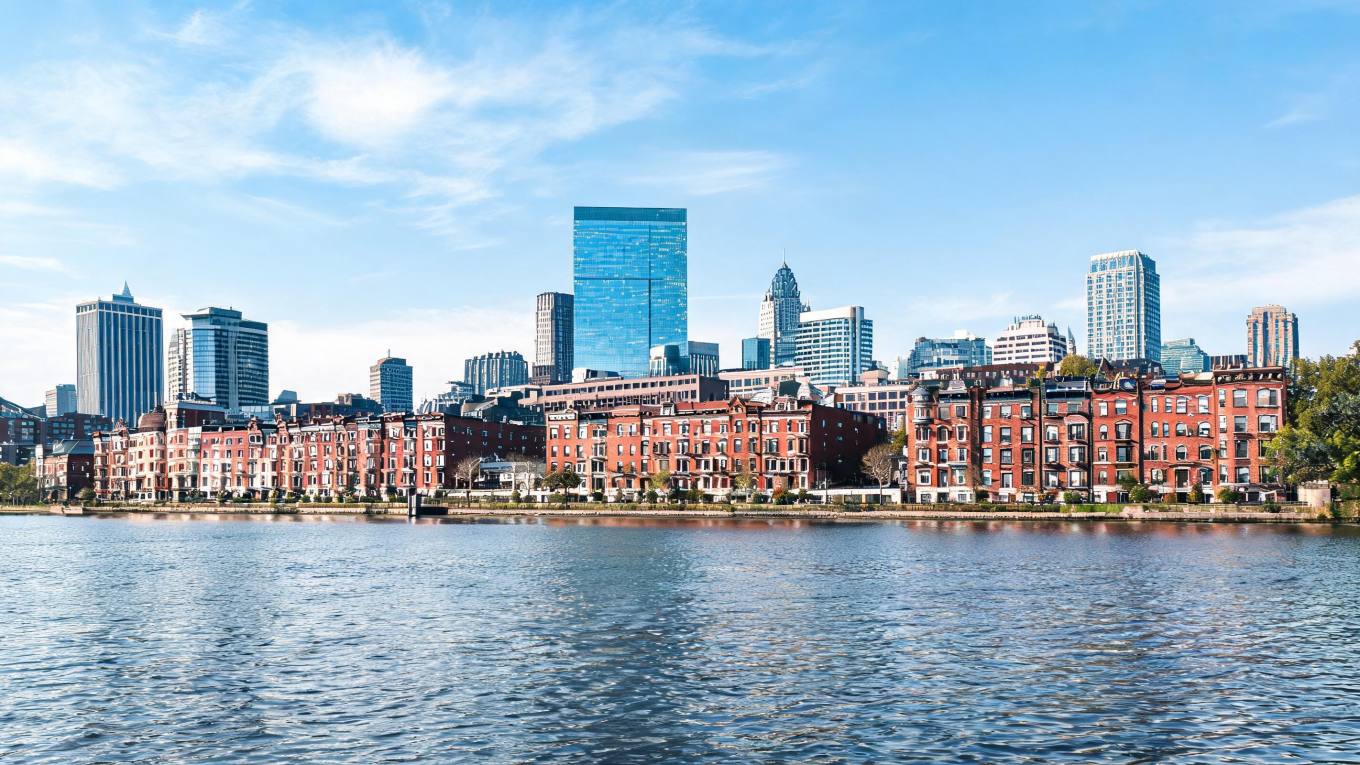
Back Bay is Boston's most elegant neighborhood, lined with red-brick townhouses. Newbury Street is the main artery, stretching from big-name brands to independent designers, coffee shops, and dessert shops—perfect for shopping and photos. On the way, you can also visit Trinity Church and the John Hancock Tower. If you have time, go up to the Skywalk Observatory (View Boston) for a panoramic view of the city.
Fenway Park (1–2 hours)
Opened in 1912, it's the oldest ballpark still in use in Major League Baseball, home to the Boston Red Sox. The iconic green wall, the "Green Monster," is a pilgrimage site for baseball fans. Even if you don't catch a game, taking a stadium tour (Park Tour) is very interesting. If you can get tickets to a Red Sox home game, the atmosphere is another experience entirely (prices vary; check official site).
New England Aquarium (half day, great for families)
Located right on the waterfront, the central giant cylindrical tank is the highlight. Penguins, sea turtles, and jellyfish are big hits with kids. Nearby you can also catch a whale-watching cruise (seasonal). Families with children should plan for half a day here.
Cambridge: Harvard and MIT Campus Tour (half to one day)
Cross the Charles River to Cambridge, home to Harvard University and MIT. Harvard Yard with its "three-lie statue," red-brick lecture halls, and the bookstores and cafés of Harvard Square are a major draw for many visitors. MIT's modernist architecture (like the Stata Center designed by Gehry) offers a completely different vibe. Both campuses are free to enter, but Harvard's history, personalities, and those "trivia" details come alive only with a guide—walking on your own can feel superficial, which is why campus tours often benefit from a Chinese-speaking guide.
Classic itineraries (2-day / 3-day)
2-Day Highlights:
Day 1—Start at Boston Common in the morning, follow the Freedom Trail north past the Old State House and Faneuil Hall, have lunch at Quincy Market. Continue in the afternoon to the North End (Little Italy) to see Old North Church, and if you have energy, cross the bridge to Bunker Hill. Return downtown in the evening. Day 2—Explore Back Bay and Newbury Street in the morning, go up for a city view, then cross the river to Harvard and MIT in the afternoon, finishing at dusk along the Charles River.
3-Day Relaxed Version:
Build on the 2-day plan, but split Harvard and MIT into a half-day on Day 2. Use Day 3 morning for the New England Aquarium or a Fenway Park tour, and the afternoon as flex time—if you love the coast, go to the suburbs; if you prefer shopping, revisit Newbury Street. During foliage season, spend all of Day 3 on a day trip to Cape Cod or Salem.
Transportation, tickets, and costs (USD with CNY reference)
City transportation: Boston's subway is called the "T" (MBTA), with Red, Orange, Blue, Green, and Silver lines. Most attractions are along the lines, making it the most convenient way to get around. Get a CharlieCard (physical transit card) to tap in; a single subway ride is about $2.40 (approx. ¥17). There are also 1-day and 7-day passes (Day Pass / 7-Day Pass) for frequent travel—check MBTA's official site for current fares and whether they've switched to the new Tap system. In the core downtown area, you can connect most sights on foot; the subway is mainly used for going to Cambridge, Fenway, and to/from the airport.
Getting from Logan Airport (BOS) to downtown: Logan is very close to the city center. The cheapest option is to take the free airport shuttle to the Blue Line Airport station and then ride into town (a few dollars). For convenience, take a taxi or rideshare (Uber/Lyft), which costs about $25–$45 (approx. ¥180–¥320, depending on traffic and time of day)—better for groups or those with heavy luggage.
Ticket prices (always check official site for real-time pricing): The Freedom Trail itself is free; individual museum admissions are about $10–$15. Observation decks cost about $30–$40 (approx. ¥210–¥290). New England Aquarium adult tickets are around $30–$40. Fenway Park tours are about $20–$35. Overall, hard ticket costs in Boston aren't huge—the big expenses are usually accommodation and food.
Daily budget (excluding flights and lodging, per person): For budget travelers, about $40–$60/day (public transit + street food + one or two attractions). For a more comfortable experience, $80–$120/day (includes one nice lobster dinner). Use a rough conversion of $1 ≈ ¥7.1 to keep it in perspective.
Food: Lobster rolls and clam chowder
Two things are must-tries in New England. First, the Lobster Roll: a warm bun packed with chunks of lobster meat, available in two styles—"cold" (with mayonnaise) and "hot" (butter-based). You can find them by the harbor and at Quincy Market; a roll costs roughly $25–$40 (approx. ¥180–¥280)—that's your "ceremonial meal" of the trip. Second, New England Clam Chowder: creamy, thick, rich, and warming—almost every seafood place serves it, usually around $10 a bowl, and it's most comforting in autumn and winter. Also try Boston baked beans, tiramisu from the North End (Mike's Pastry cannoli), and brunch along the Charles River—these are local favorites. If you're on a budget, stick to markets and casual spots; if you want top-tier oysters and a lobster feast, treat yourself at an old-school seafood restaurant in the seaport district.
Tips to avoid pitfalls
① Visa / ESTA must be arranged in advance. Travelers from mainland China need a B1/B2 visa for the U.S. Holders of certain third-country passports can use ESTA (electronic travel authorization), but be sure to apply and get confirmation a few days before departure—don't wait until boarding time. Regardless of which, have your itinerary, hotel confirmation, and return flight ready for inspection.
② Book lodging early for fall foliage season. October is Boston's most popular window: fall colors, university openings, and weekend events combine to drive up prices and fill up well-located hotels one to two months in advance. If you want to see the leaves and stay conveniently, book at least 1–2 months ahead—the closer you get, the pricier and scarcer rooms become.
③ Winter is really cold. Boston's winter brings strong sea winds, frequent snow, and wind chills often below freezing, plus icy sidewalks. If visiting in winter, bring plenty of down clothing, non-slip shoes, hat, and gloves. Outdoor attractions like the Swan Boats will be closed, so plan your itinerary around indoor activities.
④ Other small gotchas: In U.S. restaurants, tipping 15–20% is standard (many bills already show a "suggested tip" line—don't double tip). Cross streets at traffic lights; pedestrians don't always have the right of way. The Freedom Trail may not look long, but walking it adds up to many steps—wear comfortable shoes above all.
Should you hire a Chinese-speaking guide/driver or a private car?
Boston's city center is actually very DIY-friendly—the subway works well, attractions are concentrated, and English signs are clear. Solo travelers can manage just fine. However, there are a few situations where hiring a Chinese-speaking guide or a private car makes much more sense:
First, campus tours. Harvard and MIT campuses are free to enter, but on your own you'll only snap photos. The stories of key figures, admission insights, and architectural details come alive with a guide. A local Chinese-speaking guide can turn a "been there, snapped that" visit into a genuine understanding in just half a day—especially valuable for families scoping out schools for their kids.
Second, suburban trips. Cape Cod, Salem, and New England's fall foliage countryside are hard to reach by public transit. Driving yourself means dealing with left-hand traffic and unfamiliar roads. A private car day trip is much more relaxing—you set the schedule, and the driver can double as a guide. Split among a few people, it might not even cost more than the train.
Third, traveling with seniors or tight on time. If you're bringing parents or have only 1–2 days and want to visit efficiently, having someone handle airport transfers, plan the route, and help with ordering food and buying tickets makes a huge difference in the experience.
That's exactly how Dijiexia (地接侠) works: post a request on the platform (like "a half-day narrated tour of Boston's universities" or "a day trip to Cape Cod for fall foliage"), and local Chinese-speaking guides and driver-guides will bid on it. You compare their credentials, reviews, and prices before deciding whom to hire. Your contact info and itinerary details are not shared until you accept. Just like with tickets, hiring a guide or a car is that kind of "spend a little, gain a lot" expense—explore the city on your own, but hand off the key parts to a local—that's the most cost-effective way to play.
FAQ
Q1: Is Boston safe? Can I walk around at night?
Overall, it's one of the safer big U.S. cities. Back Bay, Beacon Hill, Cambridge, and the Seaport District are lively at night. As with any large city, keep your valuables out of sight and avoid lingering at less busy subway stations after the last train, but normal tourist areas are fine for evening strolls.
Q2: If I only have 2 days, can I do both the Freedom Trail and Harvard?
Yes. Day 1: focus on the Freedom Trail, Quincy Market, and the North End. Day 2: morning in Back Bay, then cross the river to Harvard and MIT in the afternoon. The pace is tight but doable. For a more relaxed schedule, add a third day.
Q3: Which month offers the best fall foliage?
Boston's city foliage peaks from early to mid-October. Farther north or inland in New England, peak comes a bit earlier. If you're specifically coming for the leaves, aim for the first half of October and book accommodations early. Exact timing shifts slightly each year depending on temperatures.