
One-sentence summary: Berlin doesn't win you over with "photo-worthy scenery" — its weight lies entirely in history. The Brandenburg Gate, the Berlin Wall, the Holocaust Memorial — they look like just a wall and a field of concrete slabs, but behind them are the stories of WWII and the Cold War that weighed on Europe for half a century. Give it a full three days: book Museum Island and the Reichstag dome in advance on their official websites, then set aside one day for Sanssouci Palace in nearby Potsdam. Only then will you truly "understand" Berlin, not just snap a few photos and leave.
How many days to spend
Berlin's city center isn't compact — attractions are often two to three kilometers apart — but the dense network of U-Bahn and S-Bahn makes getting around efficient. If you're just rushing through for a quick visit, you can string together the Brandenburg Gate, the Reichstag, the exterior of Museum Island, and Alexanderplatz in a single day; but after that, your understanding of the city will basically be "German capital, has a wall."
A more reasonable plan is 2 to 3 days. Two days allow you to comfortably see the core area, Museum Island, and the East Side Gallery to the east; if you have a third day, devote it to Sanssouci Palace in nearby Potsdam. Winter has short daylight hours and is cold outdoors, so April to October is a more comfortable window.
Must-see attractions
Brandenburg Gate and Reichstag
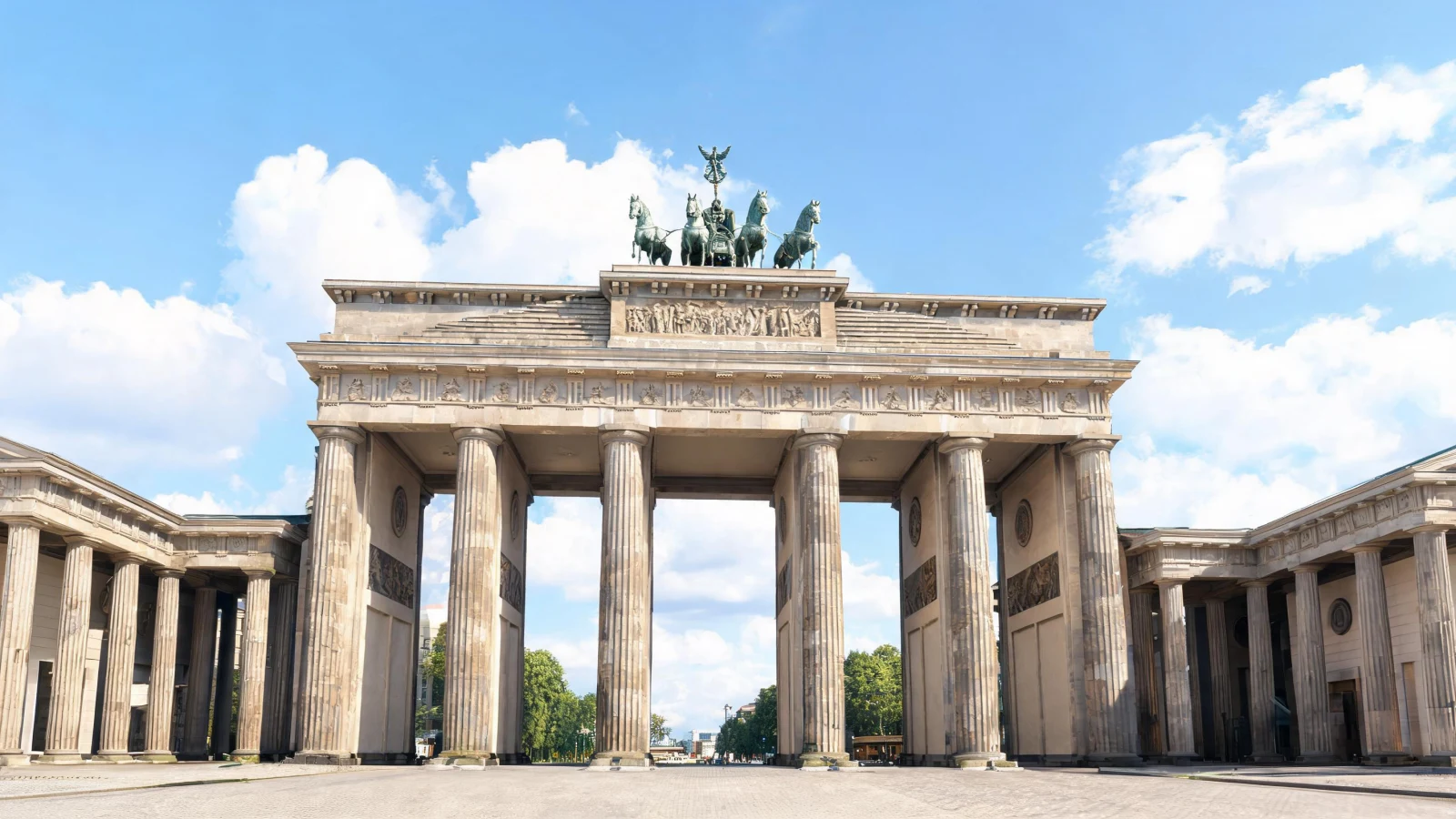
The Brandenburg Gate is Berlin's iconic symbol and the core of the "division–reunification" narrative. During the Cold War, it sat right on the border between East and West Berlin, in the death strip of the Berlin Wall, where ordinary people couldn't go near for years. The celebrations of the Wall's fall and German reunification in 1989 took place here. It looks best for photos in the early morning or when lit up at night; the gate itself is free and open 24/7.
A few steps north is the Reichstag (German Parliament building). The glass dome designed by Norman Foster is the highlight — you get a 360-degree view of the city and can see down into the parliamentary chamber through the dome, a clear metaphor of "power transparent to the public." The dome is free but you must book in advance on the official website of the German Bundestag; you need to provide your name and passport details. During peak season, you may need to book one to two weeks ahead. Walk-ins are nearly impossible, so make sure to arrange it before you travel.
Berlin Wall – East Side Gallery and Checkpoint Charlie
The best place to see a preserved stretch of the Berlin Wall is the East Side Gallery — a 1.3 km section along the Spree River, covered in murals by artists from around the world after the Wall fell. The "Brotherly Kiss" (the one of Brezhnev and Honecker kissing) is practically a visual icon of the Cold War. It's free, open-air, and accessible anytime; allow 40 minutes to stroll and view it.
Checkpoint Charlie was the crossing point between the US and Soviet sectors during the Cold War. Today, only a replica guardhouse and photo boards of soldiers remain; the area is heavily commercialized, with costumed guards asking for tips for photos — the site itself feels pretty "empty." The nearby Mauermuseum (Wall Museum) is well-documented, showing real escape attempts by East Germans over the wall, and is much more worthwhile than the guardhouse itself. If you want a systematic understanding, the Berlin Wall Memorial (Bernauer Straße) preserves the complete border structure with a watchtower and is free — and actually more impressive.
Museum Island and Pergamon Museum
Museum Island (Museumsinsel) is a UNESCO World Heritage site, a cluster of five museums on a small island in the Spree River. The most famous, the Pergamon Museum (Pergamonmuseum), houses the Pergamon Altar and the Ishtar Gate of Babylon — ancient architectural structures brought indoors in their entirety. Note: The Pergamon's main building is currently closed for long-term renovation, with full reopening not expected until 2027 or later. Be sure to check the official website for which halls are open before you go — don't end up going there for nothing. The Neues Museum (with the Nefertiti bust) and the Alte Nationalgalerie (Old National Gallery) are equally worth seeing; picking one or two to explore in depth is better than rushing through them all.
Memorial to the Murdered Jews of Europe and Topography of Terror
Just south of the Brandenburg Gate is the Memorial to the Murdered Jews of Europe (Holocaust Mahnmal) — 2,711 gray concrete slabs of varying heights spread across a sloping field, with no names or explanations. As you walk in, the ground undulates and the pillars grow taller, creating an intentional feeling of being swallowed and lost. It's free and open-air; the underground information center tells the stories of the victims — worth a visit.
Another site is the Topography of Terror (Topographie des Terrors), built on the former headquarters of the Gestapo and the SS. The open-air and indoor exhibitions are free, confronting the Nazi apparatus of repression through extensive documentation, with a preserved section of the Berlin Wall alongside. Neither of these places is "beautiful," but they are the weightiest parts of Berlin's "face the past" narrative.
Alexanderplatz and TV Tower
Alexanderplatz (Alexanderplatz) was the central square of East Berlin and is now a transport hub and shopping district. The iconic Berlin TV Tower (Fernsehturm) stands 368 meters tall, making it Germany's tallest building; from the top you get a panoramic view of the entire city. You need to buy a ticket to go up; booking online in advance avoids queues and gives you a fixed price. If your budget is tight, the free view from the Reichstag dome is already sufficient.
Day trip to Sanssouci Palace in Potsdam
Potsdam, about 30 minutes southwest of Berlin by S-Bahn, is home to Sanssouci Palace (Sanssouci), also a UNESCO World Heritage site. With its terraced vineyards, Rococo palace, and sprawling gardens, it's a world apart from Berlin's Cold War atmosphere. Here you'll also find Cecilienhof Palace, where the Potsdam Conference was held at the end of WWII, dividing up post-war Europe. The interior of Sanssouci's main palace requires a ticket and often has limited time slots and visitor caps — it can sell out in peak season, so it's advisable to book through the official channel in advance; the gardens are free to explore on your own. A full day is just enough.
Classic itineraries (1/2/3 days)
1 day (highlights express): Morning: Reichstag dome (book ahead) → Brandenburg Gate → Holocaust Memorial → Potsdamer Platz; Afternoon: walk east along Unter den Linden to Museum Island to choose one museum → wrap up at Alexanderplatz and TV Tower. This is a tight schedule, suitable for a layover.
2 days (core depth): Day 1: Follow the historical western route, focusing on the Reichstag, Brandenburg Gate, Holocaust Memorial, and Topography of Terror; Day 2: Head east — East Side Gallery → Checkpoint Charlie or Berlin Wall Memorial → half day at Museum Island → evening at Hackesche Höfe for food and shopping.
3 days (including suburb): First two days as above; Day 3: Entirely for Sanssouci Palace in Potsdam, with the S-Bahn round trip. This is the most recommended version — you experience the full Cold War heart of Berlin and balance it with a royal garden.
Transportation, tickets, and costs
Berlin's public transport is operated by BVG, with U-Bahn, S-Bahn, buses, and trams using a unified ticket system. The city center and most attractions are in zones AB; for Potsdam you need a ticket covering zone C (buy an ABC ticket). A single trip costs about €3.50 (roughly RMB 27), and a day pass (AB) costs about €9 to €10 (roughly RMB 70 to 78). Check the BVG official website for current prices. If you're visiting many attractions, the Berlin WelcomeCard bundles transport with discounts on several attractions, priced by zone and number of days — it may be better value when your itinerary is tight; do the math based on your plan.
Getting from the airport to the city: From Berlin Brandenburg Airport (BER), the fastest way is to take the Airport Express FEX or S-Bahn, about 30 minutes to Berlin Hauptbahnhof (main station). You can use a regular ABC ticket, which is much cheaper than a taxi. Regarding tickets: The Reichstag dome is free but requires a mandatory online reservation; the Holocaust Memorial, Topography of Terror, East Side Gallery, and Brandenburg Gate are all free; individual museum tickets on Museum Island generally range from €10 to €20 (around RMB 100+); the TV Tower and Sanssouci Palace interior require separate tickets. Prices and opening hours are always subject to each official website; for popular museums, it's strongly recommended to book timed tickets online in advance.
Food
Berlin's "national snack" is currywurst — grilled sausage cut into pieces and doused with ketchup and curry powder, served with fries. It costs a few euros at street stalls — cheap and filling. Another hearty dish is the German pork knuckle (Eisbein or the southern-style roasted Schweinshaxe), crispy on the outside and tender inside, huge portions, usually served with sauerkraut and beer. One order is often enough for two. Turkish döner kebab is also extremely common in Berlin — the modern pita-style döner is said to have been popularized by Turkish immigrants in the city. You'll find it everywhere, great value, and pairs perfectly with a wheat beer or pilsner.
Tips to avoid pitfalls
① Visa: Germany is part of the Schengen Area. Chinese passport holders need to apply for a Schengen visa in advance. The paperwork, appointment, and processing take time, so plan well ahead — don't leave it until the last minute.
② Advance booking is essential: For the Reichstag dome, popular Museum Island museums, the TV Tower, and Sanssouci Palace's main palace, it's nearly impossible to get a same-day slot in peak season. The Reichstag especially won't let you in without a reservation — book your time slot on each official website before you leave.
③ Stores closed on Sundays: German law requires most shops to close on Sundays — supermarkets, malls, and retail stores are all shut. Don't plan shopping for Sunday; restaurants, museums, and attractions stay open normally. The convenience stores at train stations and gas stations are the few places where you can buy essentials on a Sunday.
④ Pergamon main hall is under renovation: As mentioned earlier, it's closed long-term. If you're going specifically for it, check the official website for opening status first.
⑤ Watch out for scams at Checkpoint Charlie: People dressed up for photo ops and street vendors selling "pieces of the Berlin Wall" are often dubious. If you want to learn history, go to proper wall memorials or the Mauermuseum.
Should you hire a Chinese-speaking guide or car service?
Berlin's tickets and transport can be handled independently, the city metro is convenient, and a purely sightseeing itinerary can easily be done solo. The scenarios where "hiring someone is worth it" are these two:
First, historical depth. Places like the Berlin Wall, the Holocaust Memorial, and the Topography of Terror are hard to "understand" just by looking at the physical objects — why did people die at a wall? How were East and West Germany divided? How did the Potsdam Conference carve up half of Europe? You need someone to connect the context. A Chinese-speaking guide who knows WWII and the Cold War can elevate your experience from "taking photos" to "understanding." Second, the round trip to Potsdam. If you're traveling with elderly parents or children, or if you want to combine Sanssouci Palace, Cecilienhof Palace, and other scattered sites in one day, hiring a car is more convenient and flexible than squeezing onto the S-Bahn.
The way platforms like Didijie work is you post your needs (e.g., "two-day Berlin historical in-depth guide + third-day Potsdam car hire"), and local Chinese-speaking guides, driver-guides, and interpreters bid on your request. You compare qualifications, reviews, and prices, then choose. Your contact information is not revealed to bidders until you accept an offer. If you love researching on your own and have a flexible itinerary, going solo is fine; if you want a hassle-free experience, want to hear the stories behind the sights, or are traveling with family, finding a reliable Chinese-speaking guide can indeed save you from many pitfalls.
FAQ
Q: Is the Reichstag dome really free? How do I book?
Yes, the dome is free to visit, but you must register and book a time slot in advance on the official website of the German Bundestag, providing your name and passport details. During peak season, it's wise to book one to two weeks ahead. Without a reservation, you basically can't get in — this is one of the most common traps.
Q: Can I visit the Pergamon Museum now?
The Pergamon's main hall is undergoing long-term renovation, with full reopening not expected until 2027 or later. Some adjoining halls may be partially open. Be sure to check the Museum Island official website for what's available before you go, so you don't make a trip just for that.
Q: What's the approximate budget for three days in Berlin?
Excluding flights and accommodation, three days of local transport using day passes or the WelcomeCard will cost around a few tens of euros; tickets for several paid museums and the TV Tower total around €100; food varies (snacks a few euros, a full meal around €20 per person). Overall, a per-person budget of a few hundred euros (roughly RMB two to three thousand) for three days can give you a good experience. All ticket prices are subject to each official source.