
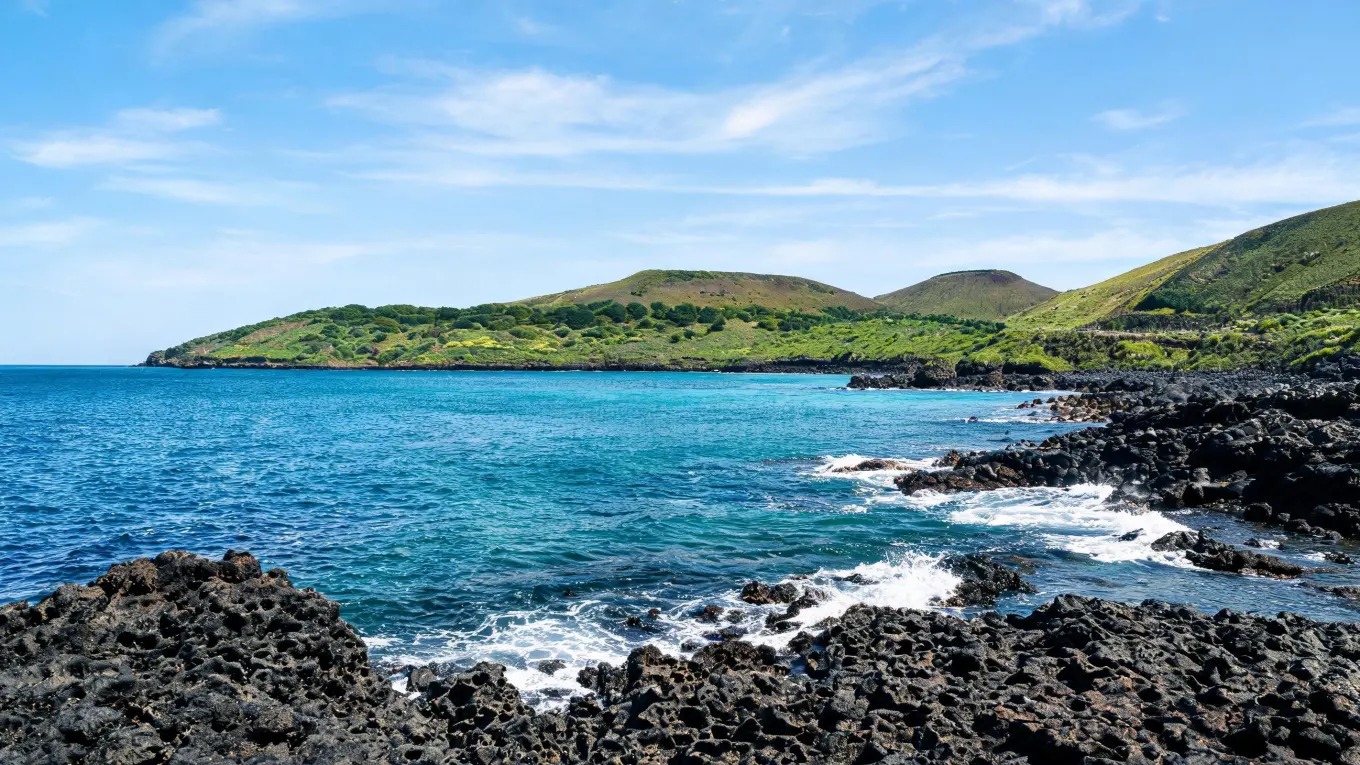
One-sentence conclusion: Ascension Island is a tiny volcanic island in the middle of the South Atlantic, roughly over a thousand kilometers from the nearest continent, and is a British Overseas Territory. It has no commercial tourism routes, is extremely difficult to reach (mainly via Royal Air Force military flights from RAF Brize Norton, or via St Helena with prior entry permits required), and is only suitable for hardcore adventurers willing to spend time on paperwork, accept limited supplies and facilities, and genuinely want to see green sea turtles, stargaze, and explore volcanic landscapes — not for those seeking a relaxed vacation.
What is Ascension Island?
Ascension Island is located in the South Atlantic, almost dead center between Africa and South America. Administratively, it belongs to the British Overseas Territory of "St Helena, Ascension and Tristan da Cunha." It is a young volcanic island with an area of just over 90 square kilometers. Its permanent population has long been only a few hundred to just over a thousand, almost entirely consisting of personnel stationed for work (military, communications, scientific research, island management) and their families, with no traditional "indigenous" or settled immigrant community.
The most prominent landmark on the island is the central extinct volcanic cone "Green Mountain." Due to its higher altitude, the summit traps moisture, forming a green area that blends artificial and natural vegetation, while below lies vast black lava fields, volcanic slag, and nearly barren wasteland — a stark contrast. In the 19th century, the British Royal Navy used it as an outpost to monitor Napoleon (exiled on St Helena) and suppress the slave trade. Later, due to its central Atlantic location and isolation, it became a natural communications relay, satellite tracking, and aviation refueling hub. Today, the US and UK still maintain military and space tracking facilities on the island, which is the fundamental reason for its strict management and restricted access.
Precisely because it has long "existed for functionality," Ascension Island retains a very pristine natural appearance: it is one of the most important nesting sites for Atlantic green sea turtles, a breeding ground for various seabirds, with excellent fish resources in surrounding waters and virtually zero light pollution. For nature and history enthusiasts, it is a rare place almost untouched by mass tourism.
How to get there and what paperwork is needed (honest explanation of scarce flights and entry permits)
To be honest: there is no "book a ticket and go" option for Ascension Island. The island has an airport (Wideawake), but commercial flights are extremely limited. There are two main ways to get in and out, both requiring weeks or even months of advance planning:
First, military flights via the UK. The Royal Air Force operates flights from RAF Brize Norton in Oxfordshire to the Falkland Islands, with a stopover on Ascension Island. Historically, this was the main route for ordinary people to reach the island. These flights are infrequent, seats are prioritized for official and military needs, and civilian seats must be applied for through official channels. Whether you can travel, the price, and the schedule are all subject to official arrangements.
Second, transit via St Helena Island. Since the opening of St Helena Airport, there are regular flights from Johannesburg, South Africa to St Helena, and then a connecting flight between the two islands to Ascension. This route is theoretically more suitable for independent travelers, but connecting flights are not frequent and are easily affected by weather and capacity. Be sure to allow plenty of buffer time and rely on the carrier's published schedule.
Regardless of which route you take, the key prerequisite is an Entry Permit. Traveling to Ascension Island usually requires applying in advance to the island government for an Entry Permit, along with proof of accommodation, purpose of stay, departure flight, valid insurance, etc. Pure tourist visitors are also accepted but are reviewed on a case-by-case basis. Before booking any flights, be sure to check the official website of the St Helena and Ascension Island government for the latest permit requirements, required materials, and processing times. Everything must be based on official sources; do not trust second-hand guides claiming "visa-free" entry.
What to see on the island
Green Mountain National Park hiking
Green Mountain is the geographical and ecological core of the island, with the summit area designated as a national park. There is a loop trail around the summit (often called "Elliot's Path" by locals), which ascends from dry, hot lava wasteland to a mist-shrouded, humid summit covered in ferns and bamboo groves. The dramatic change in vegetation and temperature is a highlight in itself. Many plants on the mountain were introduced by humans in the 19th century, gradually forming a unique "artificial cloud forest," a living case study of ecological transformation. Before hiking, check with the island administration about trail conditions and weather.
Long Beach green sea turtle nesting season
Long Beach near Georgetown is a famous spot for observing Atlantic green sea turtles. During the nesting season, female turtles come ashore at night to dig nests and lay eggs. Months later, hatchlings emerge and rush to the sea, a spectacular sight. Strict regulations apply: no bright lights, no touching or blocking turtles, maintain distance, and leave no obstacles on the beach. It is usually recommended to observe at night with a local guide or island staff to minimize disturbance to the turtles.
World-class stargazing and sea fishing
Due to its extreme distance from any continental light sources and sparse population, Ascension Island's night sky is exceptionally clear, making it an excellent location for stargazing and photographing the Milky Way. The southern hemisphere's stars are almost completely free of light pollution here. During the day, it is a paradise for fishing enthusiasts, with surrounding waters famous for large migratory fish and often record-breaking catches. Offshore fishing must be arranged through licensed local operators and comply with relevant fishing and conservation regulations.
Georgetown and WWII / communications station relics
Georgetown is the main settlement on the island, retaining colonial-era churches, forts, old gun batteries, and dock buildings. Though small, it has a strong historical atmosphere. The island also scatters WWII military remains and traces of various communications and tracking facilities, connecting the history of this "Atlantic relay station" from a naval outpost to a modern tracking hub.
Volcanic landscapes
Apart from Green Mountain, the island is dotted with numerous small volcanic cinder cones, lava fields, and colorful slag heaps in red, black, and ochre. Combined with the almost barren openness, walking across them feels like being on another planet — a paradise for geology and photography enthusiasts.
How many days to stay, best season (sea turtle nesting season, etc.)
Given that flights in and out are not daily, the length of stay is often not "how many days you want to play" but "how many days the flights pin you to." In reality, many visitors find their stay locked to around a week or multiples thereof due to flight schedules. If purely based on attractions, allocating one to two days each for Green Mountain hiking, Georgetown and historical sites, nighttime turtle watching and stargazing, and offshore fishing, roughly five to seven days are needed to avoid feeling rushed. But plan your itinerary backwards based on the flight combinations you can secure.
Seasonal choice mainly depends on what you most want to see. The most iconic experience is green sea turtle nesting and hatching, which roughly occurs during the warmer months of the Southern Hemisphere (around late year to mid following year). Different stages (egg-laying, hatching) occur at different times. Before your trip, be sure to verify the specific period of the season with the island administration or conservation department. Stargazing is good year-round, with best results on clear nights with a small moon. Fishing and hiking are also largely feasible year-round, just avoid overly humid or rainy periods.
Accommodation, transport, and costs (limited facilities on the island, need advance booking, GBP / St Helena Pound)
Regarding accommodation, there are no large hotels or resorts on the island. Options are limited to a small number of hostels, guesthouses, or rooms managed by island authorities. Rooms are scarce, and you must arrange and book accommodation at the same time as applying for the Entry Permit; otherwise, the permit application is unlikely to succeed. Arrange in advance through the island government's official channels or designated accommodation providers.
Transport on the island is mainly by self-driving, with no established public transport system. Many visitors rent cars to get around. Roads are mostly simple tracks over volcanic terrain; pay attention to safety and vehicle condition. Confirm the recognition of your driver's license locally and book a vehicle in advance.
Regarding currency and costs: British pounds are accepted locally, and St Helena Pounds (pegged at par with GBP) are also in circulation. Banking, card payment, and ATM facilities on the island are very limited. Be sure to bring enough cash and confirm acceptable payment methods with the authorities. Overall costs are hard to pin down precisely — airfare (especially military or connecting flights), permits, insurance, accommodation, and car rental add up, and the total cost is typically much higher than a regular island vacation, with significant fluctuations. Rely on real-time quotes from airlines, the island government, and accommodation providers; do not trust any "fixed package price."
Notes and pitfalls (permits, limited supplies, limited internet and medical care, ecological protection rules)
First, permits and flights must be prepared as a "bundle." Confirm permits and accommodation first, then book flights. Any missing link could cause the entire trip to fail. Allow sufficient time for approval and buffer.
Second, supplies are limited. The variety and stock in island shops are not abundant; restocking relies on maritime shipping and limited flights. It's best to bring your own common medicines, personal specialty items, spare batteries, etc. Don't expect to "buy it when you get there."
Third, internet and medical care are limited. Internet bandwidth is limited and costs may be high; don't expect continent-level speeds. Medical resources are basic; complex or emergency cases may require long-distance evacuation. It is strongly recommended to purchase travel insurance covering remote areas and medical evacuation.
Fourth, strictly adhere to ecological protection rules. Sea turtles, seabirds, and coastlines are protected; disturbance, capture, or damage is prohibited. Be cautious with lights on beaches at night, leave no trash, and follow local requirements. Certain areas involve military or scientific facilities; do not enter or photograph without permission. Follow on-site instructions.
What to do if you need local assistance
To be honest: for extremely remote destinations like Ascension Island, there are almost no regular Chinese-language ground operators or travel agencies. Existing Chinese-speaking guide resources are very scarce. Most coordination must be done in English directly with the island authorities and accommodation providers. If your trip involves transit via St Helena or other places and you need help inquiring about flight connections, coordinating accommodation and permit materials, or basic translation on the ground, you can post a request on platforms like Dijiexia to see if anyone covering the St Helena/Ascension route or with remote coordination capabilities can take the job. But keep realistic expectations: the available resources for this route are already thin. What the platform can do is more about facilitating information and translation assistance. The core permits and flights still need to be confirmed by yourself through official channels. Do not place all hope on some "all-inclusive" promise.
FAQ
Q: Can Chinese passport holders go to Ascension Island? Do they need a visa?
A: Ascension Island is a British Overseas Territory. Entry typically requires applying in advance for an Entry Permit from the island government, along with meeting conditions such as accommodation, insurance, and departure flight tickets. This is separate from whether it is "visa-free." For specific requirements and procedures for Chinese passports, be sure to refer to the official explanations from the St Helena and Ascension Island government before travel. Do not simply apply general UK visa rules.
Q: What is the fastest, most realistic way to get there?
A: Currently, the two more realistic routes are via military flights from RAF Brize Norton in the UK, or via Johannesburg, South Africa to St Helena, then connecting to Ascension. Both routes have infrequent flights and are affected by capacity and weather. There is no "anytime you want to go" shortcut. Plan weeks to months in advance, and rely on the carrier's published times and seats.
Q: When should I go to see sea turtles?
A: The egg-laying and hatching of Atlantic green sea turtles are roughly concentrated in the warmer months of the Southern Hemisphere. However, egg-laying and hatching are different stages occurring at different times. To see a specific stage, check with the island administration or conservation department in advance for the exact period of the season. And be sure to follow nighttime turtle-watching light and distance regulations.